Singh Manish Kumar, Yadav Suraj Singh, Yadav Rajesh Singh, Singh Uma Shanker, Shukla Yogeshwar, Pant Kamlesh Kumar, Khattri Sanjay
Department of Pharmacology, King George Medical University, Lucknow, Uttar Pradesh, India.
Department of Criminology and Forensic Science, School of Applied Sciences, Dr. Harisingh Gour Central University, Sagar, Madhya Pradesh, India.
Toxicol Int. 2014 Jan;21(1):8-17. doi: 10.4103/0971-6580.128784.
Arsenic, an environmental contaminant naturally occurred in groundwater and has been found to be associated with immune-related health problems in humans.
In view of increasing risk of arsenic exposure due to occupational and non-occupational settings, the present study has been focused to investigate the protective efficacy of amla against arsenic-induced spleenomegaly in mice.
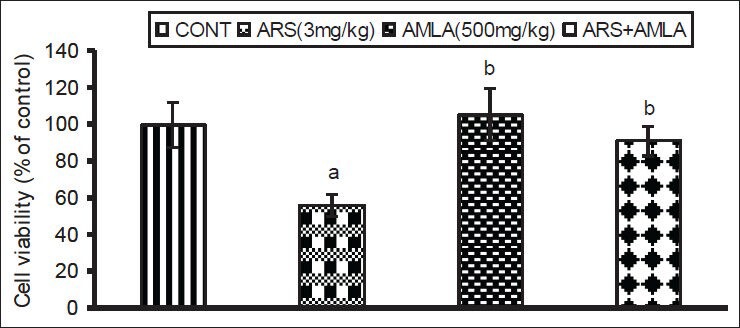
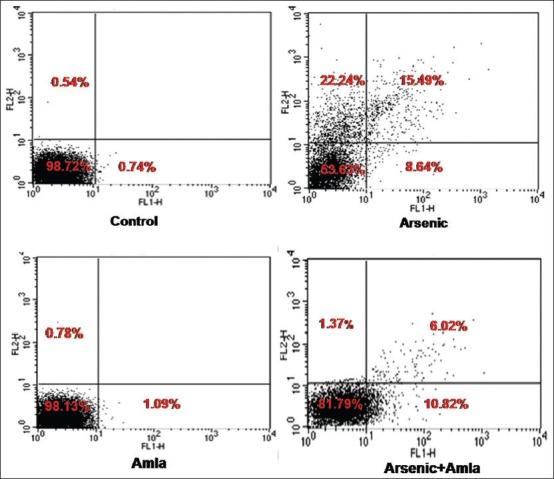
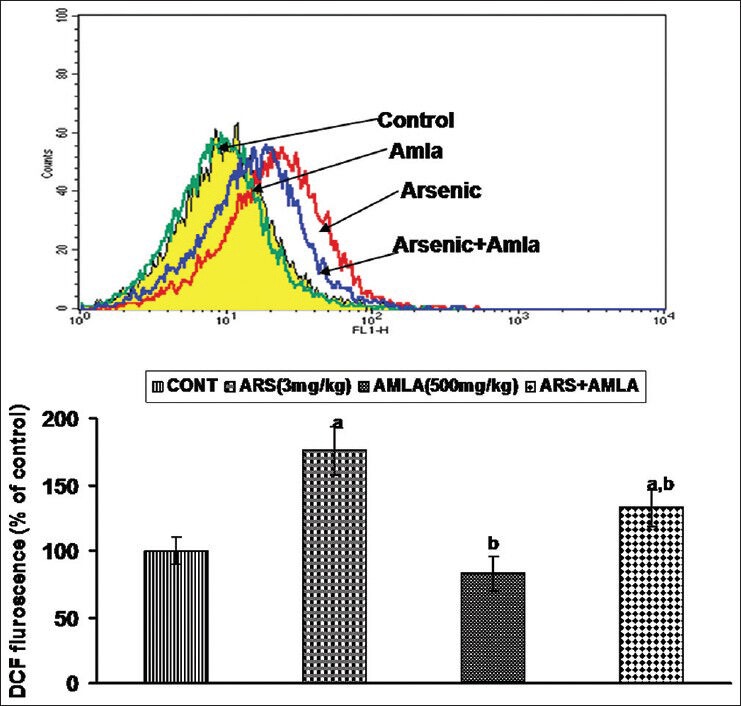
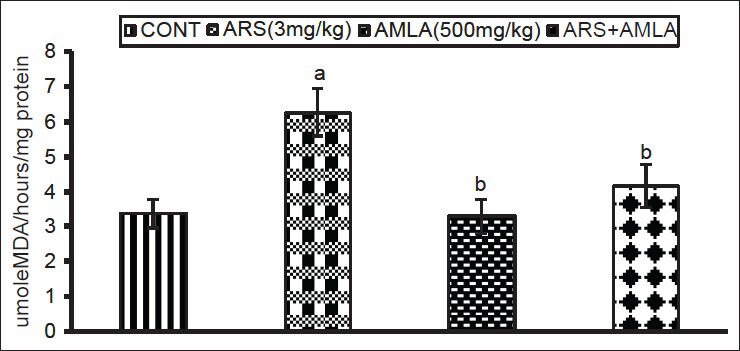
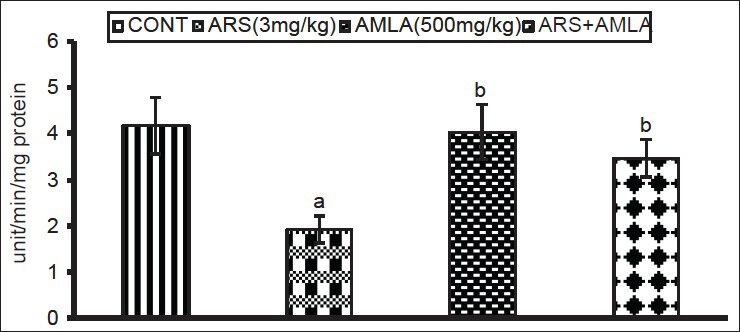
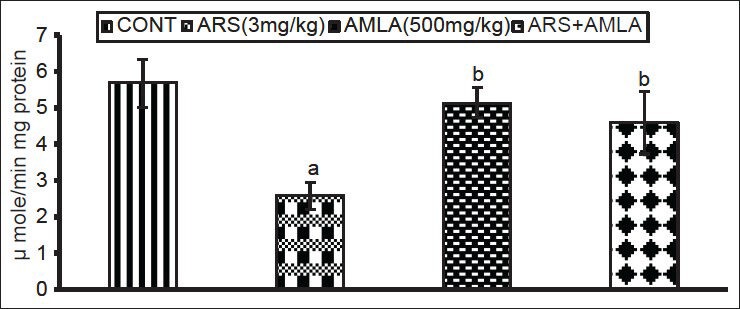
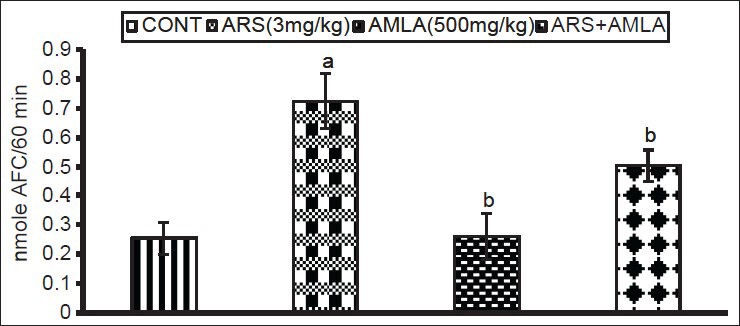
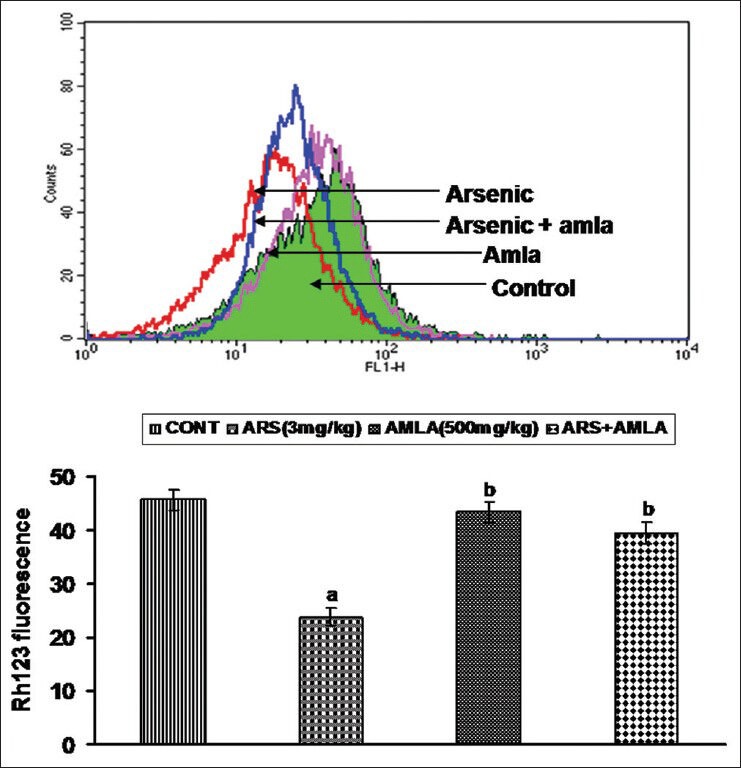
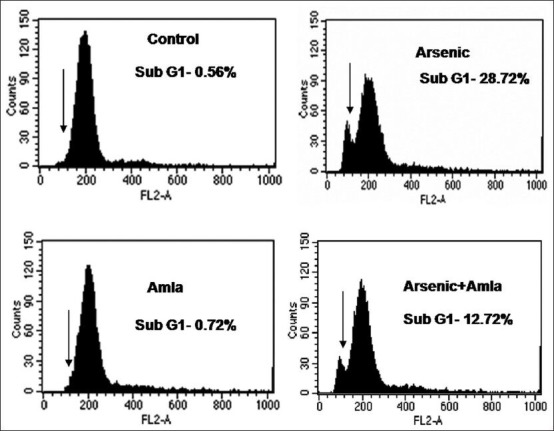
Arsenic exposures (3 mg/kg body weight p.o for 30 days) in mice caused an increase production of ROS (76%), lipid peroxidation (84%) and decrease in the levels of superoxide dismutase (53%) and catalase (54%) in spleen as compared to controls. Arsenic exposure to mice also caused a significant increase in caspases-3 activity (2.8 fold) and decreases cell viability (44%), mitochondrial membrane potential (47%) linked with apoptosis assessed by the cell cycle analysis (subG1-28.72%) and annexin V/PI binding in spleen as compared to controls. Simultaneous treatment of arsenic and amla (500 mg/kg body weight p.o for 30 days) in mice decreased the levels of lipid peroxidation (33%), ROS production (24%), activity of caspase-3 (1.4 fold), apoptosis (subG1 12.72%) and increased cell viability (63%), levels superoxide dismutase (80%), catalase (77%) and mitochondrial membrane potential (66%) as compared to mice treated with arsenic alone.
Results of the present study indicate that the effect of arsenic is mainly due to the depletion of glutathione in liver associated with enhanced oxidative stress that has been found to be protected following simultaneous treatment of arsenic and amla.
砷是一种天然存在于地下水中的环境污染物,已被发现与人类免疫相关的健康问题有关。
鉴于职业和非职业环境导致砷暴露的风险增加,本研究重点调查了印度醋栗对砷诱导的小鼠脾肿大的保护作用。
与对照组相比,小鼠经口给予砷(3mg/kg体重,持续30天)后,脾脏中活性氧生成增加(76%)、脂质过氧化增加(84%),超氧化物歧化酶水平降低(53%),过氧化氢酶水平降低(54%)。与对照组相比,砷暴露还导致小鼠脾脏中半胱天冬酶-3活性显著增加(2.8倍),细胞活力降低(44%),线粒体膜电位降低(47%),通过细胞周期分析(亚G1期-28.72%)和膜联蛋白V/碘化丙啶结合评估的凋亡增加。小鼠同时给予砷和印度醋栗(500mg/kg体重,经口给药30天),与单独给予砷的小鼠相比,脂质过氧化水平降低(33%)、活性氧生成降低(24%)、半胱天冬酶-3活性降低(1.4倍)、凋亡减少(亚G1期12.72%),细胞活力增加(63%),超氧化物歧化酶水平增加(80%),过氧化氢酶水平增加(77%),线粒体膜电位增加(66%)。
本研究结果表明,砷的作用主要是由于肝脏中谷胱甘肽的消耗,伴有氧化应激增强,而同时给予砷和印度醋栗后这种情况得到了保护。