Bogdan Paul, Deasy Bridget M, Gharaibeh Burhan, Roehrs Timo, Marculescu Radu
1] Department of Electrical Engineering, University of Southern California, Los Angeles, CA 90089-2560, USA [2].
1] CellStock, Pittsburgh, PA 15237, USA [2] McGowan Institute of Regenerative Medicine of UPMC and Department of Bioengineering, University of Pittsburgh, Pittsburgh, PA 15213, USA [3].
Sci Rep. 2014 Apr 28;4:4826. doi: 10.1038/srep04826.
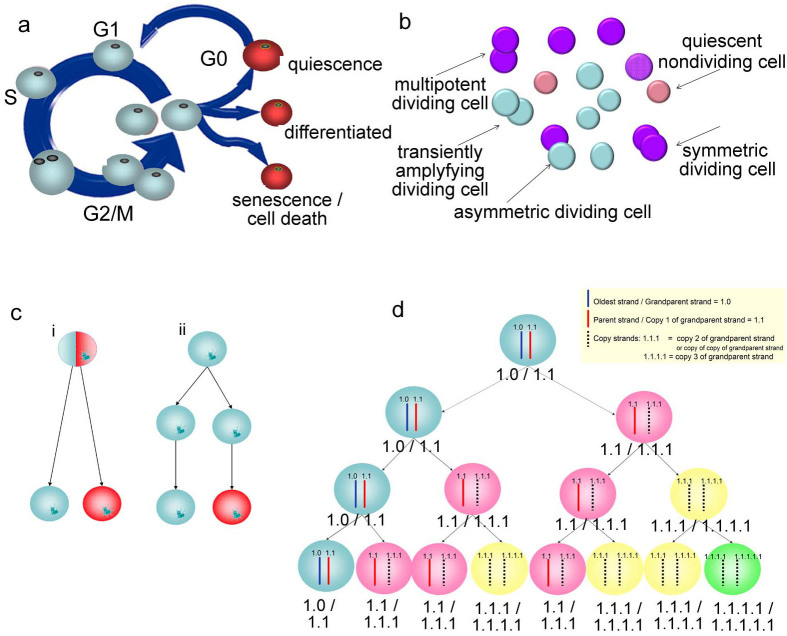
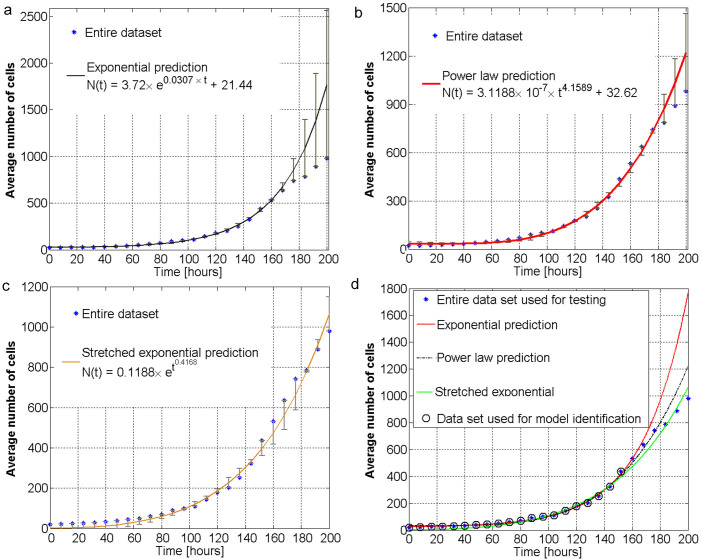
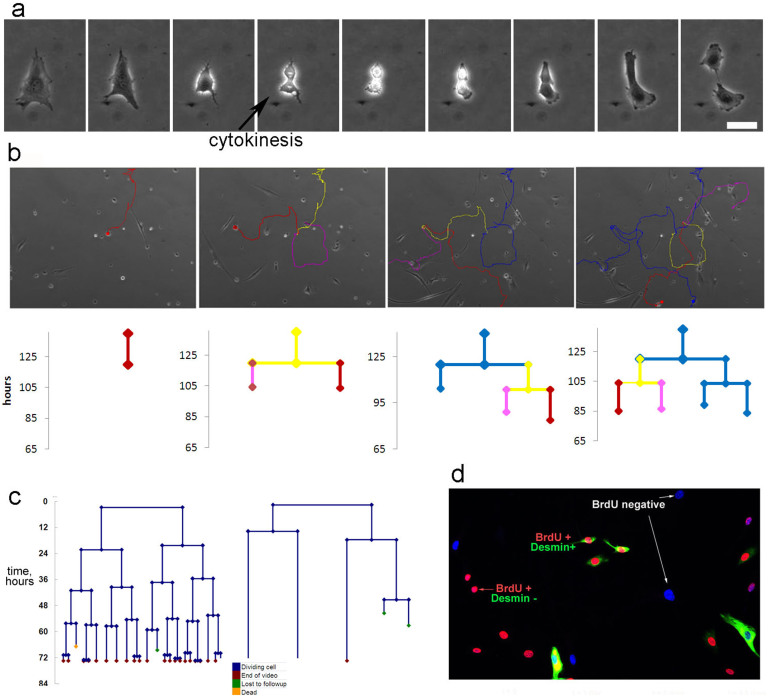
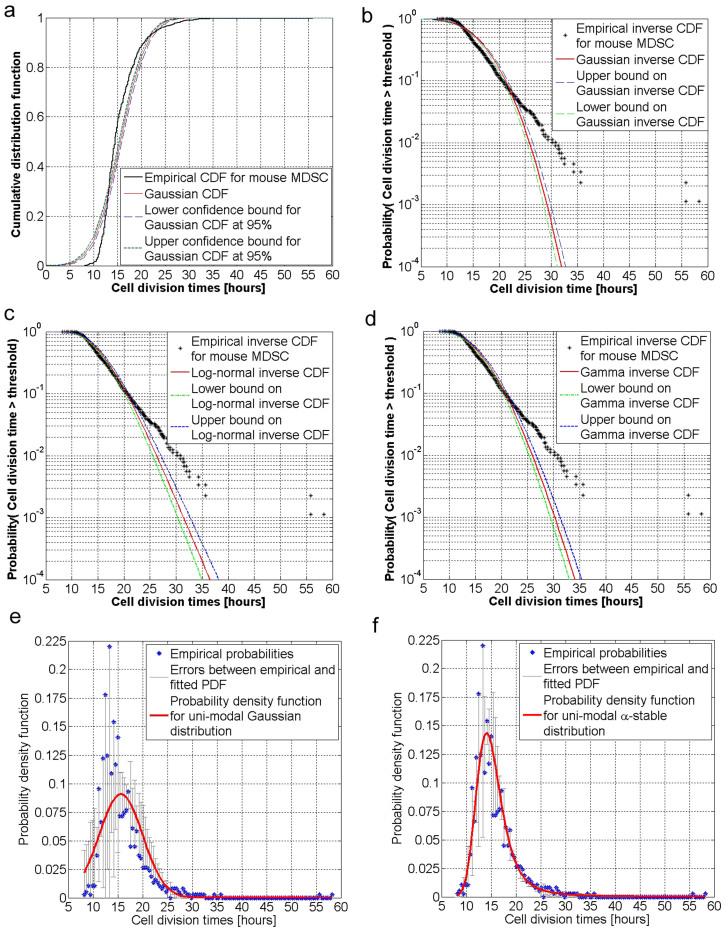
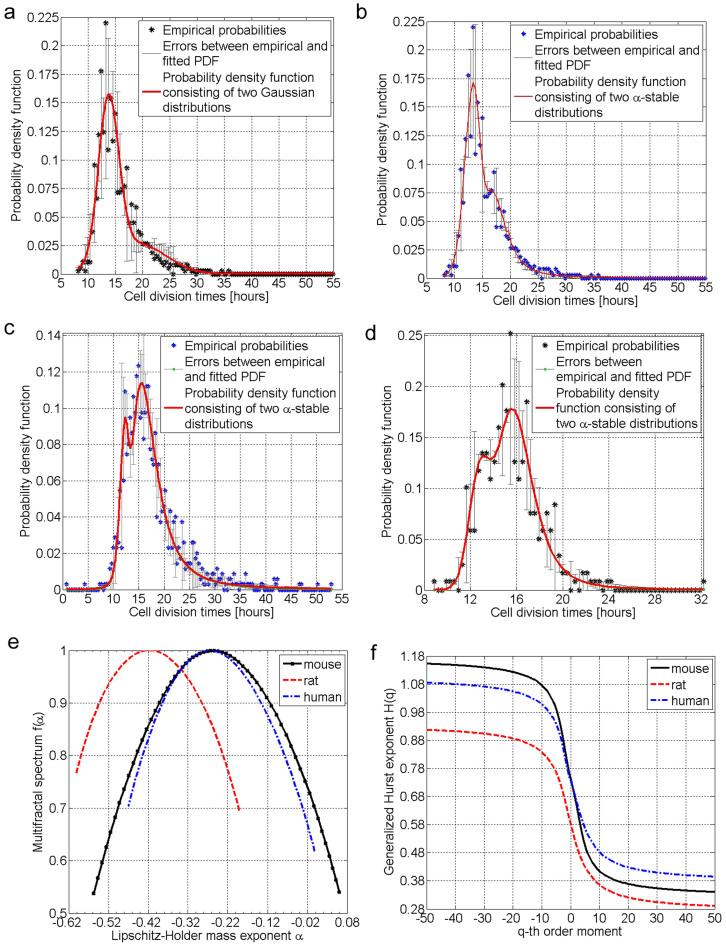
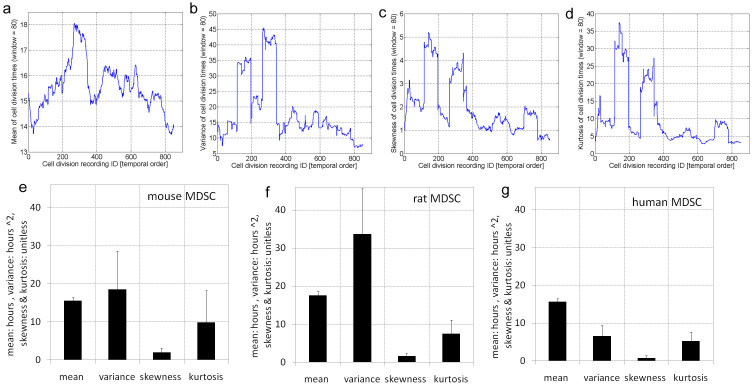
Understanding stem cell (SC) population dynamics is essential for developing models that can be used in basic science and medicine, to aid in predicting cells fate. These models can be used as tools e.g. in studying patho-physiological events at the cellular and tissue level, predicting (mal)functions along the developmental course, and personalized regenerative medicine. Using time-lapsed imaging and statistical tools, we show that the dynamics of SC populations involve a heterogeneous structure consisting of multiple sub-population behaviors. Using non-Gaussian statistical approaches, we identify the co-existence of fast and slow dividing subpopulations, and quiescent cells, in stem cells from three species. The mathematical analysis also shows that, instead of developing independently, SCs exhibit a time-dependent fractal behavior as they interact with each other through molecular and tactile signals. These findings suggest that more sophisticated models of SC dynamics should view SC populations as a collective and avoid the simplifying homogeneity assumption by accounting for the presence of more than one dividing sub-population, and their multi-fractal characteristics.
了解干细胞(SC)群体动态对于开发可用于基础科学和医学的模型至关重要,有助于预测细胞命运。这些模型可用作工具,例如用于研究细胞和组织水平的病理生理事件、预测发育过程中的(异常)功能以及个性化再生医学。通过延时成像和统计工具,我们表明干细胞群体的动态涉及由多种亚群体行为组成的异质结构。使用非高斯统计方法,我们在来自三个物种的干细胞中识别出快速和缓慢分裂亚群体以及静止细胞的共存。数学分析还表明,干细胞并非独立发育,而是通过分子和触觉信号相互作用时表现出时间依赖性分形行为。这些发现表明,更复杂的干细胞动态模型应将干细胞群体视为一个整体,并通过考虑多个分裂亚群体的存在及其多重分形特征来避免简化的同质性假设。