Steinberg Dori M, Levine Erica L, Lane Ilana, Askew Sandy, Foley Perry B, Puleo Elaine, Bennett Gary G
Duke Obesity Prevention Program, Duke Global Health Institute, Duke University, Durham, NC, United States.
J Med Internet Res. 2014 Apr 29;16(4):e114. doi: 10.2196/jmir.2996.
eHealth interventions are effective for weight control and have the potential for broad reach. Little is known about the use of interactive voice response (IVR) technology for self-monitoring in weight control interventions, particularly among populations disproportionately affected by obesity.
This analysis sought to examine patterns and predictors of IVR self-monitoring adherence and the association between adherence and weight change among low-income black women enrolled in a weight gain prevention intervention.
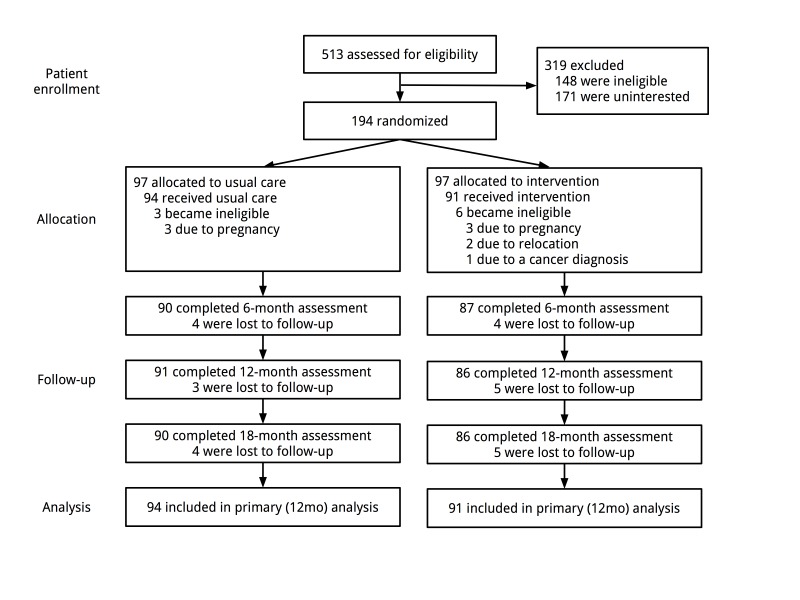
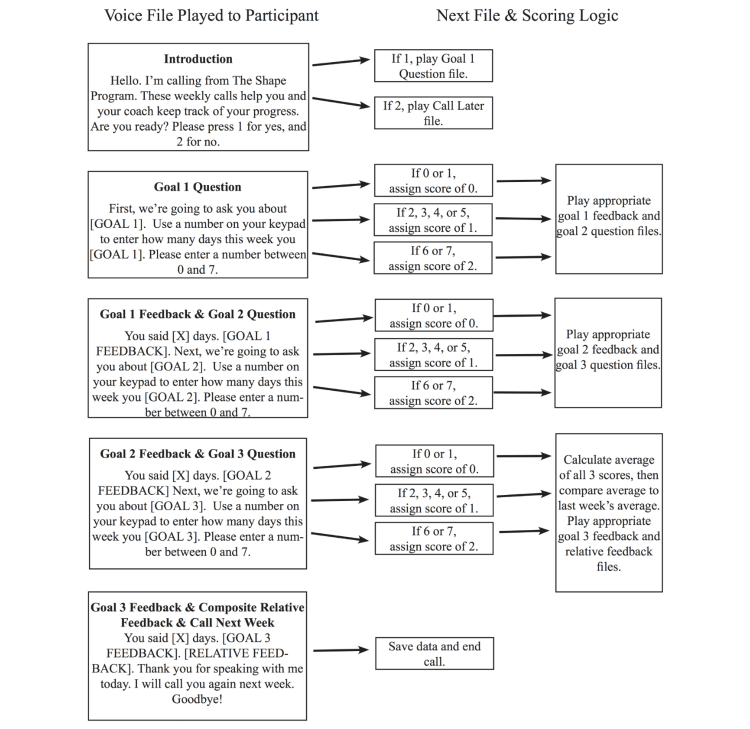
The Shape Program was a randomized controlled trial comparing a 12-month eHealth behavioral weight gain prevention intervention to usual care among overweight and obese black women in the primary care setting. Intervention participants (n=91) used IVR technology to self-monitor behavior change goals (eg, no sugary drinks, 10,000 steps per day) via weekly IVR calls. Weight data were collected in clinic at baseline, 6, and 12 months. Self-monitoring data was stored in a study database and adherence was operationalized as the percent of weeks with a successful IVR call.
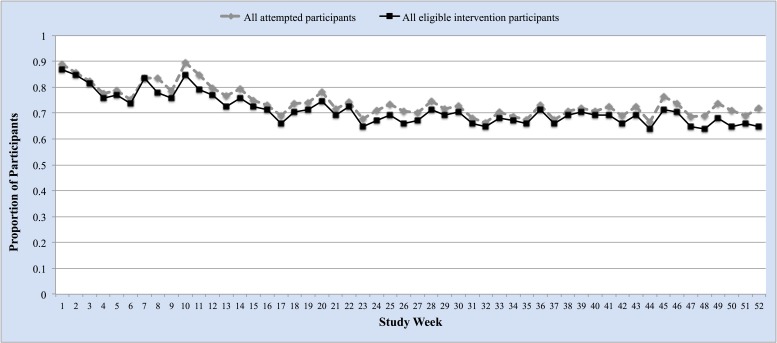
Over 12 months, the average IVR completion rate was 71.6% (SD 28.1) and 52% (47/91) had an IVR completion rate ≥80%. At 12 months, IVR call completion was significantly correlated with weight loss (r =-.22; P=.04) and participants with an IVR completion rate ≥80% had significantly greater weight loss compared to those with an IVR completion rate <80% (-1.97 kg, SE 0.67 vs 0.48 kg, SE 0.69; P=.01). Similar outcomes were found for change in body mass index (BMI; mean difference -0.94 kg, 95% CI -1.64 to -0.24; P=.009). Older, more educated participants were more likely to achieve high IVR call completion. Participants reported positive attitudes toward IVR self-monitoring.
Adherence to IVR self-monitoring was high among socioeconomically disadvantaged black women enrolled in a weight gain prevention intervention. Higher adherence to IVR self-monitoring was also associated with greater weight change. IVR is an effective and useful tool to promote self-monitoring and has the potential for widespread use and long-term sustainability.
Clinicaltrials.gov NCT00938535; http://www.clinicaltrials.gov/ct2/show/NCT00938535.
电子健康干预措施对体重控制有效,且有广泛应用的潜力。对于在体重控制干预中使用交互式语音应答(IVR)技术进行自我监测的情况,人们了解甚少,尤其是在受肥胖影响尤为严重的人群中。
本分析旨在研究参与体重增加预防干预的低收入黑人女性中,IVR自我监测依从性的模式和预测因素,以及依从性与体重变化之间的关联。
“塑形计划”是一项随机对照试验,比较了在初级保健环境中,针对超重和肥胖黑人女性进行的为期12个月的电子健康行为体重增加预防干预与常规护理。干预参与者(n = 91)通过每周的IVR通话,使用IVR技术自我监测行为改变目标(例如,不喝含糖饮料,每天走10000步)。在基线、6个月和12个月时在诊所收集体重数据。自我监测数据存储在研究数据库中,依从性以成功进行IVR通话的周数百分比来衡量。
在12个月期间,IVR平均完成率为71.6%(标准差28.1),52%(47/91)的IVR完成率≥80%。在12个月时,IVR通话完成情况与体重减轻显著相关(r = -0.22;P = 0.04),与IVR完成率<80%的参与者相比,IVR完成率≥80%的参与者体重减轻显著更多(-1.97千克,标准误0.67对0.48千克,标准误0.69;P = 0.01)。体重指数(BMI)变化也有类似结果(平均差异-0.94千克,95%置信区间-1.64至-0.24;P = 0.009)。年龄较大、受教育程度较高的参与者更有可能实现较高的IVR通话完成率。参与者对IVR自我监测持积极态度。
参与体重增加预防干预的社会经济地位不利的黑人女性对IVR自我监测的依从性较高。较高的IVR自我监测依从性也与更大的体重变化相关。IVR是促进自我监测的有效且有用的工具,具有广泛应用和长期可持续性的潜力。
Clinicaltrials.gov NCT00938535;http://www.clinicaltrials.gov/ct2/show/NCT00938535 。