Department of Nuclear Medicine, University Hospital Heidelberg, Im Neuenheimer Feld 400, 69120 Heidelberg, Germany.
Ruprecht-Karls-University, Institute of Pharmacy and Molecular Biotechnology, Im Neuenheimer Feld 329, 69120 Heidelberg, Germany.
Int J Mol Sci. 2014 Apr 30;15(5):7500-12. doi: 10.3390/ijms15057500.
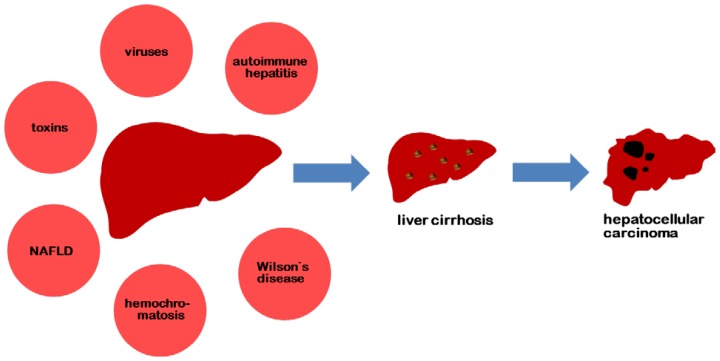
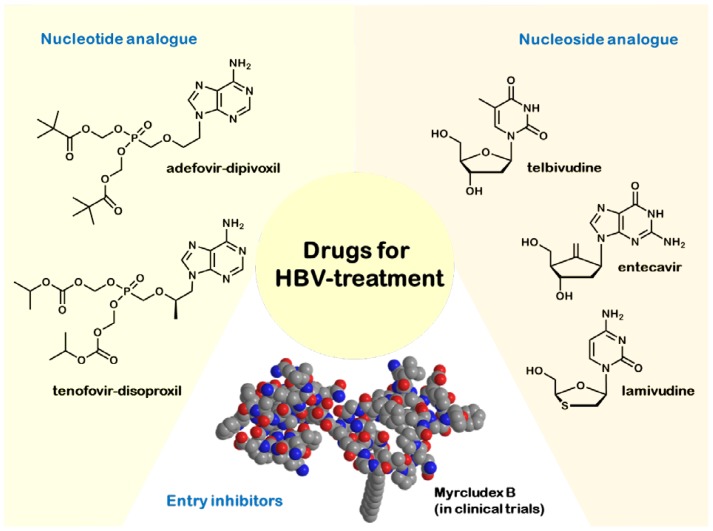
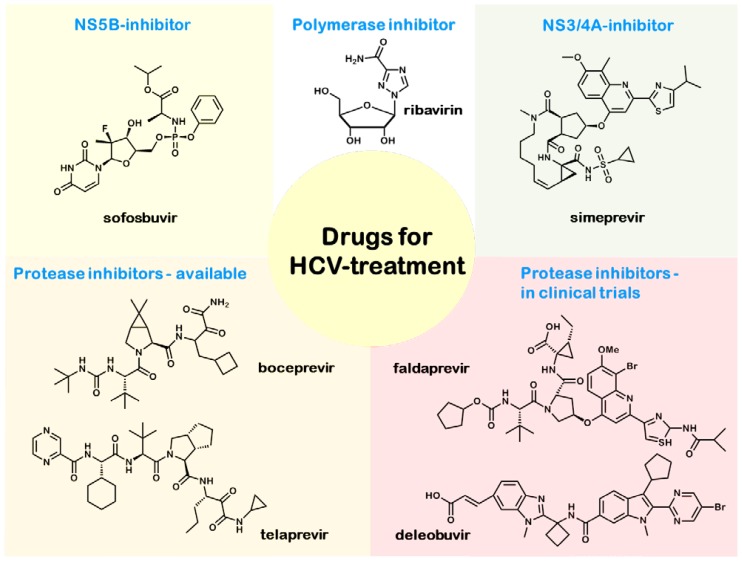
Hepatic diseases, like viral hepatitis, autoimmune hepatitis, hereditary hemochromatosis, non-alcoholic fatty liver disease (NAFLD) and Wilson's disease, play an important role in the development of liver cirrhosis and, hence, hepatocellular carcinoma. In this review, the current treatment options and the molecular mechanisms of action of the drugs are summarized. Unfortunately, the treatment options for most of these hepatic diseases are limited. Since hepatitis B (HBV) and C (HCV) infections are the most common causes of liver cirrhosis and hepatocellular carcinoma, they are the focus of the development of new drugs. The current treatment of choice for HBV/HCV infection is an interferon-based combination therapy with oral antiviral drugs, like nucleos(t)ide analogues, which is associated with improving the therapeutic success and also preventing the development of resistances. Currently, two new protease inhibitors for HCV treatment are expected (deleobuvir, faldaprevir) and together with the promising drug, daclatasvir (NS5A-inhibitor, currently in clinical trials), adequate therapy is to be expected in due course (circumventing the requirement of interferon with its side-effects), while in contrast, efficient HBV therapeutics are still lacking. In this respect, entry inhibitors, like Myrcludex B, the lead substance of the first entry inhibitor for HBV/HDV (hepatitis D) infection, provide immense potential. The pharmacokinetics and the mechanism of action of Myrcludex B are described in detail.
肝脏疾病,如病毒性肝炎、自身免疫性肝炎、遗传性血色素沉着症、非酒精性脂肪性肝病(NAFLD)和威尔逊病,在肝硬化的发展中起着重要作用,因此也是肝细胞癌的重要病因。在这篇综述中,总结了目前的治疗选择和药物的作用机制。不幸的是,这些肝脏疾病的大多数治疗选择都受到限制。由于乙型肝炎(HBV)和丙型肝炎(HCV)感染是肝硬化和肝细胞癌的最常见原因,因此它们是开发新药的重点。目前HBV/HCV 感染的治疗选择是基于干扰素的联合治疗,联合使用口服抗病毒药物,如核苷(酸)类似物,这可以提高治疗成功率,并防止耐药性的产生。目前,预计有两种新的 HCV 治疗蛋白酶抑制剂(deleobuvir、faldaprevir),再加上有前途的药物 daclatasvir(NS5A 抑制剂,目前正在临床试验中),有望在适当的时候提供充分的治疗(避免使用具有副作用的干扰素),而在这方面,高效的 HBV 治疗方法仍然缺乏。在这方面,如 Myrcludex B 等进入抑制剂提供了巨大的潜力,Myrcludex B 是第一个用于 HBV/HDV(乙型肝炎 D)感染的进入抑制剂的先导物质。本文详细描述了 Myrcludex B 的药代动力学和作用机制。