Dituri Francesco, Gigante Gianluigi, Scialpi Rosanna, Mancarella Serena, Fabregat Isabel, Giannelli Gianluigi
National Institute of Gastroenterology Saverio de Bellis, IRCCS Research Hospital, Castellana Grotte, 70013 Bari, Italy.
Oncobell Program, Bellvitge Biomedical Research Institute (IDIBELL), CIBEREHD and University of Barcelona, L'Hospitalet de Llobregat, 08908 Barcelona, Spain.
Cancers (Basel). 2022 Apr 9;14(8):1902. doi: 10.3390/cancers14081902.
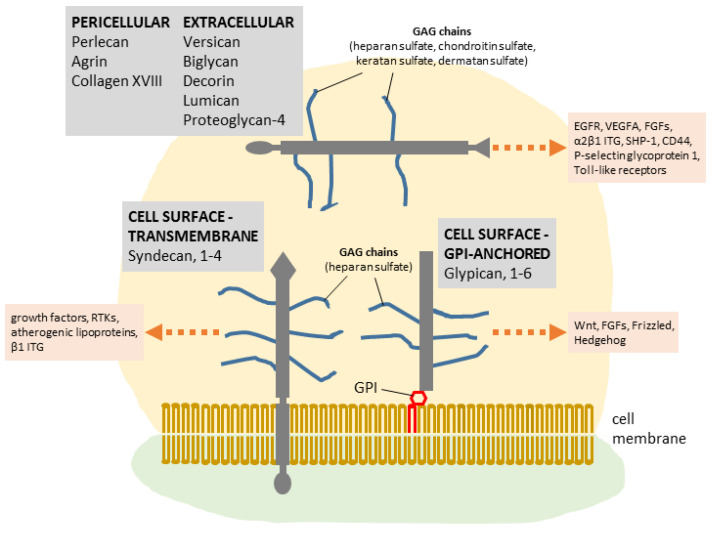
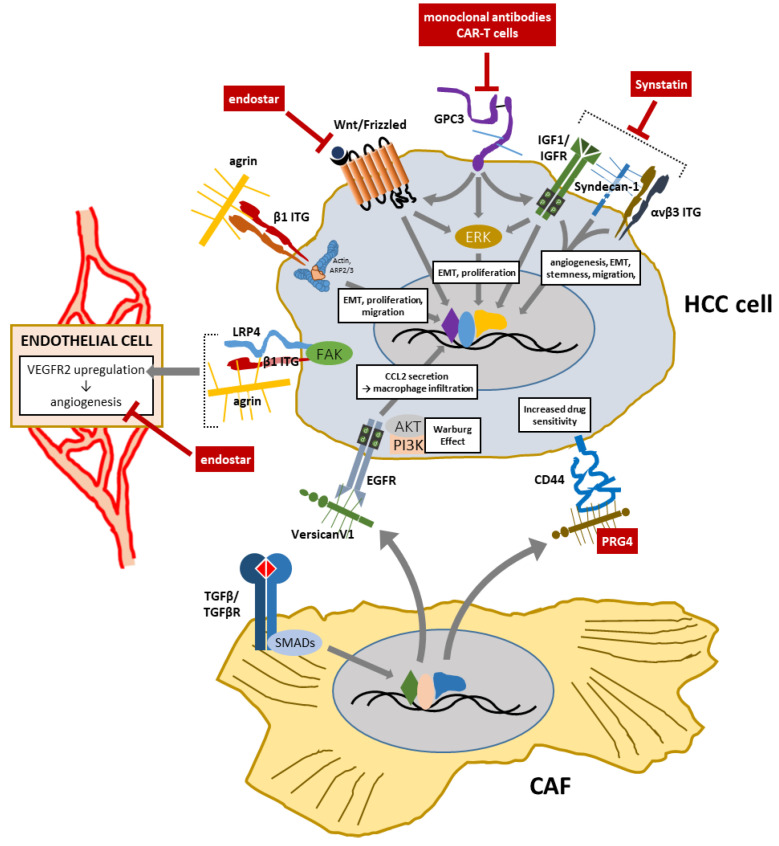
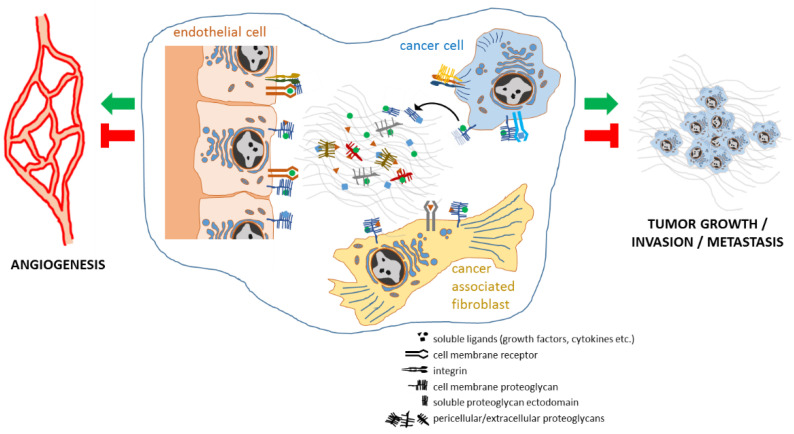
Proteoglycans are a class of highly glycosylated proteins expressed in virtually all tissues, which are localized within membranes, but more often in the pericellular space and extracellular matrix (ECM), and are involved in tissue homeostasis and remodeling of the stromal microenvironment during physiological and pathological processes, such as tissue regeneration, angiogenesis, and cancer. In general, proteoglycans can perform signaling activities and influence a range of physical, chemical, and biological tissue properties, including the diffusivity of small electrolytes and nutrients and the bioavailability of growth factors. While the dysregulated expression of some proteoglycans is observed in many cancers, whether they act as supporters or limiters of neoplastic progression is still a matter of controversy, as the tumor promoting or suppressive function of some proteoglycans is context dependent. The participation of multiple proteoglycans in organ regeneration (as demonstrated for the liver in hepatectomy mouse models) and in cancer suggests that these molecules actively influence cell growth and motility, thus contributing to key events that characterize neoplastic progression. In this review, we outline the main roles of proteoglycans in the physiology and pathology of cancers, with a special mention to hepatocellular carcinoma (HCC), highlighting the translational potential of proteoglycans as targets or therapeutic agents for the treatment of this disease.
蛋白聚糖是一类高度糖基化的蛋白质,几乎在所有组织中均有表达,它们定位于细胞膜内,但更常见于细胞周间隙和细胞外基质(ECM)中,并在生理和病理过程(如组织再生、血管生成和癌症)中参与组织稳态和基质微环境的重塑。一般来说,蛋白聚糖可以进行信号传导活动,并影响一系列物理、化学和生物学组织特性,包括小电解质和营养物质的扩散率以及生长因子的生物利用度。虽然在许多癌症中都观察到一些蛋白聚糖的表达失调,但它们是作为肿瘤进展的支持者还是限制者仍存在争议,因为一些蛋白聚糖的促肿瘤或抑肿瘤功能取决于具体情况。多种蛋白聚糖参与器官再生(如在肝切除小鼠模型中的肝脏所示)和癌症,这表明这些分子积极影响细胞生长和运动,从而促成肿瘤进展的关键事件。在这篇综述中,我们概述了蛋白聚糖在癌症生理和病理中的主要作用,特别提到了肝细胞癌(HCC),强调了蛋白聚糖作为治疗该疾病的靶点或治疗剂的转化潜力。