Ogunmola Olarinde Jeffrey, Oladosu Yusuf Olatunji, Olamoyegun Michael Adeyemi
Cardiac Care Centre, Department of Internal Medicine, Federal Medical Centre, Ido-Ekiti, Ekiti State, Nigeria.
Department of Internal Medicine, Federal Medical Centre, Ido-Ekiti, Ekiti State, Nigeria.
HIV AIDS (Auckl). 2014 Apr 23;6:61-7. doi: 10.2147/HIV.S59061. eCollection 2014.
There is a scarcity of data in rural health centers in Nigeria regarding the relationship between socioeconomic status (SES) and HIV infection. We investigated this relationship using indicators of SES.
An analytical case-control study was conducted in the HIV clinic of a rural tertiary health center. Data collection included demographic variables, educational attainment, employment status, monthly income, marital status, and religion. HIV was diagnosed by conventional methods. Data were analyzed with the SPSS version 16 software.
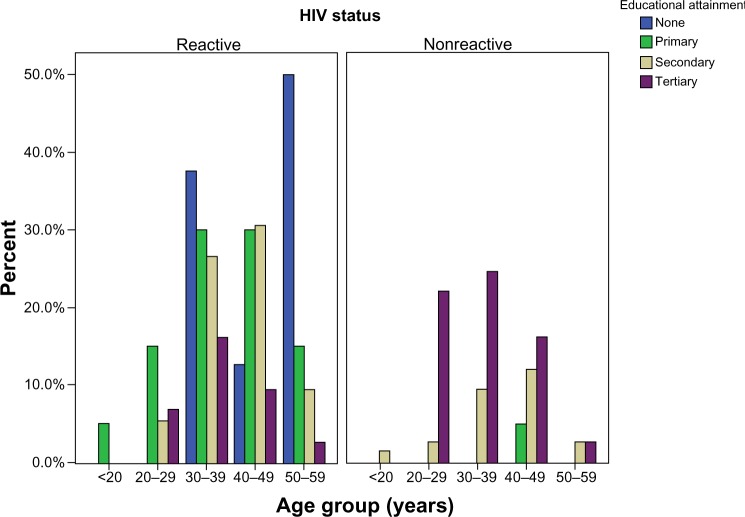
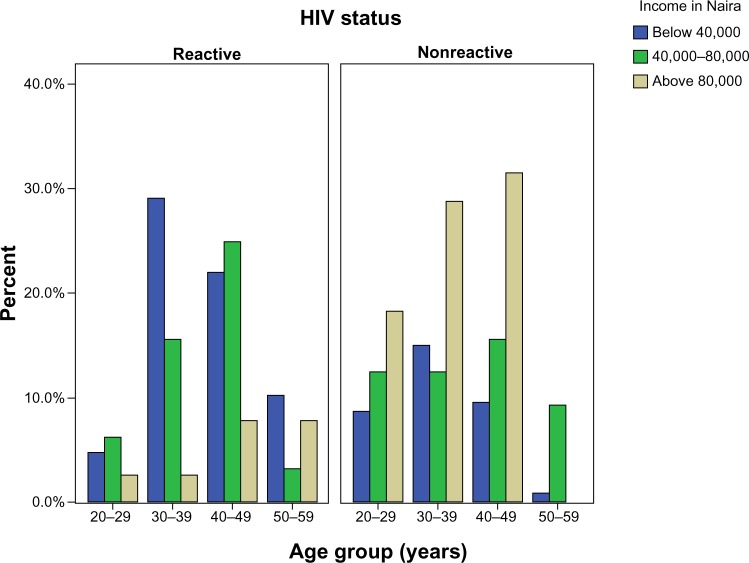
A total of 115 (48.5%) HIV-negative subjects with a mean age of 35.49±7.63 years (range: 15-54 years), and 122 (51.5%) HIV-positive subjects with a mean age of 36.35±8.31 years (range: 15-53 years) were involved in the study. Participants consisted of 47 (40.9%) men and 68 (59.1%) women who were HIV negative. Those who were HIV positive consisted of 35 (28.7%) men and 87 (71.3%) women. Attainment of secondary school levels of education, and all categories of monthly income showed statistically significant relationships with HIV infection (P=0.018 and P<0.05, respectively) after analysis using a logistic regression model. Employment status did not show any significant relationship with HIV infection.
Our findings suggested that some indicators of SES are differently related to HIV infection. Prevalent HIV infections are now concentrated among those with low incomes. Urgent measures to improve HIV prevention among low income earners are necessary. Further research in this area requires multiple measures in relation to partners' SES (measured by education, employment, and income) to further define this relationship.
在尼日利亚农村医疗中心,关于社会经济地位(SES)与艾滋病毒感染之间关系的数据匮乏。我们使用SES指标对这种关系进行了调查。
在一家农村三级医疗中心的艾滋病毒诊所开展了一项分析性病例对照研究。数据收集包括人口统计学变量、教育程度、就业状况、月收入、婚姻状况和宗教信仰。通过传统方法诊断艾滋病毒。使用SPSS 版本16软件对数据进行分析。
共有115名(48.5%)艾滋病毒阴性受试者参与研究,平均年龄为35.49±7.63岁(范围:15 - 54岁),以及122名(51.5%)艾滋病毒阳性受试者,平均年龄为36.35±8.31岁(范围:15 - 53岁)。艾滋病毒阴性参与者包括47名(40.9%)男性和68名(59.1%)女性。艾滋病毒阳性者包括35名(28.7%)男性和87名(71.3%)女性。使用逻辑回归模型分析后,中等教育水平的获得情况以及所有月收入类别与艾滋病毒感染均呈现出统计学上的显著关系(分别为P = 0.018和P < 0.05)。就业状况与艾滋病毒感染未显示出任何显著关系。
我们的研究结果表明,SES的一些指标与艾滋病毒感染的关系各不相同。目前,艾滋病毒感染主要集中在低收入人群中。有必要采取紧急措施加强对低收入者的艾滋病毒预防工作。该领域的进一步研究需要针对伴侣的SES(通过教育、就业和收入衡量)采取多种措施,以进一步明确这种关系。