Liu Chao, Srihari Sriganesh, Cao Kim-Anh Lê, Chenevix-Trench Georgia, Simpson Peter T, Ragan Mark A, Khanna Kum Kum
Institute for Molecular Bioscience, The University of Queensland, St. Lucia QLD 4072, Australia.
Institute for Molecular Bioscience, The University of Queensland, St. Lucia QLD 4072, Australia Queensland Facility for Advanced Bioinformatics, The University of Queensland, St. Lucia 4072, Australia.
Nucleic Acids Res. 2014 Jun;42(10):6106-27. doi: 10.1093/nar/gku284. Epub 2014 May 3.
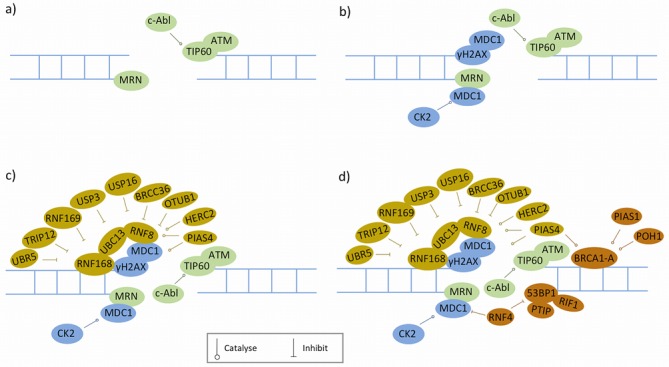
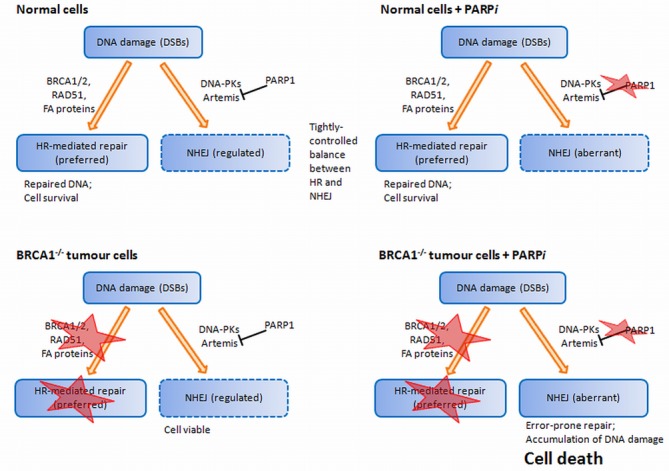
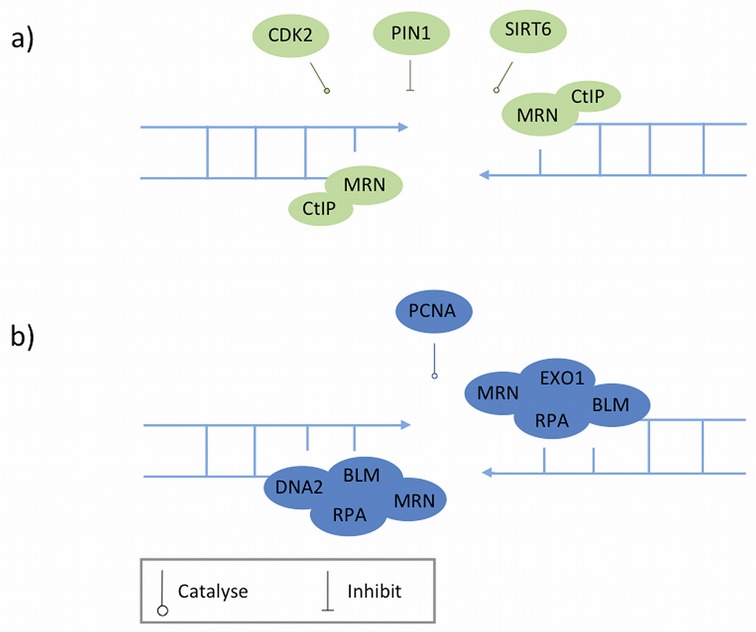
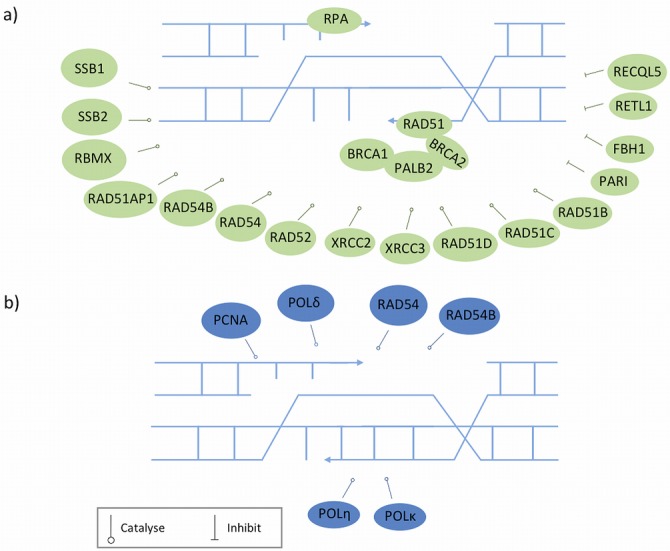
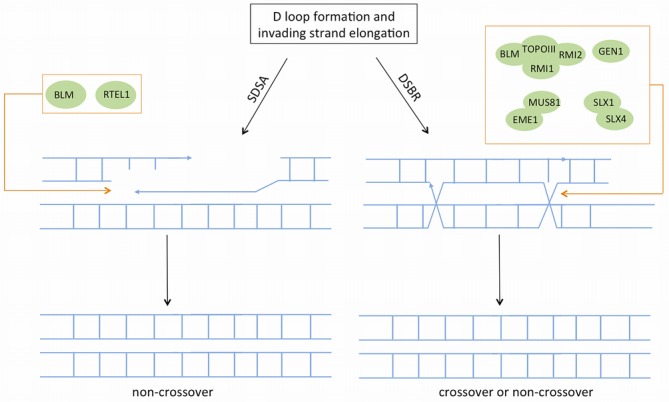
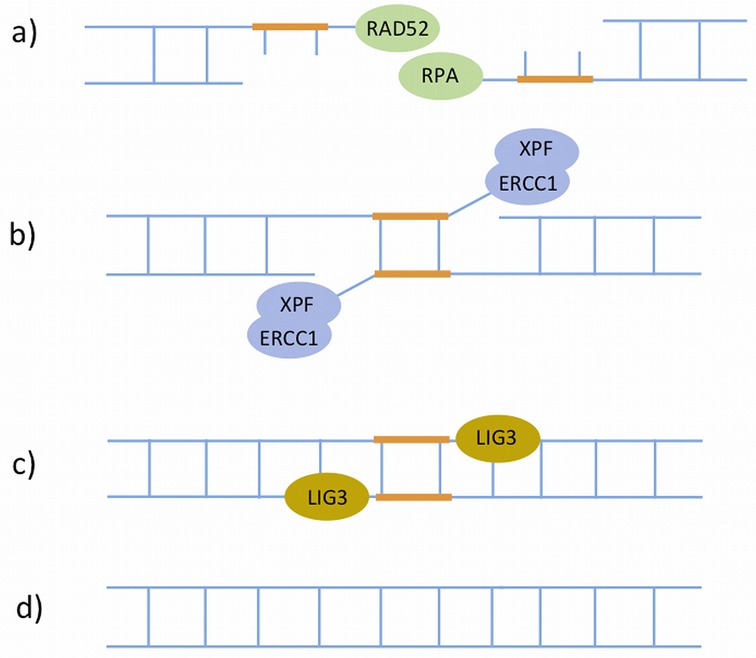
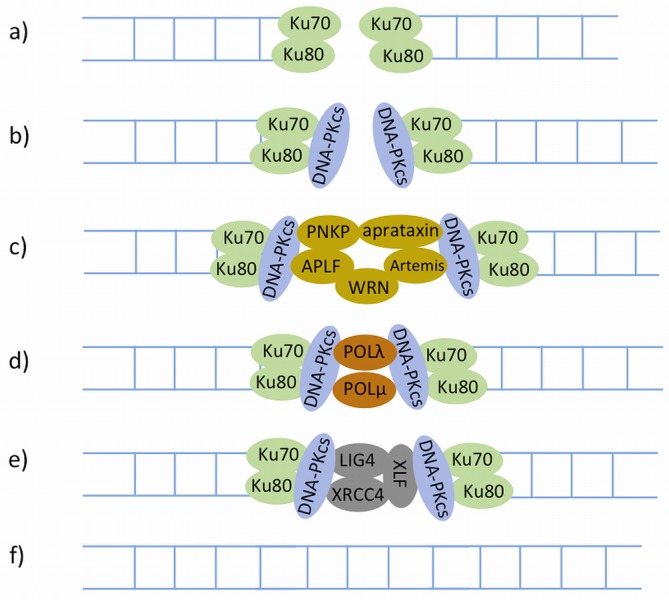
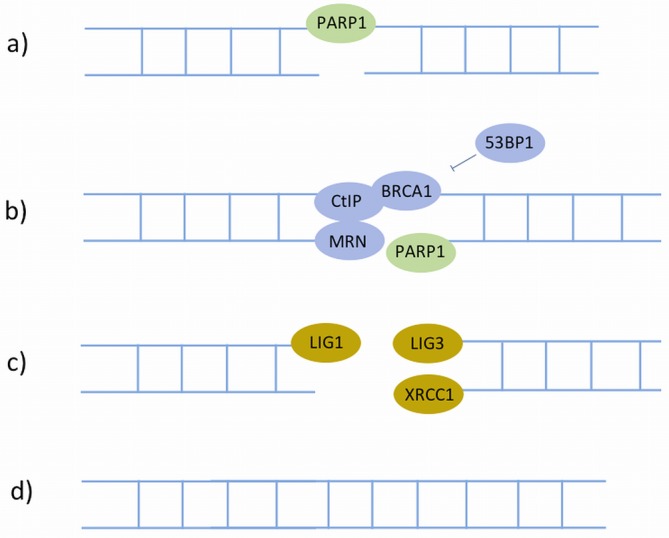
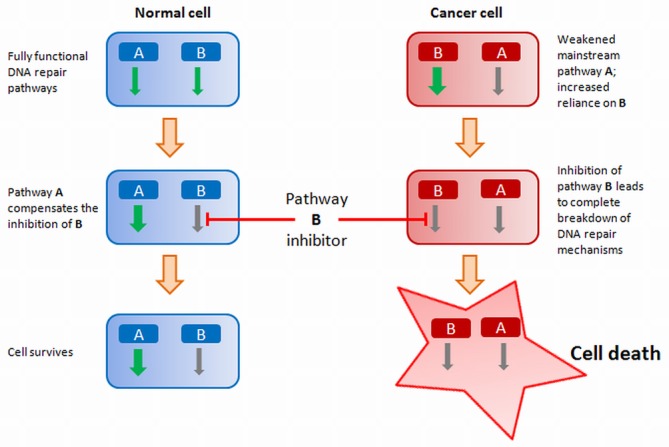
DNA-damage response machinery is crucial to maintain the genomic integrity of cells, by enabling effective repair of even highly lethal lesions such as DNA double-strand breaks (DSBs). Defects in specific genes acquired through mutations, copy-number alterations or epigenetic changes can alter the balance of these pathways, triggering cancerous potential in cells. Selective killing of cancer cells by sensitizing them to further DNA damage, especially by induction of DSBs, therefore requires careful modulation of DSB-repair pathways. Here, we review the latest knowledge on the two DSB-repair pathways, homologous recombination and non-homologous end joining in human, describing in detail the functions of their components and the key mechanisms contributing to the repair. Such an in-depth characterization of these pathways enables a more mechanistic understanding of how cells respond to therapies, and suggests molecules and processes that can be explored as potential therapeutic targets. One such avenue that has shown immense promise is via the exploitation of synthetic lethal relationships, for which the BRCA1-PARP1 relationship is particularly notable. Here, we describe how this relationship functions and the manner in which cancer cells acquire therapy resistance by restoring their DSB repair potential.
DNA损伤反应机制对于维持细胞的基因组完整性至关重要,它能够有效修复甚至是诸如DNA双链断裂(DSB)等高度致命的损伤。通过突变、拷贝数改变或表观遗传变化获得的特定基因缺陷可改变这些途径的平衡,引发细胞的癌变潜能。因此,通过使癌细胞对进一步的DNA损伤敏感,特别是通过诱导DSB来选择性杀死癌细胞,需要仔细调节DSB修复途径。在这里,我们综述了关于人类中两种DSB修复途径——同源重组和非同源末端连接的最新知识,详细描述了它们的组成部分的功能以及有助于修复的关键机制。对这些途径的这种深入表征能够更深入地理解细胞如何对治疗作出反应,并提示了可作为潜在治疗靶点进行探索的分子和过程。一个显示出巨大前景的途径是通过利用合成致死关系,其中BRCA1-PARP1关系尤为显著。在这里,我们描述了这种关系的作用方式以及癌细胞如何通过恢复其DSB修复潜能获得治疗抗性。