Yang Sizhong, Wen Xi, Zhao Liang, Shi Yulan, Jin Huijun
State Key Laboratory of Frozen Soils Engineering (SKLFSE), Cold and Arid Regions Environmental and Engineering Research Institute (CAREERI), Chinese Academy of Sciences, Lanzhou, Gansu, China.
College of Electrical Engineering, Northwest University for Nationalities, Lanzhou, Gansu, China.
PLoS One. 2014 May 2;9(5):e96552. doi: 10.1371/journal.pone.0096552. eCollection 2014.
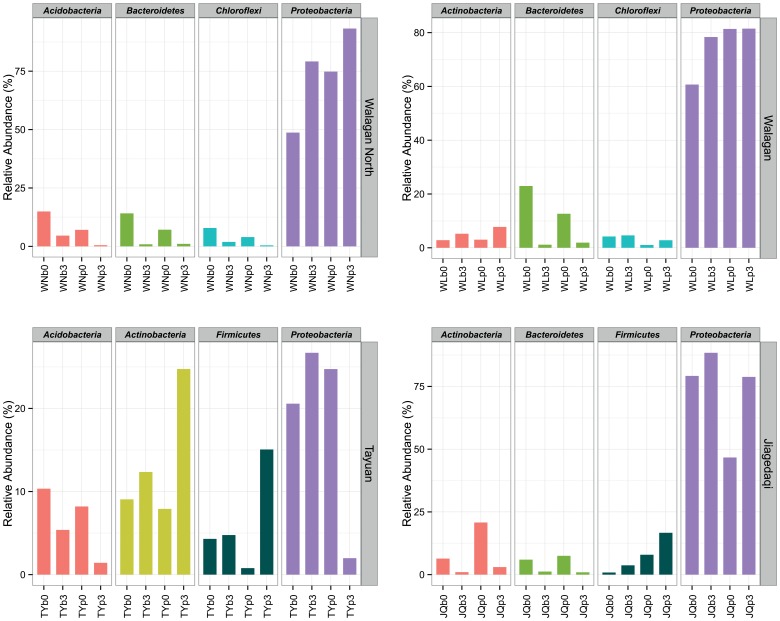
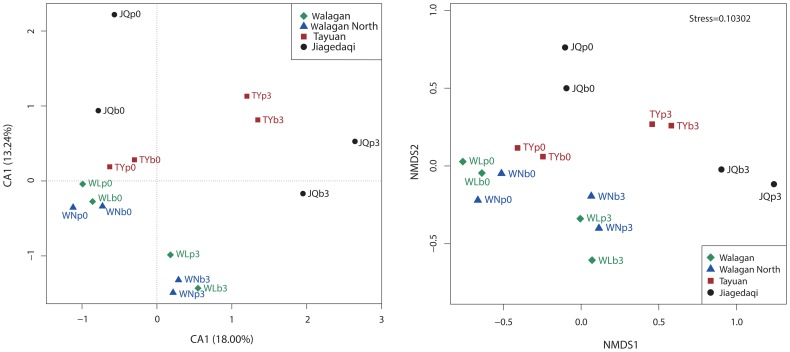
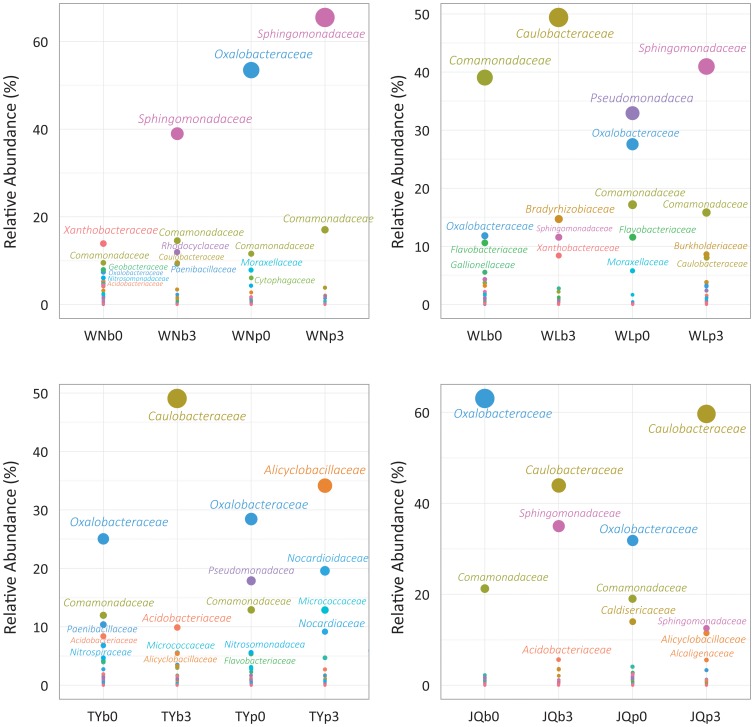
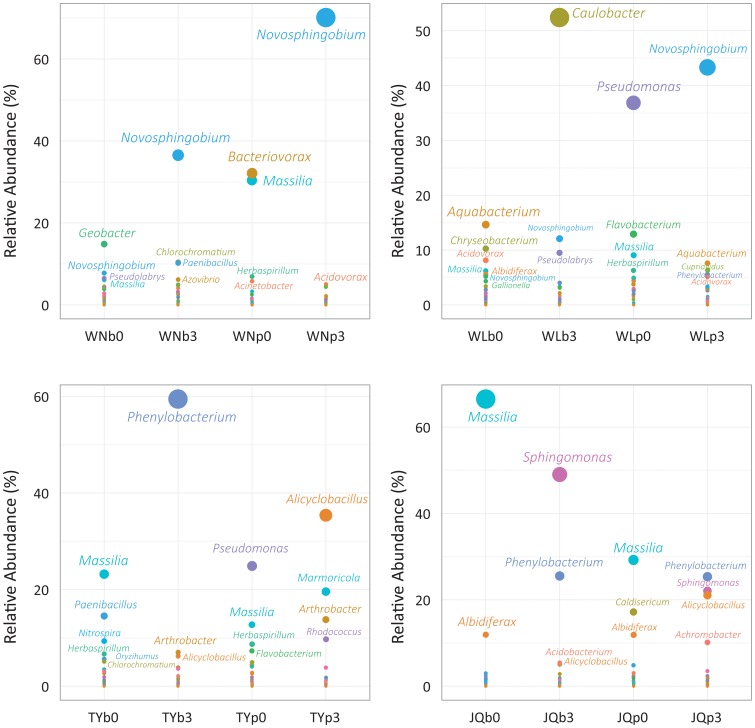
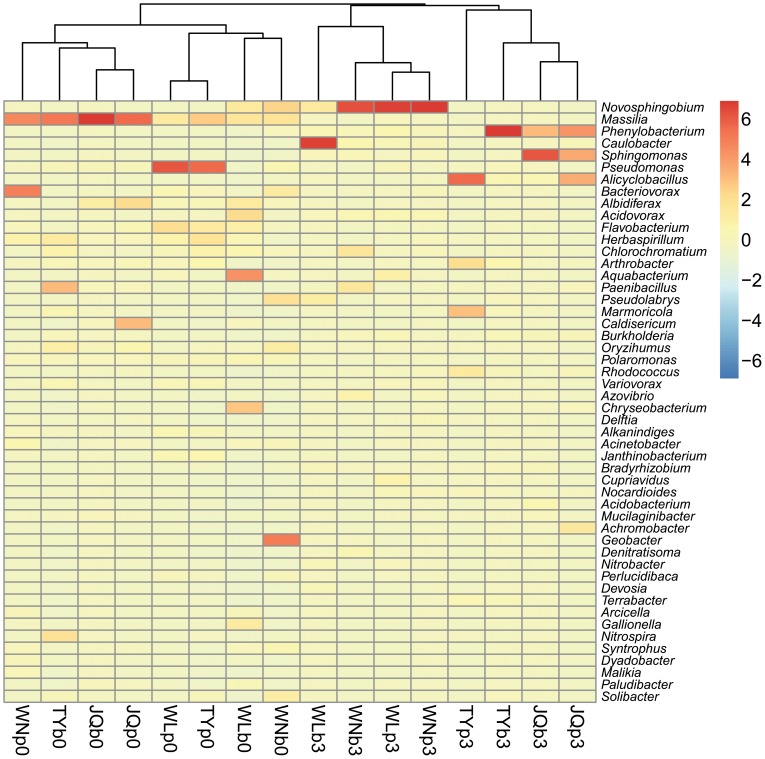
The buried China-Russia Crude Oil Pipeline (CRCOP) across the permafrost-associated cold ecosystem in northeastern China carries a risk of contamination to the deep active layers and upper permafrost in case of accidental rupture of the embedded pipeline or migration of oil spills. As many soil microbes are capable of degrading petroleum, knowledge about the intrinsic degraders and the microbial dynamics in the deep subsurface could extend our understanding of the application of in-situ bioremediation. In this study, an experiment was conducted to investigate the bacterial communities in response to simulated contamination to deep soil samples by using 454 pyrosequencing amplicons. The result showed that bacterial diversity was reduced after 8-weeks contamination. A shift in bacterial community composition was apparent in crude oil-amended soils with Proteobacteria (esp. α-subdivision) being the dominant phylum, together with Actinobacteria and Firmicutes. The contamination led to enrichment of indigenous bacterial taxa like Novosphingobium, Sphingobium, Caulobacter, Phenylobacterium, Alicylobacillus and Arthrobacter, which are generally capable of degrading polycyclic aromatic hydrocarbons (PAHs). The community shift highlighted the resilience of PAH degraders and their potential for in-situ degradation of crude oil under favorable conditions in the deep soils.
穿越中国东北多年冻土相关寒冷生态系统的中俄原油管道(CRCOP),一旦埋地管道意外破裂或原油泄漏迁移,存在污染深层活动层和上部多年冻土的风险。由于许多土壤微生物能够降解石油,了解深层地下的固有降解菌和微生物动态,有助于我们深入理解原位生物修复的应用。在本研究中,通过454焦磷酸测序扩增子,对模拟深层土壤样本污染后的细菌群落进行了实验研究。结果表明,污染8周后细菌多样性降低。在原油污染土壤中,细菌群落组成发生明显变化,变形菌门(尤其是α-亚门)为优势菌门,同时还有放线菌门和厚壁菌门。污染导致了诺卡氏菌属、鞘氨醇单胞菌属、柄杆菌属、苯基杆菌属、 Alicylobacillus和节杆菌属等本土细菌类群的富集,这些细菌通常能够降解多环芳烃(PAHs)。群落变化突出了PAH降解菌的恢复力及其在深层土壤有利条件下原位降解原油的潜力。