Andolfo Giuseppe, Ferriello Francesca, Tardella Luca, Ferrarini Alberto, Sigillo Loredana, Frusciante Luigi, Ercolano Maria Raffaella
Department of Agriculture Sciences, University of Naples 'Federico II', Portici, Italy.
Department of Statistical Sciences, University of Rome 'La Sapienza', Rome, Italy.
PLoS One. 2014 May 7;9(5):e94963. doi: 10.1371/journal.pone.0094963. eCollection 2014.
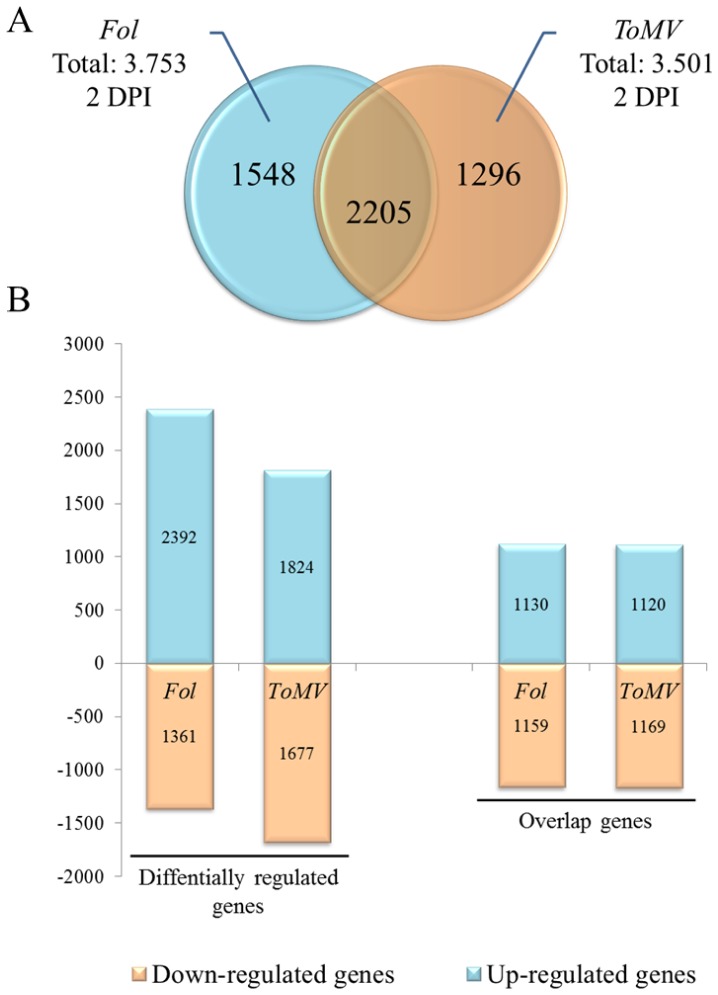
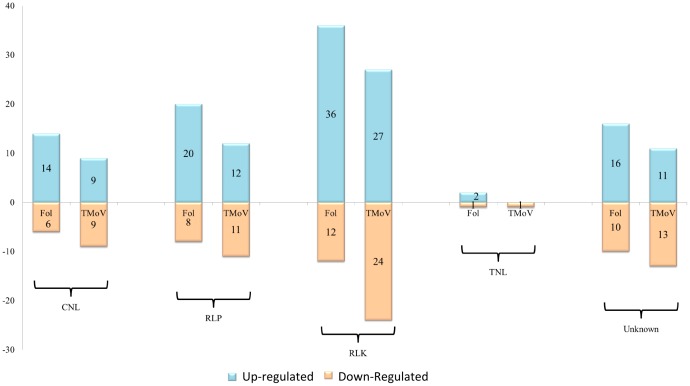
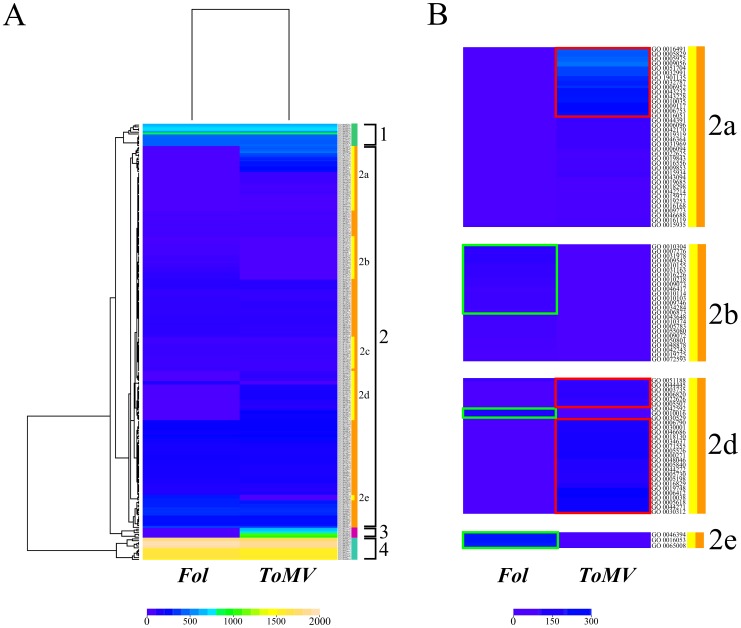
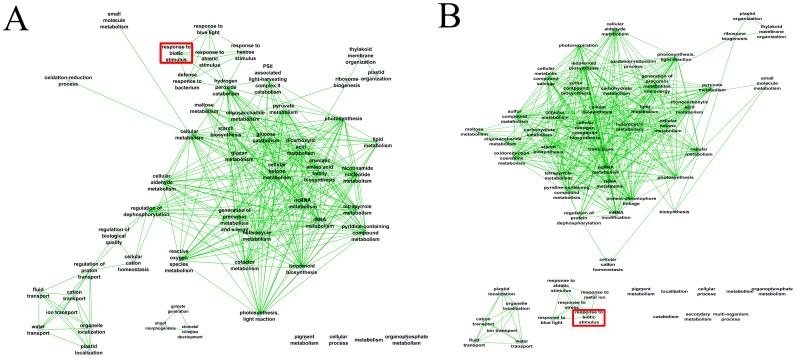
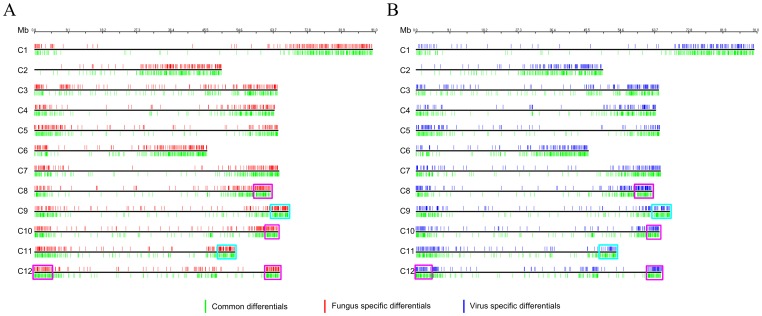
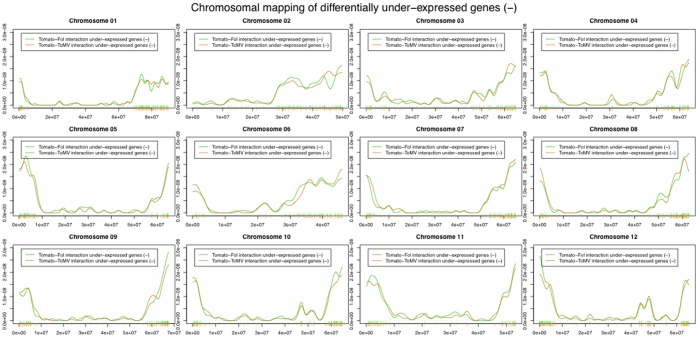
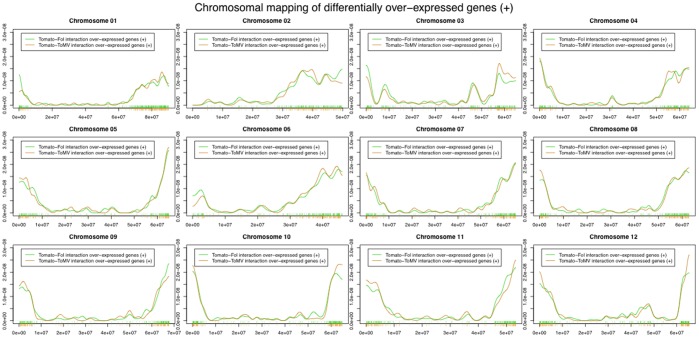
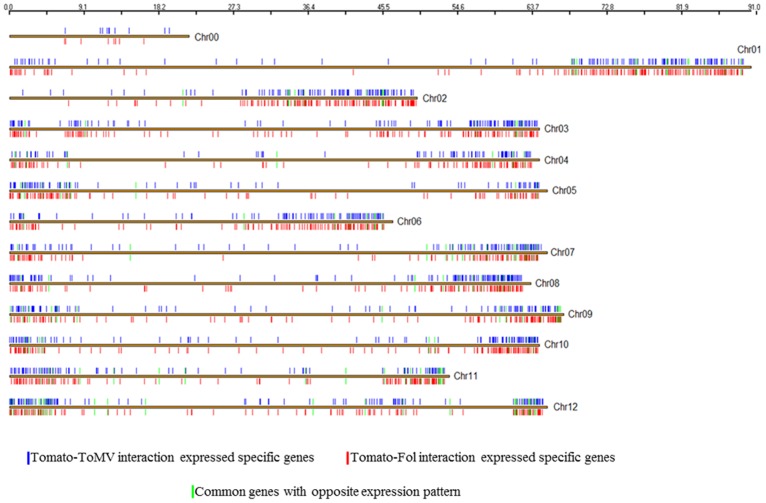
Since gene expression approaches constitute a starting point for investigating plant-pathogen systems, we performed a transcriptional analysis to identify a set of genes of interest in tomato plants infected with F. oxysporum f. sp. lycopersici (Fol) and Tomato Mosaic Virus (ToMV). Differentially expressed tomato genes upon inoculation with Fol and ToMV were identified at two days post-inoculation. A large overlap was found in differentially expressed genes throughout the two incompatible interactions. However, Gene Ontology enrichment analysis evidenced specific categories in both interactions. Response to ToMV seems more multifaceted, since more than 70 specific categories were enriched versus the 30 detected in Fol interaction. In particular, the virus stimulated the production of an invertase enzyme that is able to redirect the flux of carbohydrates, whereas Fol induced a homeostatic response to prevent the fungus from killing cells. Genomic mapping of transcripts suggested that specific genomic regions are involved in resistance response to pathogen. Coordinated machinery could play an important role in prompting the response, since 60% of pathogen receptor genes (NB-ARC-LRR, RLP, RLK) were differentially regulated during both interactions. Assessment of genomic gene expression patterns could help in building up models of mediated resistance responses.
由于基因表达方法是研究植物-病原体系统的起点,我们进行了转录分析,以确定在感染尖孢镰刀菌番茄专化型(Fol)和番茄花叶病毒(ToMV)的番茄植株中一组感兴趣的基因。在接种后两天,鉴定出接种Fol和ToMV后番茄中差异表达的基因。在这两种不相容的相互作用中,差异表达基因存在大量重叠。然而,基因本体富集分析证明了两种相互作用中的特定类别。对ToMV的反应似乎更为多面,因为与在Fol相互作用中检测到的30个特定类别相比,有70多个特定类别得到了富集。特别是,病毒刺激了一种能够改变碳水化合物通量的转化酶的产生,而Fol诱导了一种稳态反应以防止真菌杀死细胞。转录本的基因组图谱表明,特定的基因组区域参与了对病原体的抗性反应。协调机制可能在引发反应中起重要作用,因为60%的病原体受体基因(NB-ARC-LRR、RLP、RLK)在两种相互作用中均受到差异调节。评估基因组基因表达模式有助于建立介导抗性反应的模型。