Departamento de Química Biológica, Facultad de Ciencias Exactas y Naturales, Universidad de Buenos Aires, Pabellón II, Buenos Aires C1428EHA, Argentina, INQUIMAE/UBA-CONICET, Facultad de Ciencias Exactas y Naturales, Universidad de Buenos Aires, Pabellón II, Buenos Aires C1428EHA, Argentina, Department of Physical Chemistry, Faculty of Pharmacy and Institute of Biomedicine (IBUB), University of Barcelona, Campus de l'Alimentació Torribera, Avgda. Prat de la Riba 171, Santa Coloma de Gramenet 08921, Spain, Department of Physical Chemistry, Faculty of Pharmacy and Institute of Biomedicine (IBUB), University of Barcelona, Avgda. Diagonal 643, Barcelona 08028, Spain and Catalan Institution for Research and Advanced Studies (ICREA), Passeig Lluís Companys 23, Barcelona 08010, Spain.
Database (Oxford). 2014 May 8;2014(0):bau035. doi: 10.1093/database/bau035. Print 2014.
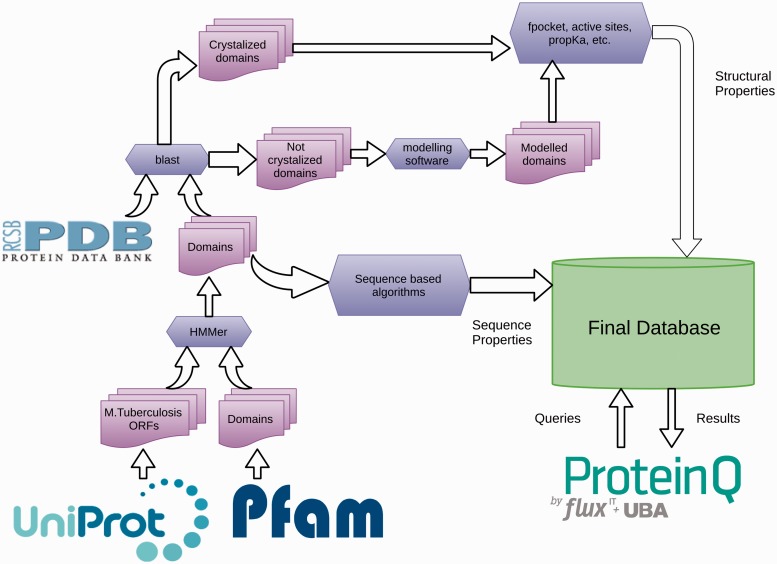
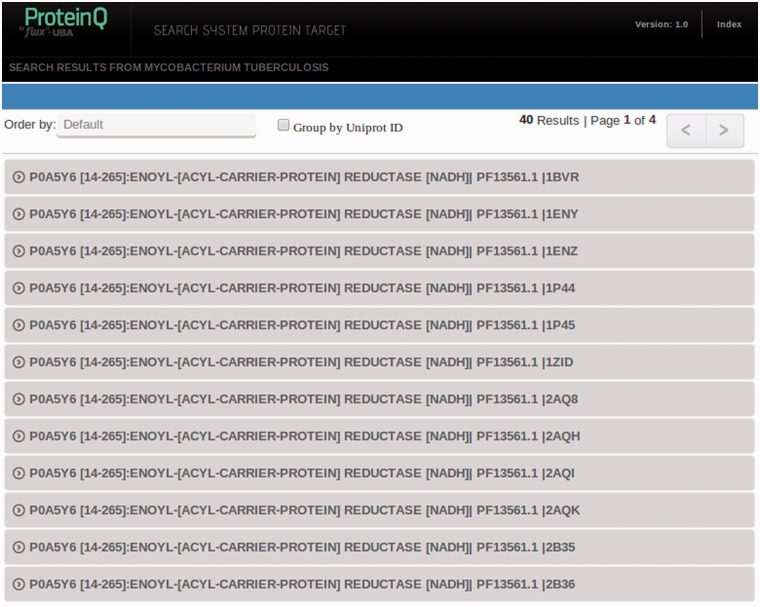
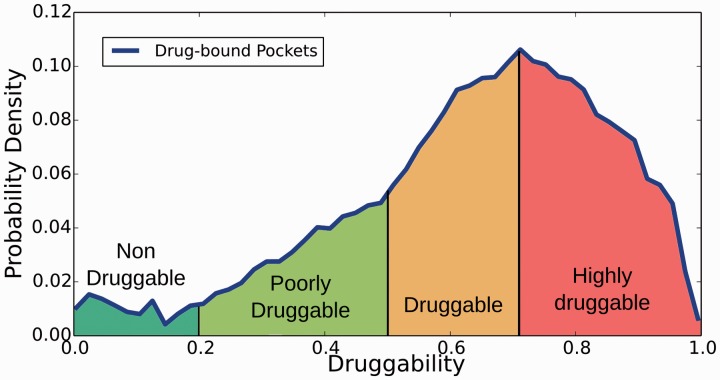
In 2012 an estimated 8.6 million people developed tuberculosis (TB) and 1.3 million died from the disease [including 320 000 deaths among human immunodeficiency virus (HIV)-positive people]. There is an urgent need for new anti-TB drugs owing to the following: the fact that current treatments have severe side effects, the increasing emergence of multidrug-resistant strains of Mycobacterium tuberculosis (Mtb), the negative drug-drug interactions with certain HIV (or other disease) treatments and the ineffectiveness against dormant Mtb. In this context we present here the TuberQ database, a novel resource for all researchers working in the field of drug development in TB. The main feature of TuberQ is to provide a druggability analysis of Mtb proteins in a consistent and effective manner, contributing to a better selection of potential drug targets for screening campaigns and the analysis of targets for structure-based drug design projects. The structural druggability analysis is combined with features related to the characteristics of putative inhibitor binding pockets and with functional and biological data of proteins. The structural analysis is performed on all available unique Mtb structures and high-quality structural homology-based models. This information is shown in an interactive manner, depicting the protein structure, the pockets and the associated characteristics for each protein. TuberQ also provides information about gene essentiality information, as determined from whole cell-based knockout experiments, and expression information obtained from microarray experiments done in different stress-related conditions. We hope that TuberQ will be a powerful tool for researchers working in TB and eventually will lead to the identification of novel putative targets and progresses in therapeutic activities. Database URL: http://tuberq.proteinq.com.ar/
2012 年,估计有 860 万人患上结核病(TB),130 万人死于该病[包括 32 万艾滋病毒(HIV)阳性人群]。由于以下原因,迫切需要新的抗结核药物:目前的治疗方法有严重的副作用,结核分枝杆菌(Mtb)多药耐药株的不断出现,与某些 HIV(或其他疾病)治疗的药物相互作用的负面影响,以及对休眠 Mtb 的无效性。在这种情况下,我们在这里介绍 TuberQ 数据库,这是一个为所有从事结核病药物开发研究的研究人员提供的新资源。TuberQ 的主要特点是以一致有效的方式提供 Mtb 蛋白的可药性分析,有助于更好地选择潜在的药物靶点进行筛选活动,并分析基于结构的药物设计项目的靶点。结构可药性分析与与假定抑制剂结合口袋的特征相关的特征以及与蛋白质的功能和生物学数据相结合。结构分析针对所有可用的独特 Mtb 结构和高质量的结构同源建模进行。该信息以交互方式显示,描绘了蛋白质结构、口袋和每个蛋白质的相关特征。TuberQ 还提供了有关基因必需性信息的信息,这些信息是从全细胞敲除实验中确定的,以及从不同应激相关条件下进行的微阵列实验中获得的表达信息。我们希望 TuberQ 将成为从事结核病研究的研究人员的有力工具,并最终将有助于确定新的潜在靶标并在治疗活动方面取得进展。数据库网址:http://tuberq.proteinq.com.ar/