
慢性乙肝患者的单核细胞在体外对乙肝表面抗原(HBsAg)和Toll样受体(TLR)产生反应,分泌细胞因子,且不受疾病阶段影响。
Monocytes from chronic HBV patients react in vitro to HBsAg and TLR by producing cytokines irrespective of stage of disease.
作者信息
Boltjes Arjan, Groothuismink Zwier M, van Oord Gertine W, Janssen Harry L A, Woltman Andrea M, Boonstra André
机构信息
Department of Gastroenterology and Hepatology, Erasmus MC University Medical Center, Rotterdam, The Netherlands.
Department of Gastroenterology and Hepatology, Erasmus MC University Medical Center, Rotterdam, The Netherlands; Liver Clinic University Health Network, Division of Gastroenterology, University of Toronto, Toronto, ON, Canada.
出版信息
PLoS One. 2014 May 13;9(5):e97006. doi: 10.1371/journal.pone.0097006. eCollection 2014.
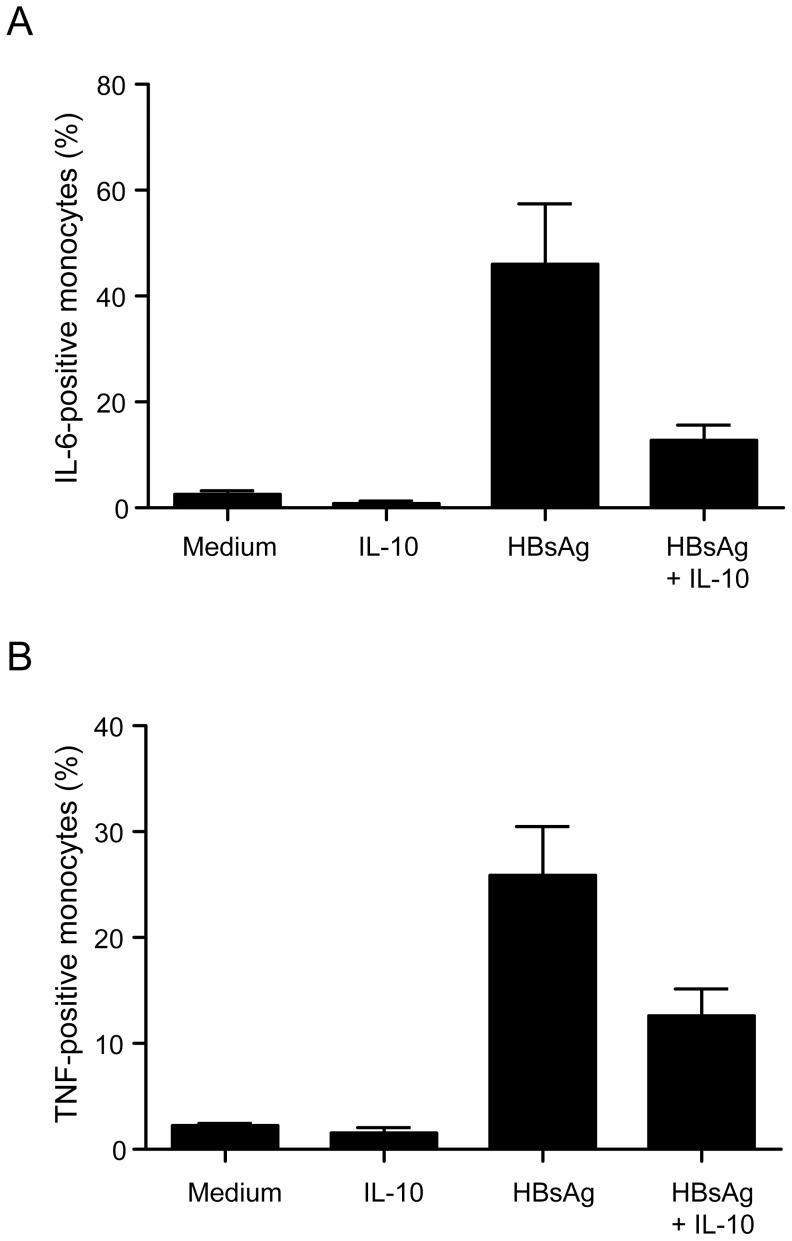
Individuals who are chronically infected with the hepatitis B virus (HBV) are highly heterogeneous with respect to serum levels of HBV DNA, HBV particles and viral proteins. Since circulating leukocytes, such as monocytes, are constantly exposed to these viral components, it is likely that the functionality of these cells is affected. However, at present, little information is available on the consequences of the interaction between monocytes and viral components. Therefore, we examined the in vitro effects of HBV surface antigen (HBsAg) on monocytes and evaluated whether these effects were reflected in vivo. We observed that in vitro HBsAg exposure of monocytes induced robust production of IL-6 and TNF. However, between chronic HBV patients with distinct levels of serum HBsAg, HBV early antigen (HBeAg), and HBV DNA, TLR-induced monocyte cytokine production did not differ. Importantly, HBsAg-induced cytokine production by monocytes was similar between patients and healthy controls showing that earlier in vivo exposure to HBsAg does not affect the in vitro response. Additionally, we show that IL-10 is able to inhibit cytokine production by HBsAg-induced monocytes. In conclusion, we demonstrate that monocytes can recognize and respond to HBsAg, resulting in vigorous pro-inflammatory cytokine production in vitro. However, phenotype and function of the monocyte compartment in chronic HBV patients are not influenced by differences in levels of serum viral components, suggesting that regulatory mechanisms are active to avoid excessive in vivo monocyte activation.
慢性感染乙型肝炎病毒(HBV)的个体在血清HBV DNA、HBV颗粒和病毒蛋白水平方面具有高度异质性。由于循环白细胞,如单核细胞,不断暴露于这些病毒成分,这些细胞的功能很可能受到影响。然而,目前关于单核细胞与病毒成分之间相互作用的后果的信息很少。因此,我们研究了HBV表面抗原(HBsAg)对单核细胞的体外作用,并评估了这些作用在体内是否有所体现。我们观察到,单核细胞在体外暴露于HBsAg会诱导IL-6和TNF的大量产生。然而,在血清HBsAg、HBV e抗原(HBeAg)和HBV DNA水平不同的慢性HBV患者中,Toll样受体(TLR)诱导的单核细胞细胞因子产生并无差异。重要的是,患者和健康对照中单核细胞由HBsAg诱导的细胞因子产生相似,这表明体内早期暴露于HBsAg并不影响体外反应。此外,我们表明IL-10能够抑制HBsAg诱导的单核细胞产生细胞因子。总之,我们证明单核细胞能够识别并对HBsAg作出反应,在体外导致强烈的促炎细胞因子产生。然而,慢性HBV患者单核细胞区室的表型和功能不受血清病毒成分水平差异的影响,这表明调节机制在积极发挥作用以避免体内单核细胞过度激活。


 Zotero 插件