Greco Maria, Sáez Claudio A, Brown Murray T, Bitonti Maria Beatrice
Department of Biology, Ecology and Earth Sciences, Laboratory of Plant Cyto-physiology, University of Calabria, Arcavacata di Rende (Cosenza), Italy.
School of Marine Sciences and Engineering, Plymouth University, Drake Circus, Plymouth, United Kingdom; Departamento de Biología, Facultad de Química y Biología, Universidad de Santiago de Chile, Santiago, Chile.
PLoS One. 2014 May 27;9(5):e96470. doi: 10.1371/journal.pone.0096470. eCollection 2014.
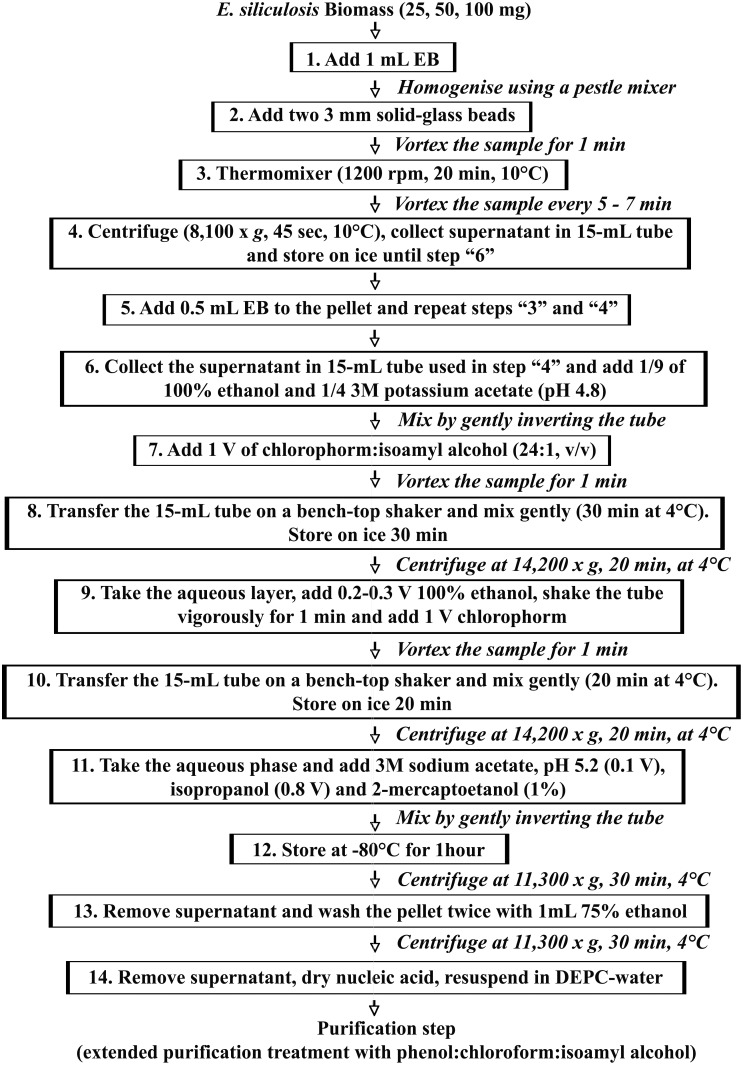
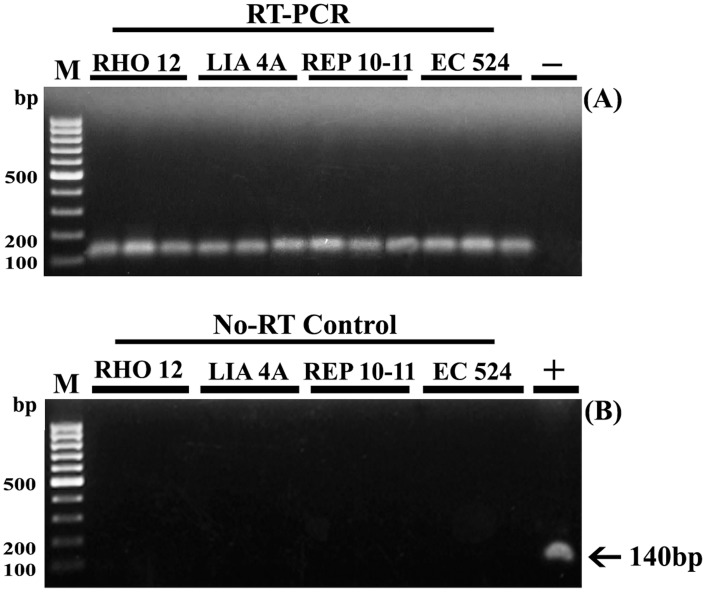
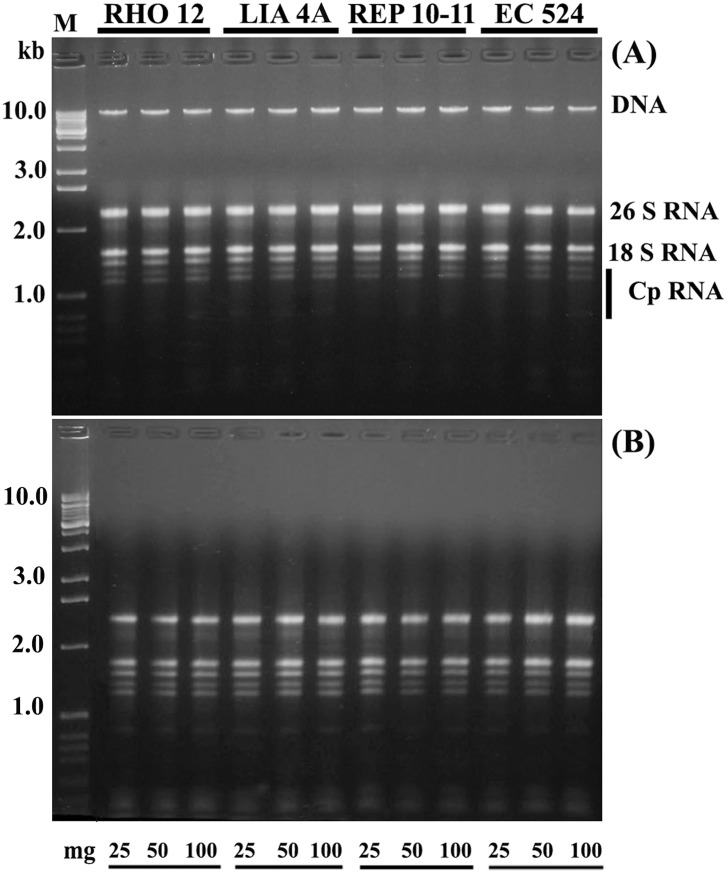
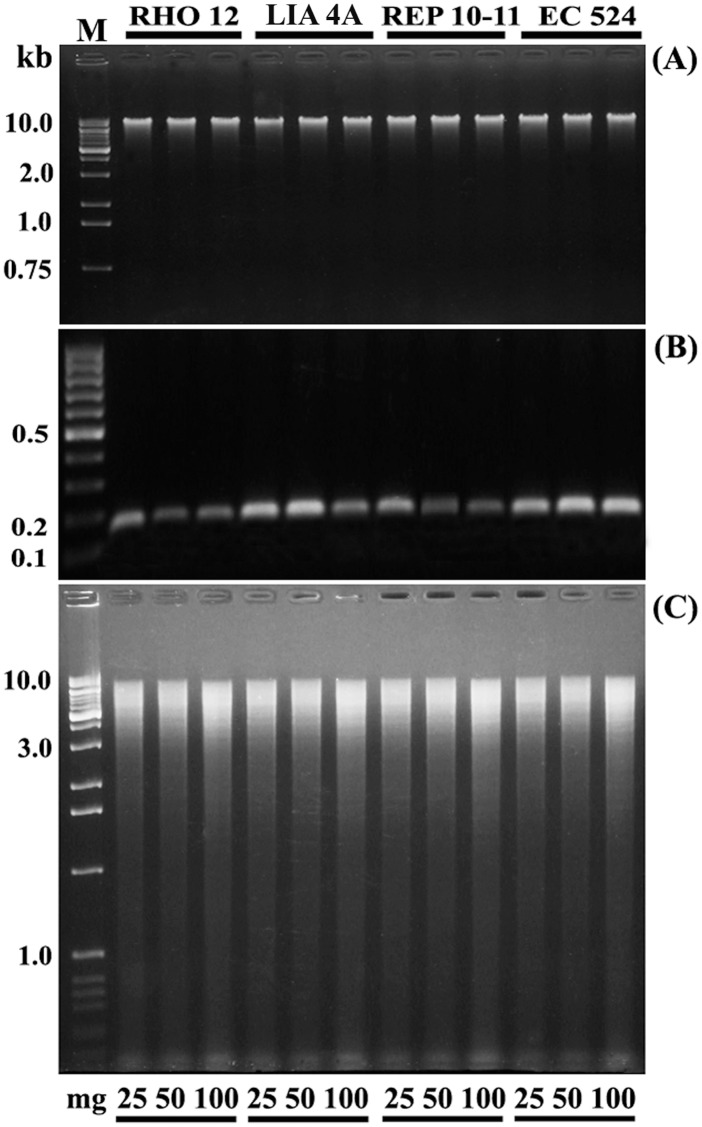
The brown seaweed Ectocarpus siliculosus is an emerging model species distributed worldwide in temperate coastal ecosystems. Over 1500 strains of E. siliculosus are available in culture from a broad range of geographic locations and ecological niches. To elucidate the molecular mechanisms underlying its capacity to cope with different environmental and biotic stressors, genomic and transcriptomic studies are necessary; this requires the co-isolation of genomic DNA and total RNA. In brown algae, extraction of nucleic acids is hindered by high concentrations of secondary metabolites that co-precipitate with nucleic acids. Here, we propose a reliable, rapid and cost-effective procedure for the co-isolation of high-quality nucleic acids using small quantities of biomass (25-, 50- and 100 mg) from strains of E. siliculosus (RHO12; LIA4A; EC524 and REP10-11) isolated from sites with different environmental conditions. The procedure employs a high pH extraction buffer (pH 9.5) which contains 100 mM Tris-HCl and 150 mM NaCl, with the addition of 5 mM DTT and 1% sarkosyl to ensure maximum solubility of nucleic acids, effective inhibition of nuclease activity and removal of interfering contaminants (e.g. polysaccharides, polyphenols). The use of sodium acetate together with isopropanol shortened precipitation time and enhanced the yields of DNA/RNA. A phenol:chlorophorm:isoamyl alcohol step was subsequently used to purify the nucleic acids. The present protocol produces high yields of nucleic acids from only 25 mg of fresh algal biomass (0.195 and 0.284 µg mg(-1) fresh weigh of RNA and DNA, respectively) and the high quality of the extracted nucleic acids was confirmed through spectrophotometric and electrophoretic analyses. The isolated RNA can be used directly in downstream applications such as RT-PCR and the genomic DNA was suitable for PCR, producing reliable restriction enzyme digestion patterns. Co-isolation of DNA/RNA from different strains indicates that this method is likely to have wider applications for intra- and inter-specific studies on other brown algae.
褐藻绳藻是一种新兴的模式物种,分布于全球温带沿海生态系统。目前有超过1500个绳藻菌株可用于培养,它们来自广泛的地理位置和生态位。为了阐明其应对不同环境和生物胁迫能力的分子机制,有必要开展基因组和转录组研究;这需要同时分离基因组DNA和总RNA。在褐藻中,高浓度的次生代谢产物会与核酸共沉淀,从而阻碍核酸的提取。在此,我们提出了一种可靠、快速且经济高效的方法,用于从分离自不同环境条件地点的绳藻(RHO12;LIA4A;EC524和REP10-11)菌株中,使用少量生物量(25毫克、50毫克和100毫克)同时分离高质量核酸。该方法采用高pH提取缓冲液(pH 9.5),其中含有100 mM Tris-HCl和150 mM NaCl,并添加5 mM DTT和1% Sarkosyl,以确保核酸的最大溶解度、有效抑制核酸酶活性并去除干扰污染物(如多糖、多酚)。使用醋酸钠和异丙醇可缩短沉淀时间并提高DNA/RNA的产量。随后采用苯酚:氯仿:异戊醇步骤纯化核酸。本方案仅从25毫克新鲜藻类生物量中就能获得高产核酸(RNA和DNA的鲜重分别为0.195和0.284微克/毫克),并且通过分光光度法和电泳分析证实了所提取核酸的高质量。分离出的RNA可直接用于下游应用,如RT-PCR,而基因组DNA适用于PCR,可产生可靠的限制性酶切图谱。从不同菌株中同时分离DNA/RNA表明,该方法可能在其他褐藻的种内和种间研究中有更广泛的应用。