Ye Panpan, Shen Ling, Jiang Wei, Ye Ying, Chen Chen-Tung Arthur, Wu Xiaodan, Wang Kuiwu, Wu Bin
Eye Center, The Second Affiliated Hospital, Zhejiang University School of Medicine, Hangzhou 310000, China.
Ocean College, Zhejiang University, Hangzhou 310058, China.
Mar Drugs. 2014 May 28;12(6):3203-17. doi: 10.3390/md12063203.
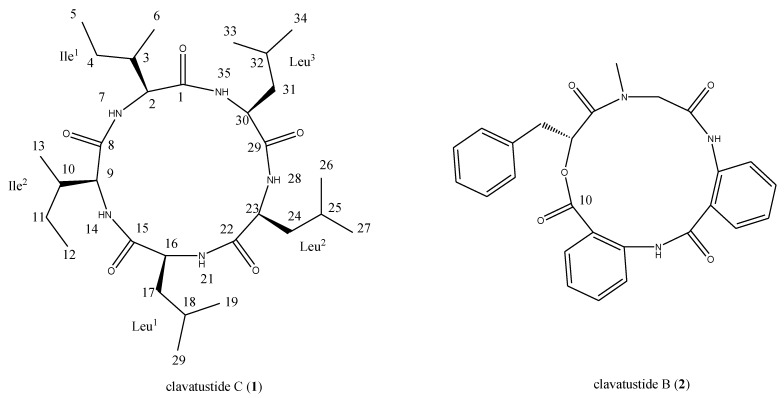
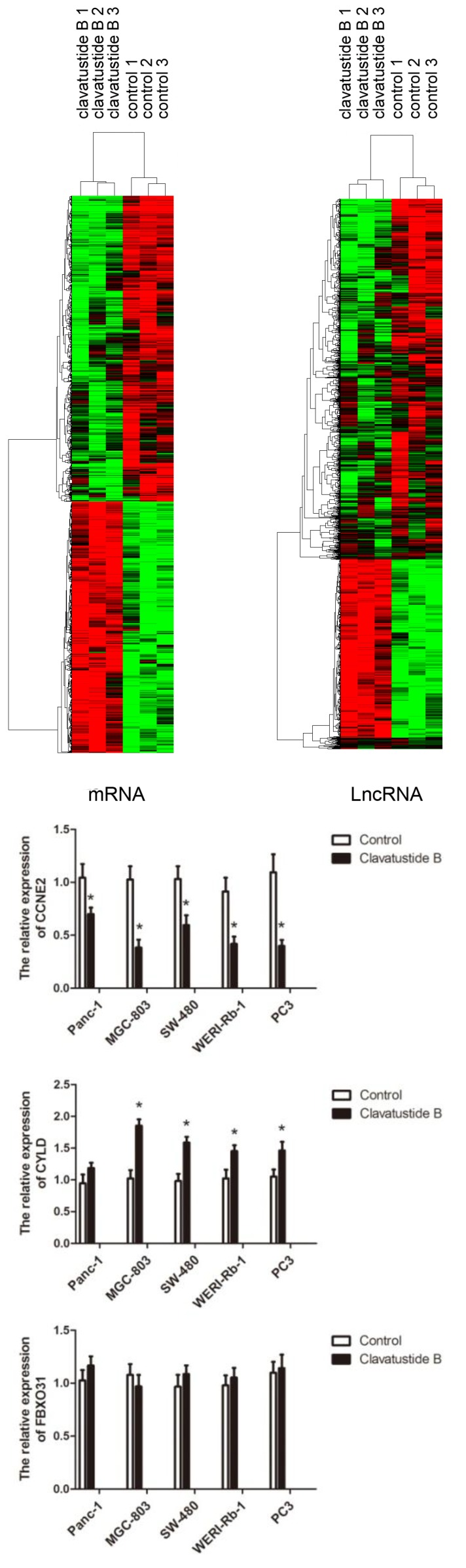
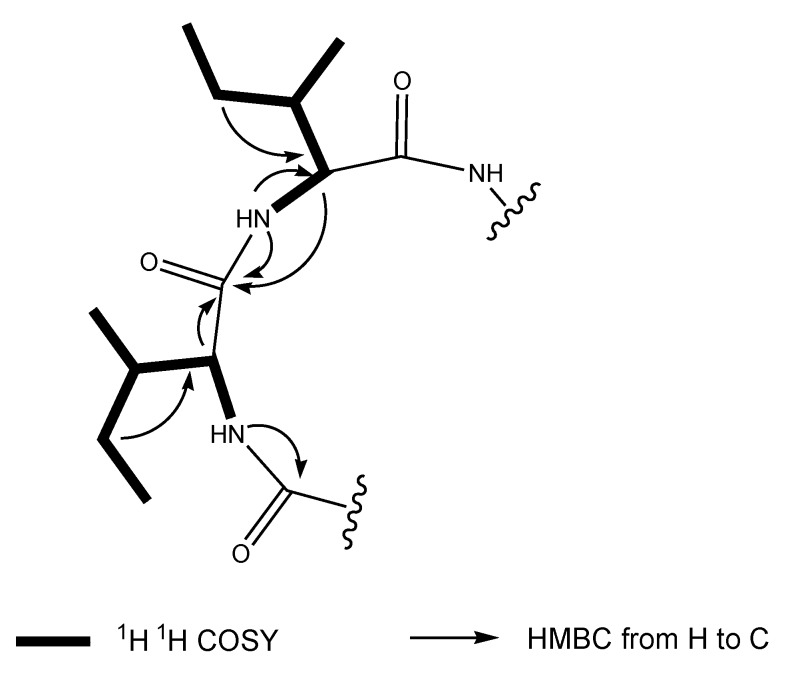
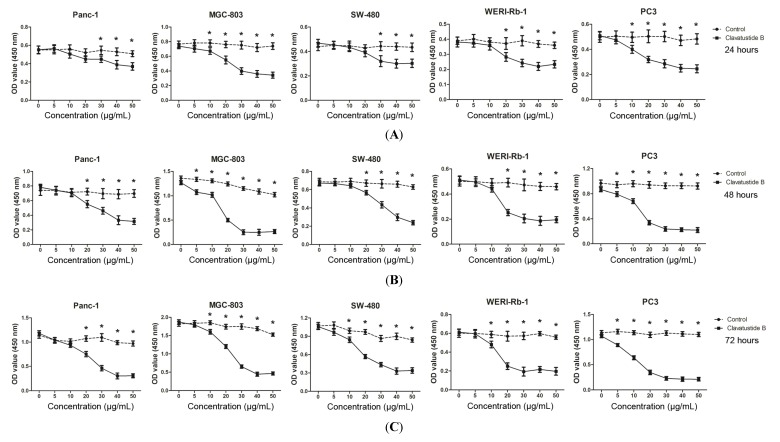
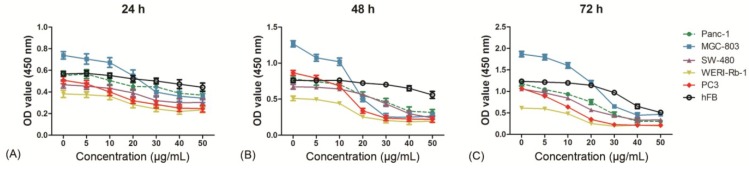
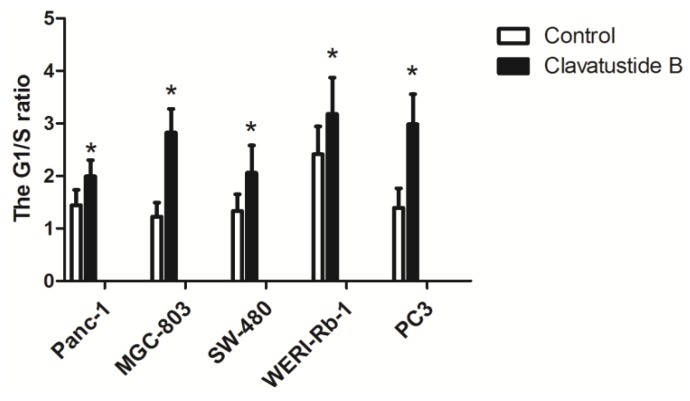
A naturally new cyclopeptide, clavatustide C, was produced as a stress metabolite in response to abiotic stress elicitation by one of the hydrothermal vent fluid components Zn in the cultured mycelia of Aspergillus clavatus C2WU, which were isolated from Xenograpsus testudinatus. X. testudinatus lives at extreme, toxic habitat around the sulphur-rich hydrothermal vents in Taiwan Kueishantao. The known compound clavatustide B was also isolated and purified. This is the first example of a new hydrothermal vent microbial secondary metabolite produced in response to abiotic Zn treatment. The structures were established by spectroscopic means. The regulation of G1-S transition in hepatocellular carcinoma cell lines by clavatustide B was observed in our previous study. The purpose of the present study was to verify these results in other types of cancer cell lines and elucidate the possible molecular mechanism for the anti-cancer activities of clavatustide B. In different human cancer cell lines, including pancreatic cancer (Panc-1), gastric cancer (MGC-803), colorectal cancer (SW-480), retinoblastoma (WERI-Rb-1) and prostate cancer (PC3), clavatustide B efficiently suppressed cell proliferations in a dose-dependent manner. Although different cancer cell lines presented variety in Max effect dose and IC50 dose, all cancer cell lines showed a lower Max effect dose and IC50 dose compared with human fibroblasts (hFB) (p < 0.05). Moreover, significant accumulations in G1 phases and a reduction in S phases (p < 0.05) were observed under clavatustide B treatment. The expression levels of 2622 genes including 39 cell cycle-associated genes in HepG2 cells were significantly altered by the treatment with 15 μg/mL clavatustide B after 48 h. CCNE2 (cyclin E2) was proved to be the key regulator of clavatustide B-induced G1-S transition blocking in several cancer cell lines by using real-time PCR.
一种天然的新环肽——棒曲霉素C,是棒曲霉C2WU的培养菌丝体在热液喷口流体成分之一锌的非生物胁迫诱导下产生的应激代谢产物,该菌株是从龟纹瓢蟹中分离得到的。龟纹瓢蟹生活在台湾龟山岛富含硫的热液喷口周围极端、有毒的栖息地。已知化合物棒曲霉素B也被分离和纯化。这是首例响应非生物锌处理产生的新型热液喷口微生物次级代谢产物。其结构通过光谱手段确定。在我们之前的研究中观察到棒曲霉素B对肝癌细胞系G1-S期转换的调控作用。本研究的目的是在其他类型的癌细胞系中验证这些结果,并阐明棒曲霉素B抗癌活性的可能分子机制。在不同的人类癌细胞系中,包括胰腺癌(Panc-1)、胃癌(MGC-803)、结直肠癌(SW-480)、视网膜母细胞瘤(WERI-Rb-1)和前列腺癌(PC3),棒曲霉素B以剂量依赖的方式有效抑制细胞增殖。尽管不同癌细胞系在最大效应剂量和IC50剂量方面存在差异,但与人类成纤维细胞(hFB)相比,所有癌细胞系的最大效应剂量和IC50剂量均较低(p<0.05)。此外,在棒曲霉素B处理下,观察到G1期显著积累,S期减少(p<0.05)。用15μg/mL棒曲霉素B处理HepG2细胞48小时后,包括39个细胞周期相关基因在内的2622个基因的表达水平发生了显著变化。通过实时PCR证明,CCNE2(细胞周期蛋白E2)是棒曲霉素B诱导多种癌细胞系G1-S期转换阻滞的关键调节因子。