Onozuka Daisuke
Department of Planning Information and Administration, Fukuoka Institute of Health and Environmental Sciences, 39 Mukaizano, Dazaifu-shi, Fukuoka 818-0135, Japan.
Sci Rep. 2014 Jun 3;4:5157. doi: 10.1038/srep05157.
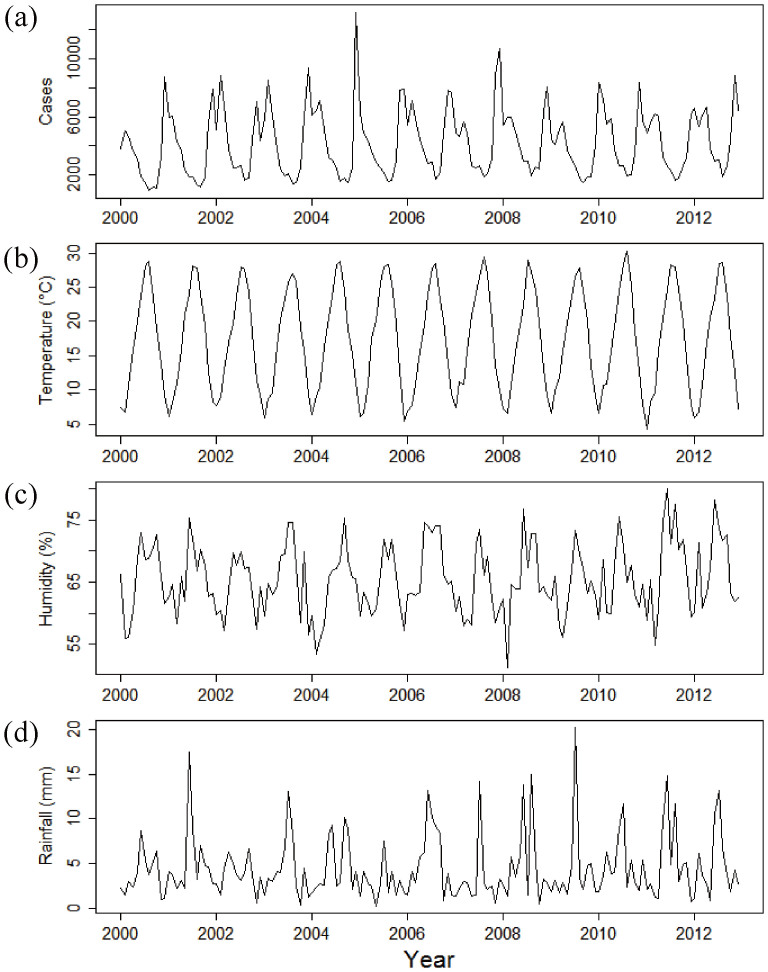
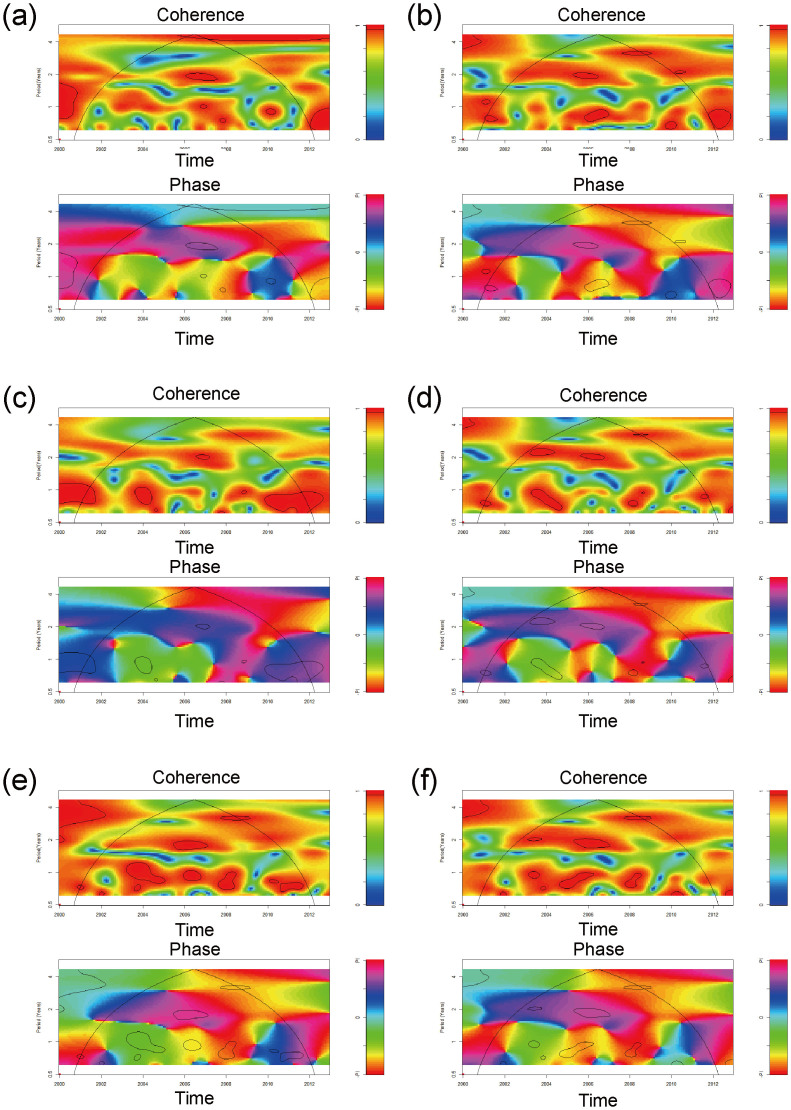
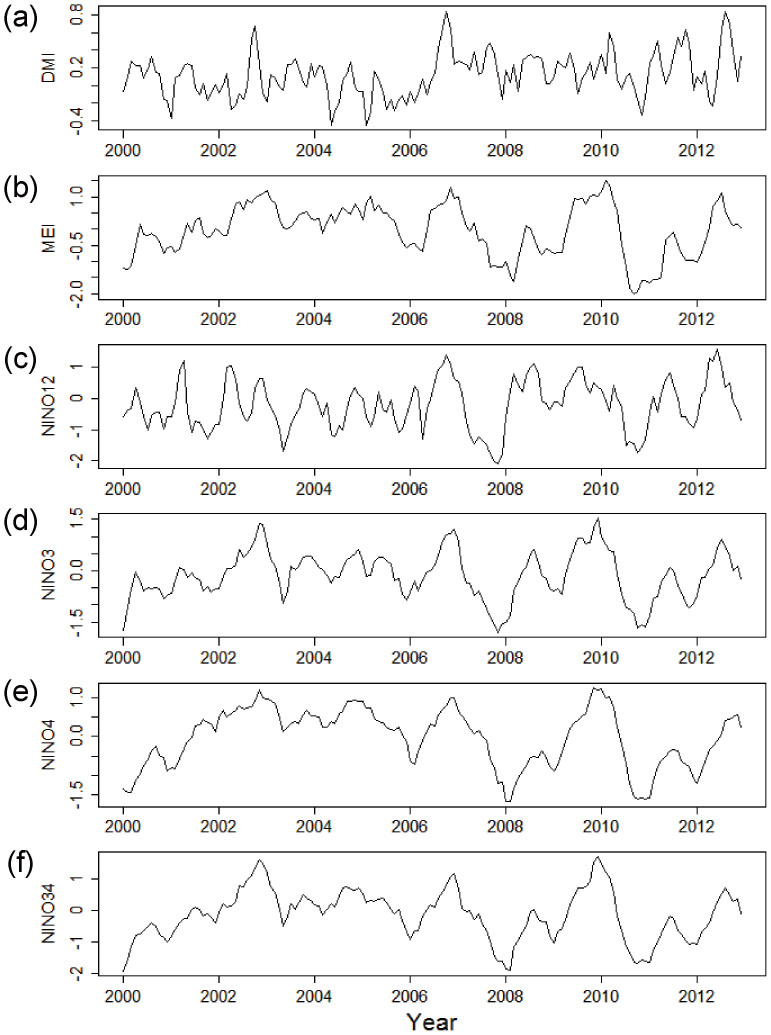
Local weather factors are widely considered to influence the transmission of infectious gastroenteritis. Few studies, however, have examined the non-stationary relationships between global climatic factors and transmission of infectious gastroenteritis. We analyzed monthly data for cases of infectious gastroenteritis in Fukuoka, Japan from 2000 to 2012 using cross-wavelet coherency analysis to assess the pattern of associations between indices for the Indian Ocean Dipole (IOD) and El Niño Southern Oscillation (ENSO). Infectious gastroenteritis cases were non-stationary and significantly associated with the IOD and ENSO (Multivariate ENSO Index [MEI], Niño 1 + 2, Niño 3, Niño 4, and Niño 3.4) for a period of approximately 1 to 2 years. This association was non-stationary and appeared to have a major influence on the synchrony of infectious gastroenteritis transmission. Our results suggest that non-stationary patterns of association between global climate factors and incidence of infectious gastroenteritis should be considered when developing early warning systems for epidemics of infectious gastroenteritis.
人们普遍认为当地气候因素会影响感染性肠胃炎的传播。然而,很少有研究考察全球气候因素与感染性肠胃炎传播之间的非平稳关系。我们使用交叉小波相干分析,分析了2000年至2012年日本福冈感染性肠胃炎病例的月度数据,以评估印度洋偶极子(IOD)和厄尔尼诺南方涛动(ENSO)指数之间的关联模式。感染性肠胃炎病例呈非平稳状态,并且在大约1至2年的时间里与IOD和ENSO(多变量ENSO指数[MEI]、尼诺1 + 2、尼诺3、尼诺4和尼诺3.4)显著相关。这种关联是非平稳的,并且似乎对感染性肠胃炎传播的同步性有重大影响。我们的结果表明,在制定感染性肠胃炎疫情预警系统时,应考虑全球气候因素与感染性肠胃炎发病率之间的非平稳关联模式。