Sterzer Philipp, Stein Timo, Ludwig Karin, Rothkirch Marcus, Hesselmann Guido
Visual Perception Laboratory, Department of Psychiatry and Psychotherapy, Charité Universitätsmedizin Berlin, Germany.
Center for Mind/Brain Sciences, University of Trento Rovereto, Italy.
Front Psychol. 2014 May 19;5:453. doi: 10.3389/fpsyg.2014.00453. eCollection 2014.
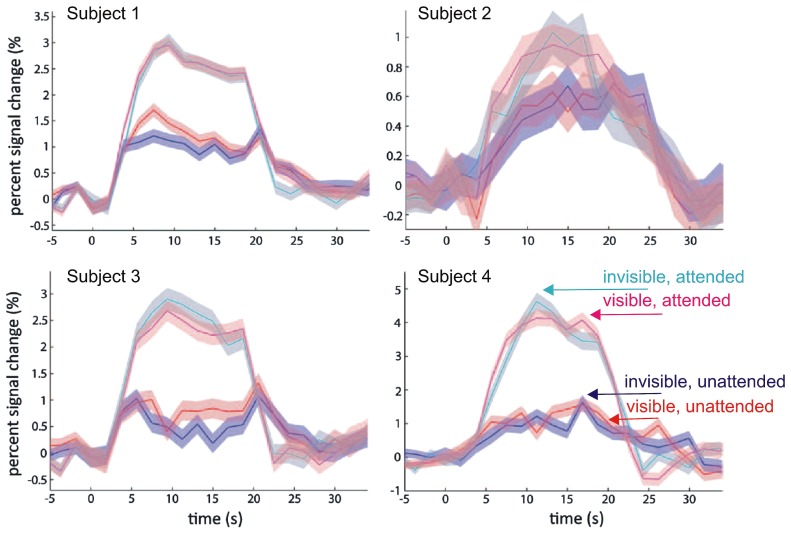
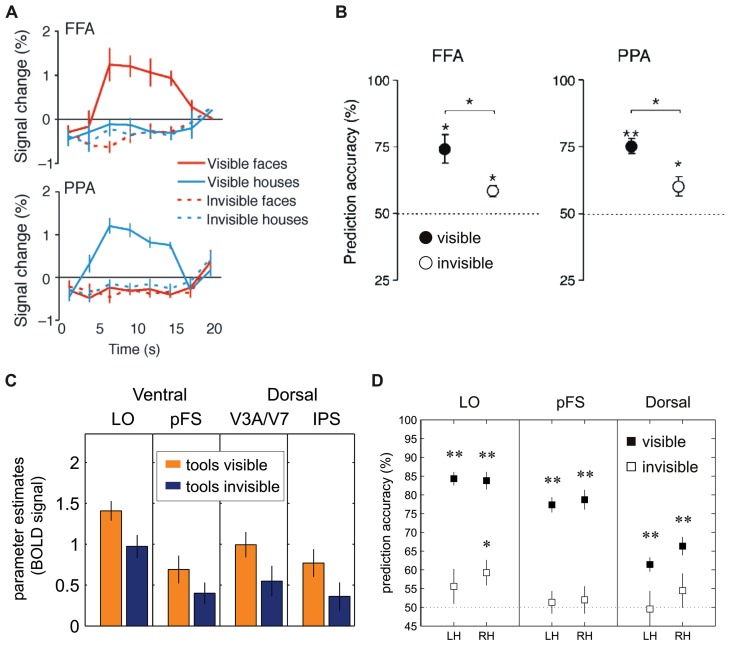
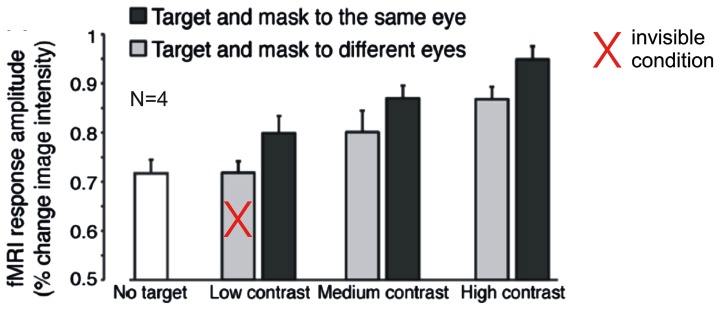
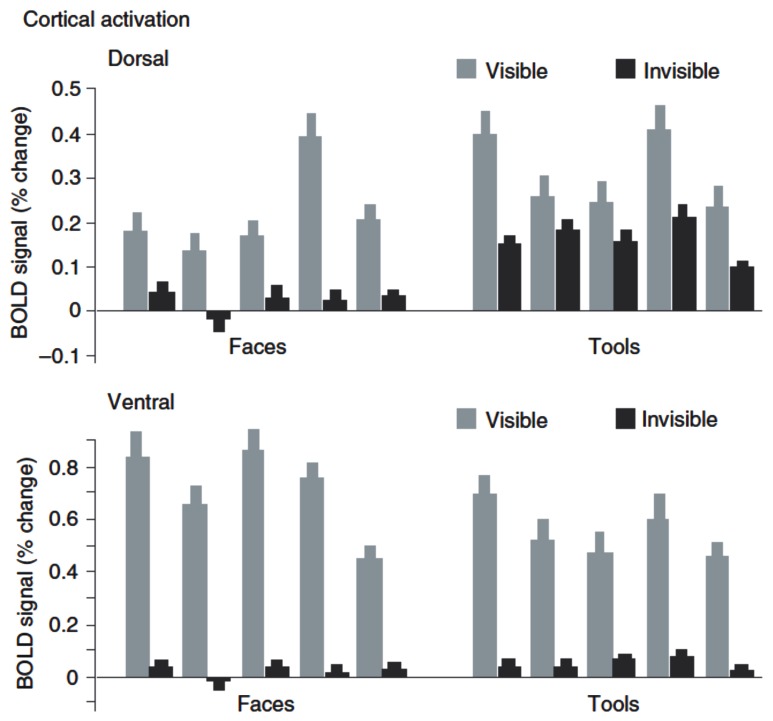
When dissimilar stimuli are presented to the two eyes, only one stimulus dominates at a time while the other stimulus is invisible due to interocular suppression. When both stimuli are equally potent in competing for awareness, perception alternates spontaneously between the two stimuli, a phenomenon called binocular rivalry. However, when one stimulus is much stronger, e.g., due to higher contrast, the weaker stimulus can be suppressed for prolonged periods of time. A technique that has recently become very popular for the investigation of unconscious visual processing is continuous flash suppression (CFS): High-contrast dynamic patterns shown to one eye can render a low-contrast stimulus shown to the other eye invisible for up to minutes. Studies using CFS have produced new insights but also controversies regarding the types of visual information that can be processed unconsciously as well as the neural sites and the relevance of such unconscious processing. Here, we review the current state of knowledge in regard to neural processing of interocularly suppressed information. Focusing on recent neuroimaging findings, we discuss whether and to what degree such suppressed visual information is processed at early and more advanced levels of the visual processing hierarchy. We review controversial findings related to the influence of attention on early visual processing under interocular suppression, the putative differential roles of dorsal and ventral areas in unconscious object processing, and evidence suggesting privileged unconscious processing of emotional and other socially relevant information. On a more general note, we discuss methodological and conceptual issues, from practical issues of how unawareness of a stimulus is assessed to the overarching question of what constitutes an adequate operational definition of unawareness. Finally, we propose approaches for future research to resolve current controversies in this exciting research area.
当向双眼呈现不同的刺激时,一次只有一种刺激占主导,而另一种刺激由于双眼抑制而不可见。当两种刺激在争夺意识方面同样有效时,感知会在两种刺激之间自发交替,这种现象称为双眼竞争。然而,当一种刺激强得多时,例如由于对比度更高,较弱的刺激可能会被长时间抑制。一种最近在无意识视觉加工研究中非常流行的技术是连续闪光抑制(CFS):向一只眼睛呈现的高对比度动态图案可以使向另一只眼睛呈现的低对比度刺激在长达数分钟内不可见。使用CFS的研究产生了新的见解,但也引发了关于可以无意识处理的视觉信息类型、神经部位以及这种无意识处理的相关性的争议。在这里,我们回顾了关于双眼抑制信息神经处理的当前知识状态。专注于最近的神经影像学发现,我们讨论了这种被抑制的视觉信息是否以及在多大程度上在视觉处理层次结构的早期和更高级别进行处理。我们回顾了与注意力对双眼抑制下早期视觉处理的影响、背侧和腹侧区域在无意识物体处理中的假定不同作用以及表明对情感和其他社会相关信息进行优先无意识处理的证据相关的有争议的发现。更一般地说,我们讨论了方法学和概念性问题,从如何评估对刺激的无意识的实际问题到什么构成无意识的适当操作定义的总体问题。最后,我们提出了未来研究的方法,以解决这个令人兴奋的研究领域中的当前争议。