Erika-Florence Michelle, Leech Robert, Hampshire Adam
The Brain and Mind Institute, University of Western Ontario, London, Ontario, Canada N6A5B7.
The Cognitive, Computational and Clinical Neurosciences Lab, Department of Medicine, Imperial College London, London W12 0NN, UK.
Nat Commun. 2014 Jun 6;5:4073. doi: 10.1038/ncomms5073.
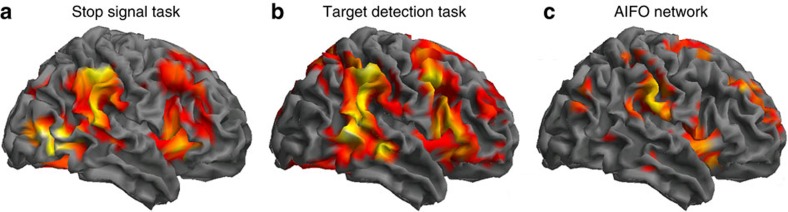
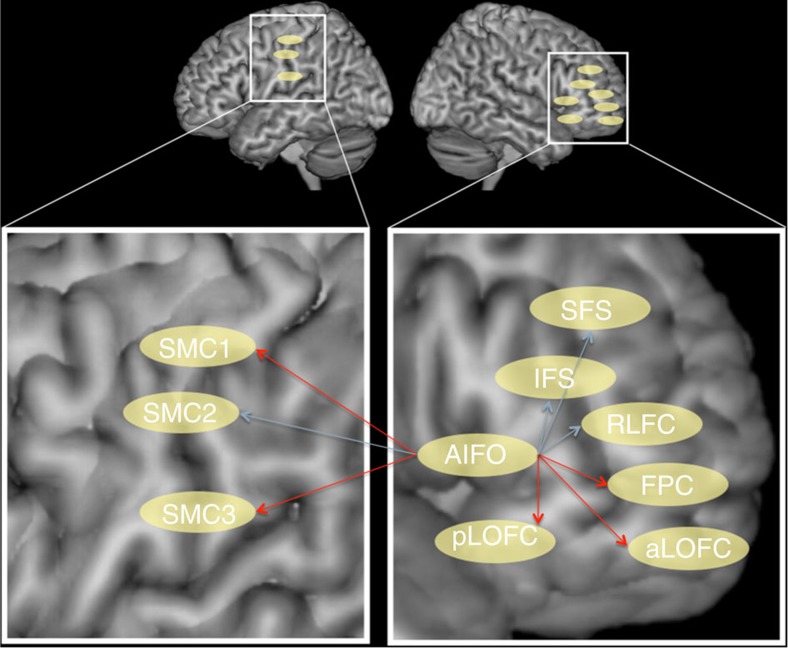
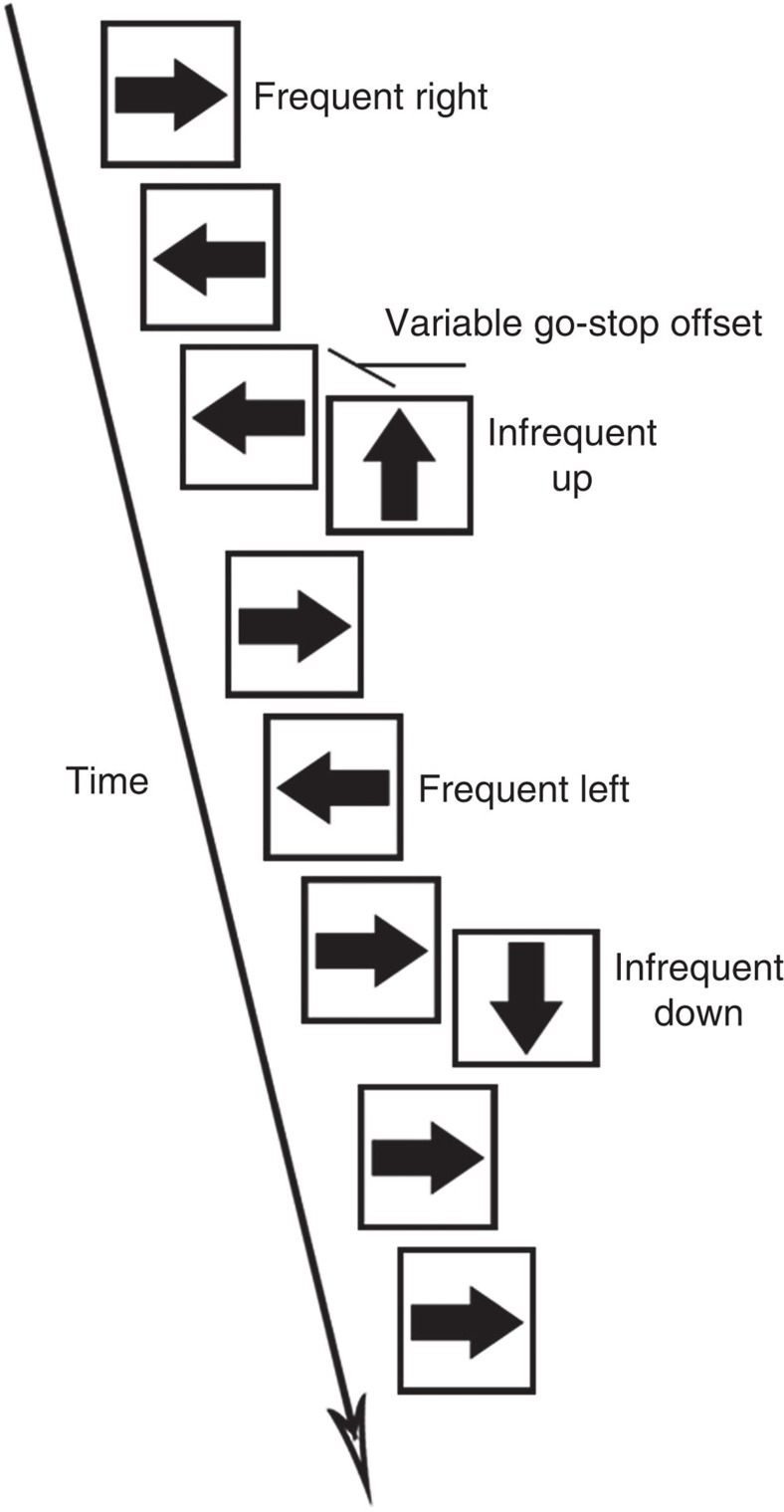
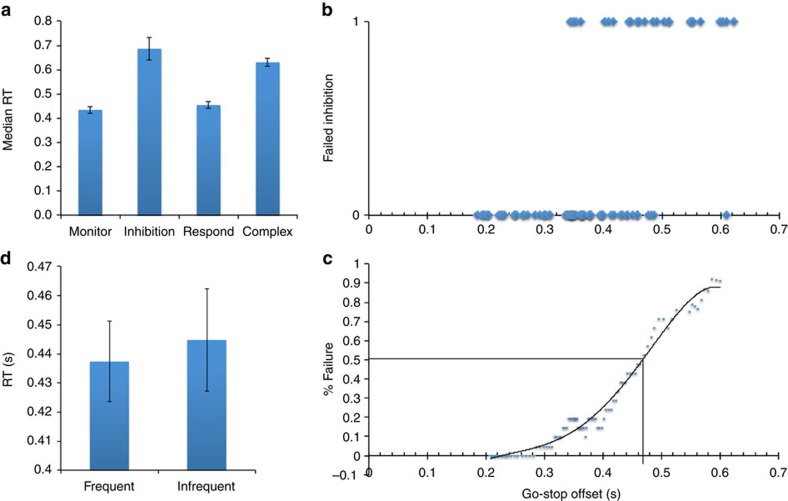
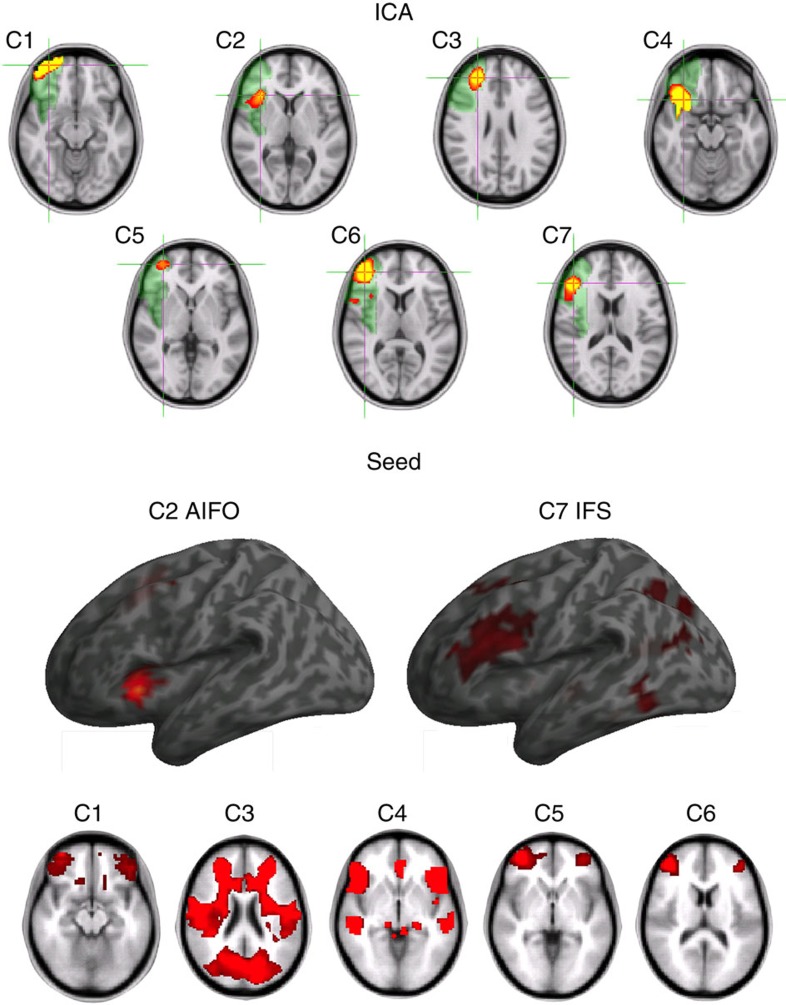
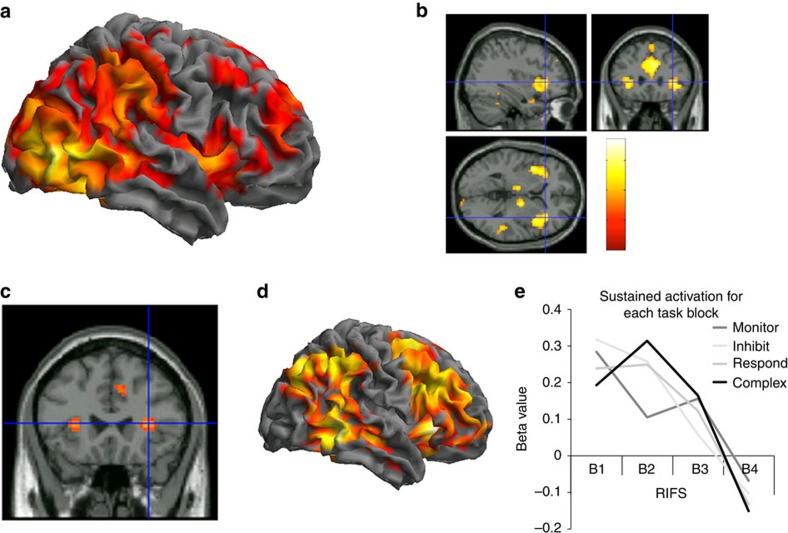
Inferior frontal cortex (IFC) modules that inhibit dominant behaviours are a popular feature in theories of cognitive dysfunction. However, the paradigms on which these theories are based fail to distinguish between inhibitory and non-inhibitory cognitive demands. Here we use four novel fMRI variants of the classic stop-signal task to test whether the IFC houses unique inhibitory modules. Our results demonstrate that IFC sub-regions are not functionally unique in their sensitivities to inhibitory cognitive demands, but instead form components of spatially distributed networks. These networks are most strongly activated when infrequent stimuli are being processed, regardless of behavioural inhibitory demands, and when novel tasks are being acquired, as opposed to when routine responses must be suppressed. We propose that there are no inhibitory modules within the frontal lobes and that behavioural inhibition is an emergent property of spatially distributed functional networks, each of which supports a broader class of cognitive demands.
抑制主导行为的额下回(IFC)模块是认知功能障碍理论中的一个常见特征。然而,这些理论所基于的范式未能区分抑制性和非抑制性认知需求。在这里,我们使用经典停止信号任务的四种新颖的功能磁共振成像(fMRI)变体来测试IFC是否包含独特的抑制模块。我们的结果表明,IFC子区域在对抑制性认知需求的敏感性方面并非功能独特,而是形成了空间分布网络的组成部分。当处理不频繁的刺激时,无论行为抑制需求如何,以及当学习新任务时,而不是必须抑制常规反应时,这些网络会被最强烈地激活。我们提出,额叶内不存在抑制模块,行为抑制是空间分布功能网络的一种涌现属性,每个网络都支持更广泛的认知需求类别。