Department of Chemical Engineering, National Taiwan University of Science and Technology, Taipei 10607, Taiwan.
Department of Neurosurgery, Taipei Medical University Hospital, Taipei 11031, Taiwan.
Molecules. 2014 Jun 5;19(6):7341-55. doi: 10.3390/molecules19067341.
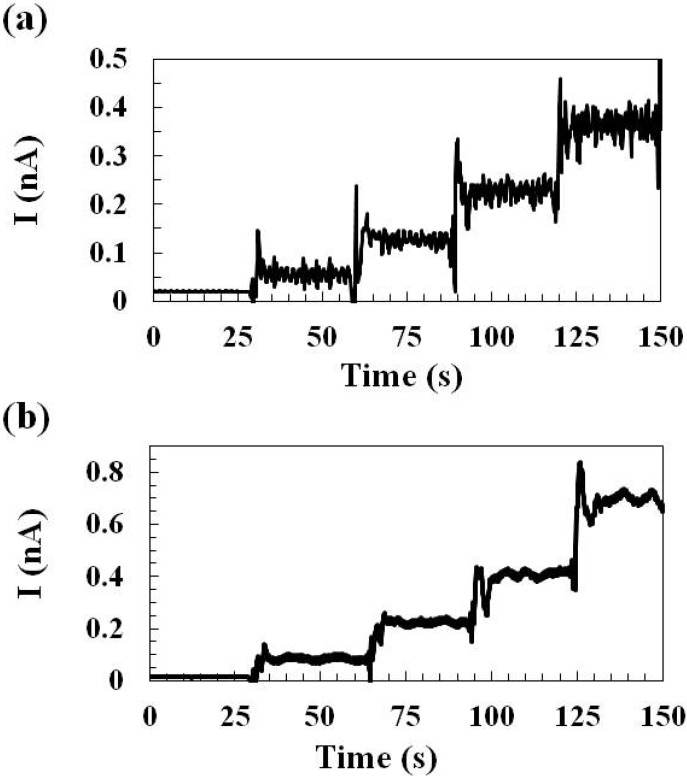
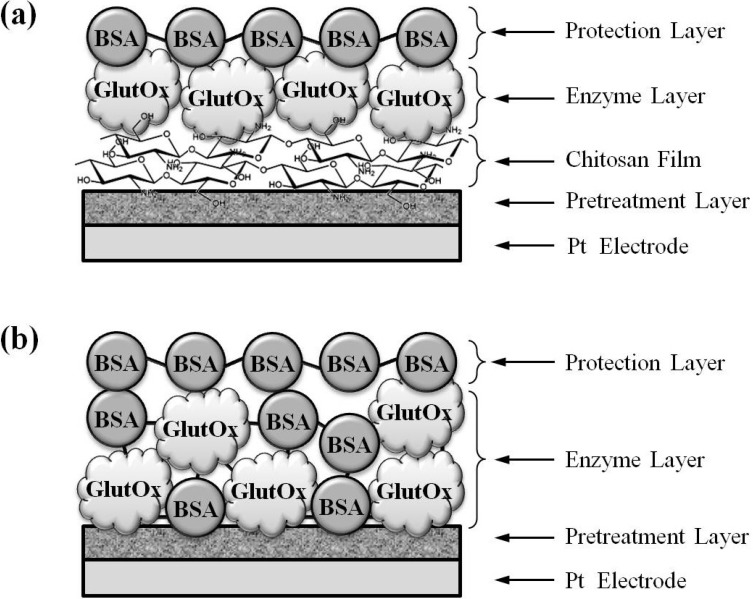
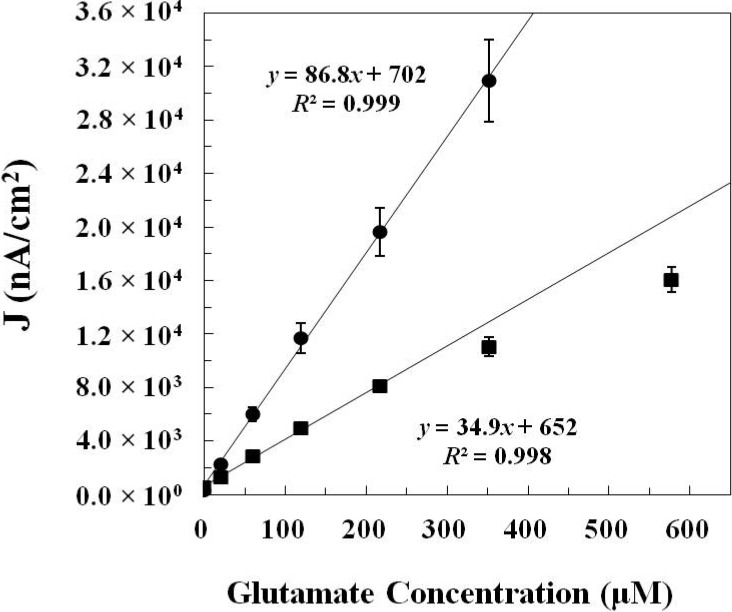
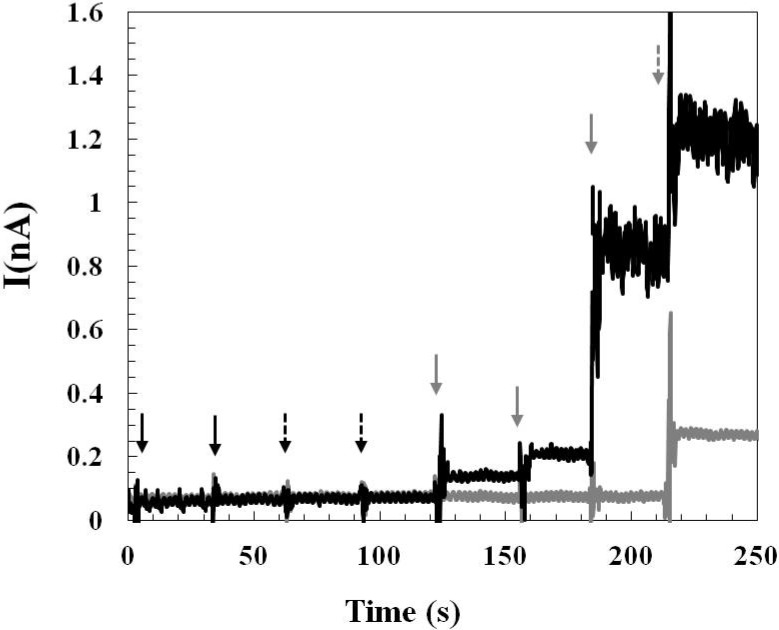
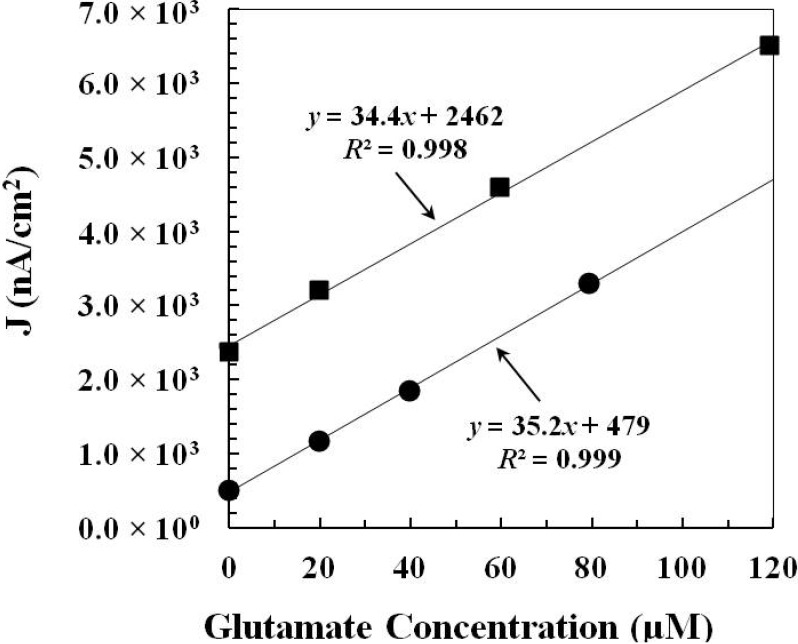
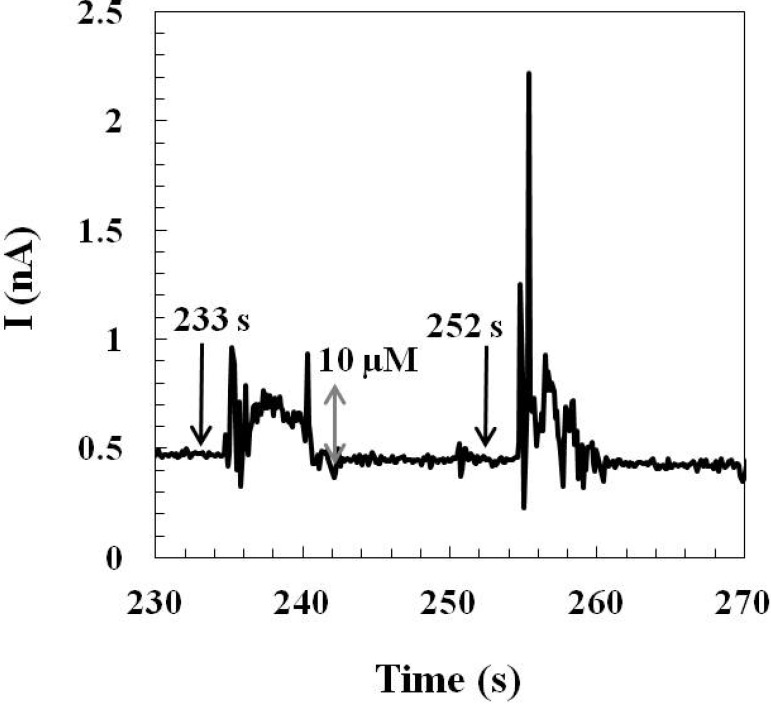
Glutamate sensors based on the immobilization of glutamate oxidase (GlutOx) were prepared by adsorption on electrodeposited chitosan (Method 1) and by crosslinking with glutaraldehyde (Method 2) on micromachined platinum microelectrodes. It was observed that glutamate sensors prepared by Method 1 have faster response time (<2 s) and lower detection limit (2.5±1.1 μM) compared to that prepared by Method 2 (response time: <5 sec and detection limit: 6.5±1.7 μM); glutamate sensors prepared by Method 2 have a larger linear detection range (20-352 μM) and higher sensitivity (86.8±8.8 nA·μM-1·cm-2, N=12) compared to those prepared by Method 1 (linear detection range: 20-217 μM and sensitivity: 34.9±4.8 nA·μM-1·cm-2, N=8). The applicability of the glutamate sensors in vivo was also demonstrated. The glutamate sensors were implanted into the rat brain to monitor the stress-induced extracellular glutamate release in the hypothalamus of the awake, freely moving rat.
基于谷氨酸氧化酶(GlutOx)固定化的谷氨酸传感器通过在微加工铂微电极上吸附(方法 1)和用戊二醛交联(方法 2)来制备。观察到,与方法 2 相比,通过方法 1 制备的谷氨酸传感器具有更快的响应时间(<2 秒)和更低的检测限(2.5±1.1 μM)(响应时间:<5 秒,检测限:6.5±1.7 μM);与方法 1 相比,通过方法 2 制备的谷氨酸传感器具有更大的线性检测范围(20-352 μM)和更高的灵敏度(86.8±8.8 nA·μM-1·cm-2,N=12)(线性检测范围:20-217 μM,灵敏度:34.9±4.8 nA·μM-1·cm-2,N=8)。还证明了谷氨酸传感器在体内的适用性。将谷氨酸传感器植入大鼠大脑中,以监测清醒、自由运动大鼠下丘脑应激诱导的细胞外谷氨酸释放。