Institute of Surgical Pathology, University Hospital Zurich, Zurich, Switzerland.
Department of Computer Science, ETH Zurich, Zurich, Switzerland.
PLoS One. 2014 Jun 6;9(6):e98932. doi: 10.1371/journal.pone.0098932. eCollection 2014.
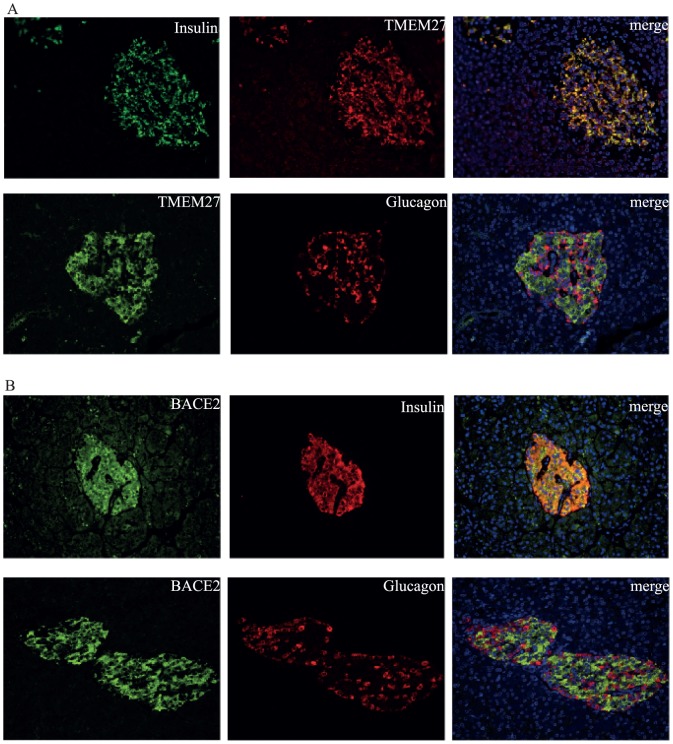
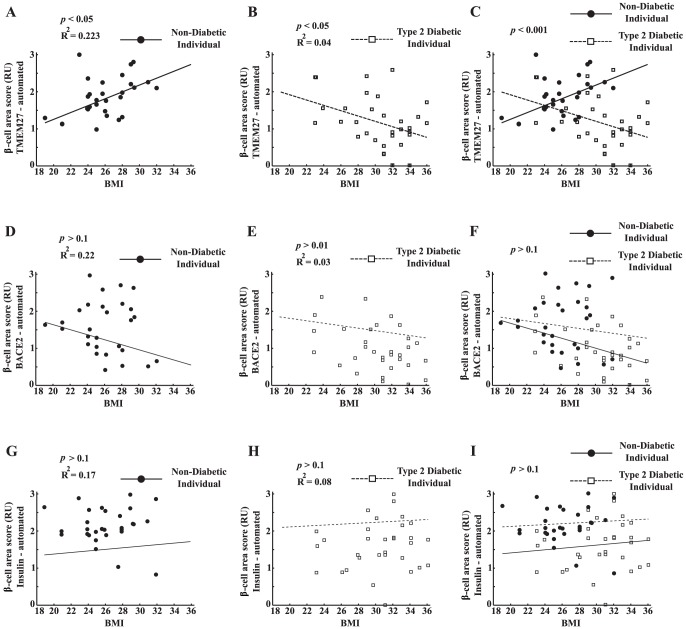
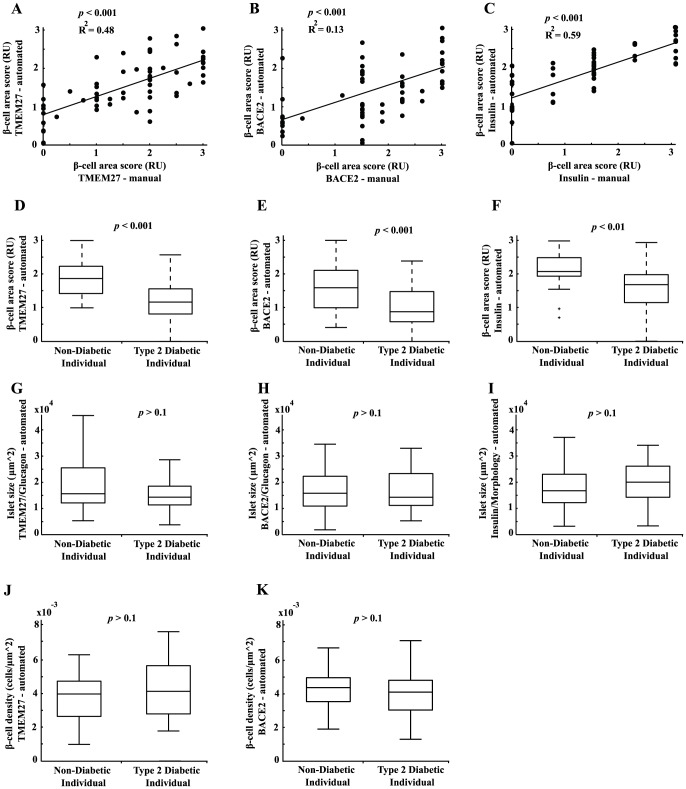
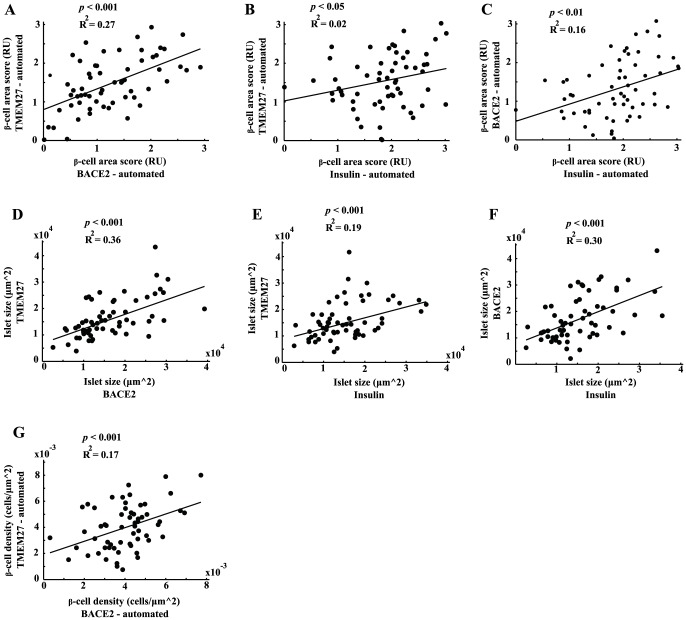
In this study we aimed to establish an unbiased automatic quantification pipeline to assess islet specific features such as β-cell area and density per islet based on immunofluorescence stainings. To determine these parameters, the in vivo protein expression levels of TMEM27 and BACE2 in pancreatic islets of 32 patients with type 2 diabetes (T2D) and in 28 non-diabetic individuals (ND) were used as input for the automated pipeline. The output of the automated pipeline was first compared to a previously developed manual area scoring system which takes into account the intensity of the staining as well as the percentage of cells which are stained within an islet. The median TMEM27 and BACE2 area scores of all islets investigated per patient correlated significantly with the manual scoring and with the median area score of insulin. Furthermore, the median area scores of TMEM27, BACE2 and insulin calculated from all T2D were significantly lower compared to the one of all ND. TMEM27, BACE2, and insulin area scores correlated as well in each individual tissue specimen. Moreover, islet size determined by costaining of glucagon and either TMEM27 or BACE2 and β-cell density based either on TMEM27 or BACE2 positive cells correlated significantly. Finally, the TMEM27 area score showed a positive correlation with BMI in ND and an inverse pattern in T2D. In summary, automated quantification outperforms manual scoring by reducing time and individual bias. The simultaneous changes of TMEM27, BACE2, and insulin in the majority of the β-cells suggest that these proteins reflect the total number of functional insulin producing β-cells. Additionally, β-cell subpopulations may be identified which are positive for TMEM27, BACE2 or insulin only. Thus, the cumulative assessment of all three markers may provide further information about the real β-cell number per islet.
在这项研究中,我们旨在建立一个无偏的自动量化管道,以评估胰岛特异性特征,如基于免疫荧光染色的β细胞面积和胰岛密度。为了确定这些参数,我们将 32 名 2 型糖尿病(T2D)患者和 28 名非糖尿病个体(ND)的胰岛中 TMEM27 和 BACE2 的体内蛋白表达水平作为自动管道的输入。自动管道的输出首先与以前开发的手动面积评分系统进行比较,该系统考虑了染色强度以及胰岛内染色细胞的百分比。每位患者所有被研究胰岛的 TMEM27 和 BACE2 平均面积评分与手动评分以及胰岛素的平均面积评分显著相关。此外,与所有 ND 相比,所有 T2D 的 TMEM27、BACE2 和胰岛素的平均面积评分显著降低。在每个个体组织标本中,TMEM27、BACE2 和胰岛素的面积评分也相关。此外,通过胰高血糖素和 TMEM27 或 BACE2 的共染色确定的胰岛大小以及基于 TMEM27 或 BACE2 阳性细胞的β细胞密度与显著相关。最后,TMEM27 面积评分在 ND 中与 BMI 呈正相关,而在 T2D 中呈负相关。总之,自动量化通过减少时间和个体偏差,优于手动评分。大多数β细胞中 TMEM27、BACE2 和胰岛素的同时变化表明这些蛋白质反映了具有功能的胰岛素产生β细胞的总数。此外,可能会鉴定出仅对 TMEM27、BACE2 或胰岛素呈阳性的β细胞亚群。因此,对所有三种标志物的累积评估可能会提供有关每个胰岛的真实β细胞数量的进一步信息。