Hoffmann Beate, Proust Hélène, Belcram Katia, Labrune Cécile, Boyer François-Didier, Rameau Catherine, Bonhomme Sandrine
Institut Jean-Pierre Bourgin, UMR1318 Institut National de la Recherche Agronomique-AgroParisTech, Versailles, France.
Institut Jean-Pierre Bourgin, UMR1318 Institut National de la Recherche Agronomique-AgroParisTech, Versailles, France,; Centre de Recherche de Gif, Institut de Chimie des Substances Naturelles, UPR2301 CNRS, Gif-sur-Yvette, France.
PLoS One. 2014 Jun 9;9(6):e99206. doi: 10.1371/journal.pone.0099206. eCollection 2014.
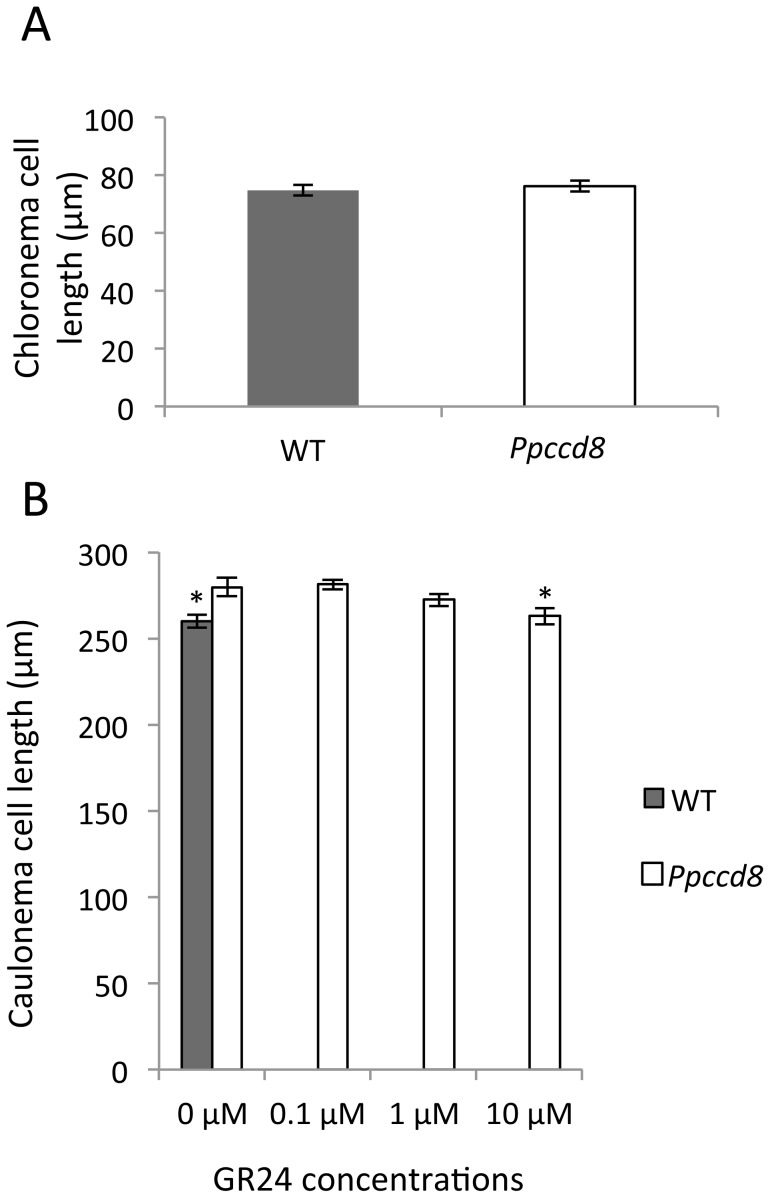
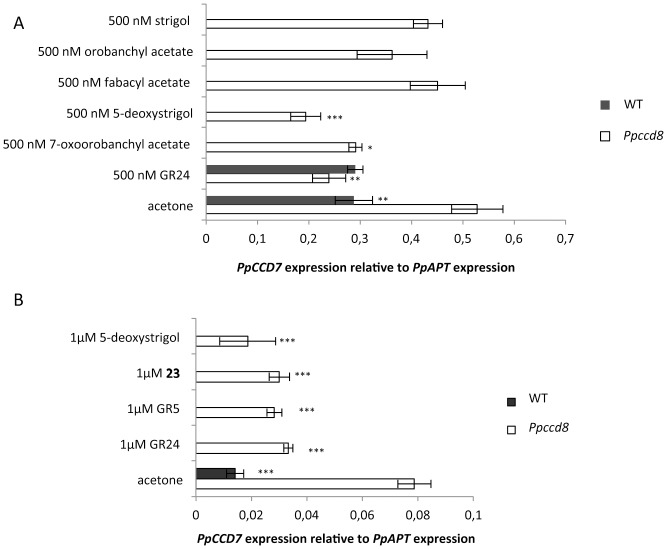
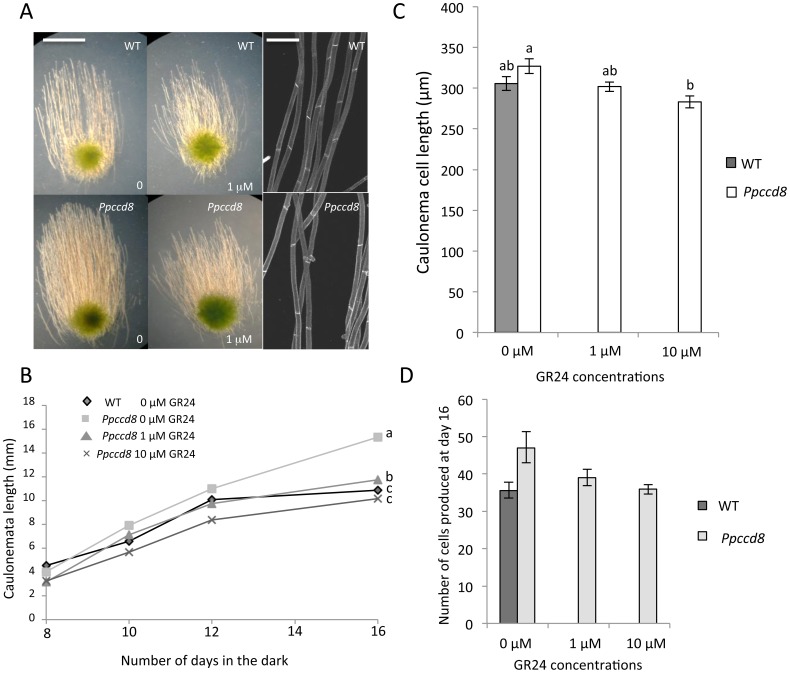
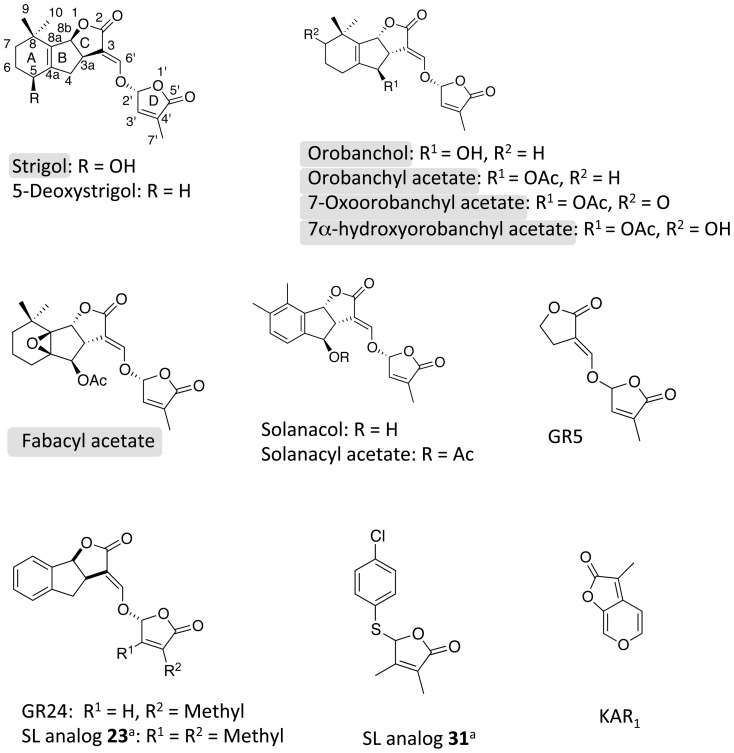
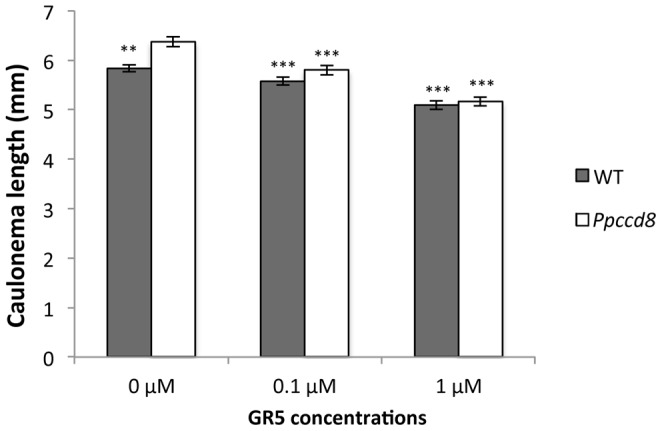
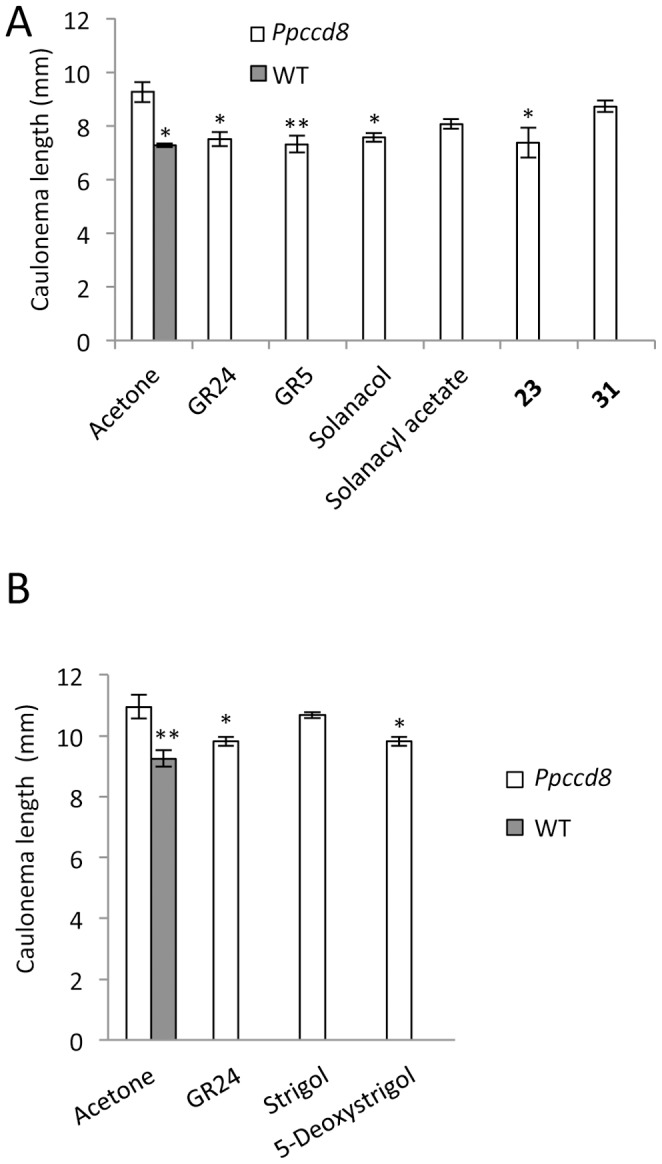
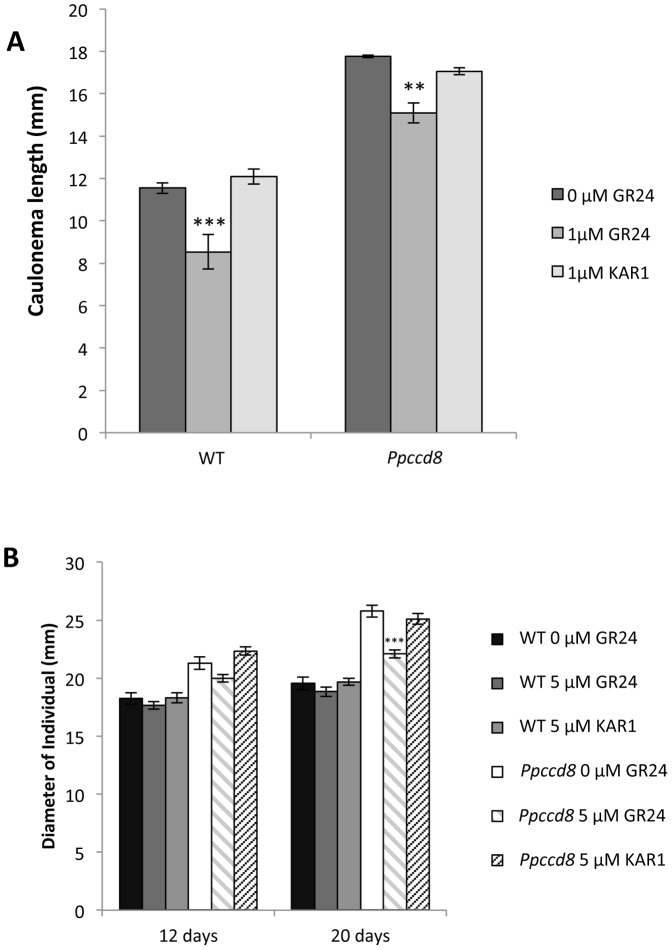
In vascular plants, strigolactones (SLs) are known for their hormonal role and for their role as signal molecules in the rhizosphere. SLs are also produced by the moss Physcomitrella patens, in which they act as signaling factors for controlling filament extension and possibly interaction with neighboring individuals. To gain a better understanding of SL action at the cellular level, we investigated the effect of exogenously added molecules (SLs or analogs) in moss growth media. We used the previously characterized Ppccd8 mutant that is deficient in SL synthesis and showed that SLs affect moss protonema extension by reducing caulonema cell elongation and mainly cell division rate, both in light and dark conditions. Based on this effect, we set up bioassays to examine chemical structure requirements for SL activity in moss. The results suggest that compounds GR24, GR5, and 5-deoxystrigol are active in moss (as in pea), while other analogs that are highly active in the control of pea branching show little activity in moss. Interestingly, the karrikinolide KAR1, which shares molecular features with SLs, did not have any effect on filament growth, even though the moss genome contains several genes homologous to KAI2 (encoding the KAR1 receptor) and no canonical homologue to D14 (encoding the SL receptor). Further studies should investigate whether SL signaling pathways have been conserved during land plant evolution.
在维管植物中,独脚金内酯(SLs)以其激素作用以及在根际作为信号分子的作用而闻名。藓类植物小立碗藓也能产生独脚金内酯,在小立碗藓中,它们作为信号因子控制丝状体延伸,并可能参与与邻近个体的相互作用。为了更好地理解独脚金内酯在细胞水平上的作用,我们研究了在藓类生长培养基中外源添加分子(独脚金内酯或其类似物)的影响。我们使用了先前鉴定的缺乏独脚金内酯合成的Ppccd8突变体,结果表明,无论在光照还是黑暗条件下,独脚金内酯都会通过降低茎丝细胞伸长率,尤其是细胞分裂速率来影响藓类原丝体的延伸。基于这一效应,我们建立了生物测定法来检测藓类中独脚金内酯活性的化学结构要求。结果表明,化合物GR24、GR5和5-脱氧独脚金醇在藓类中具有活性(与豌豆中情况相同),而其他在控制豌豆分枝方面具有高活性的类似物在藓类中几乎没有活性。有趣的是,与独脚金内酯具有共同分子特征的卡里金内酯KAR1对丝状体生长没有任何影响,尽管藓类基因组包含几个与KAI2(编码KAR1受体)同源的基因,却没有与D14(编码独脚金内酯受体)的典型同源物。进一步的研究应该调查在陆地植物进化过程中独脚金内酯信号通路是否保守。