Karbanová Jana, Laco Jan, Marzesco Anne-Marie, Janich Peggy, Voborníková Magda, Mokrý Jaroslav, Fargeas Christine A, Huttner Wieland B, Corbeil Denis
Tissue Engineering Laboratories, BIOTEC, Technische Universität Dresden, Dresden, Germany; Department of Histology and Embryology, Charles University in Prague Faculty of Medicine and University Hospital Hradec Králové, Prague, Czech Republic.
The Fingerland Department of Pathology, Charles University in Prague Faculty of Medicine and University Hospital Hradec Králové, Prague, Czech Republic.
PLoS One. 2014 Jun 9;9(6):e98927. doi: 10.1371/journal.pone.0098927. eCollection 2014.
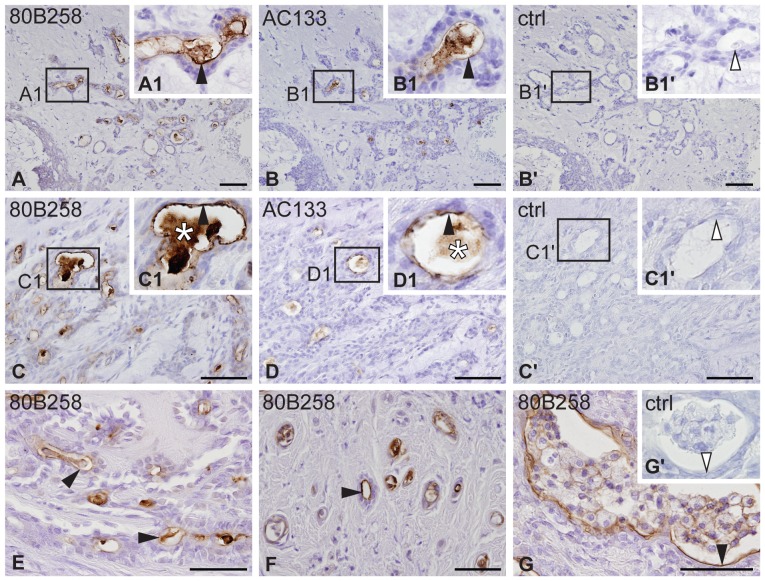
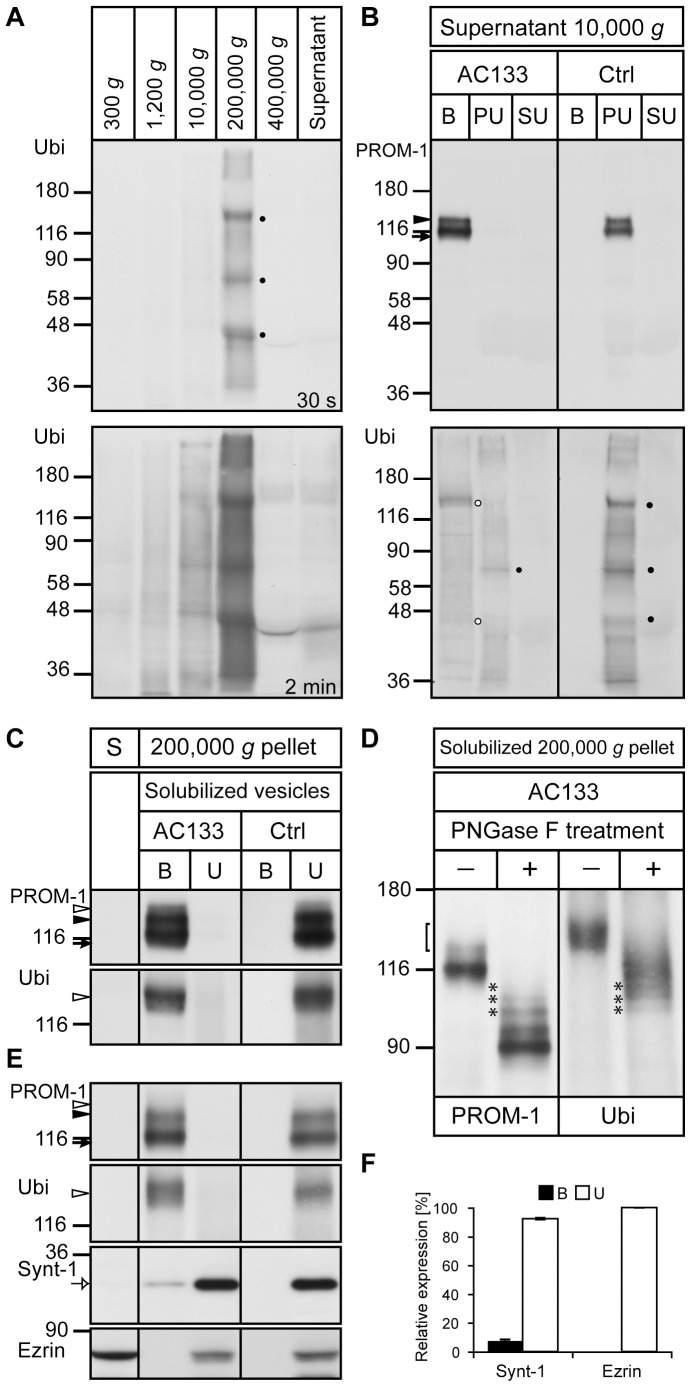
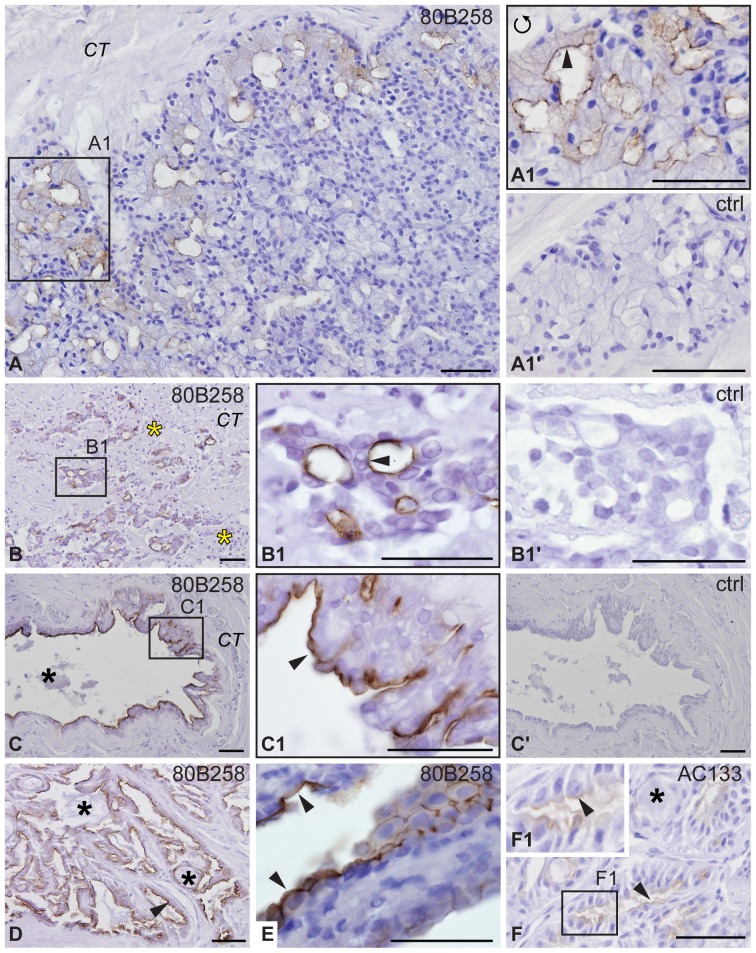
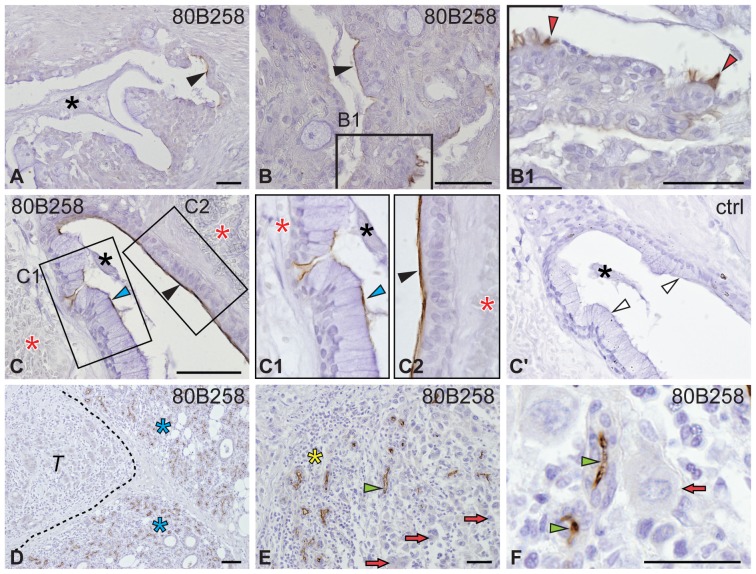
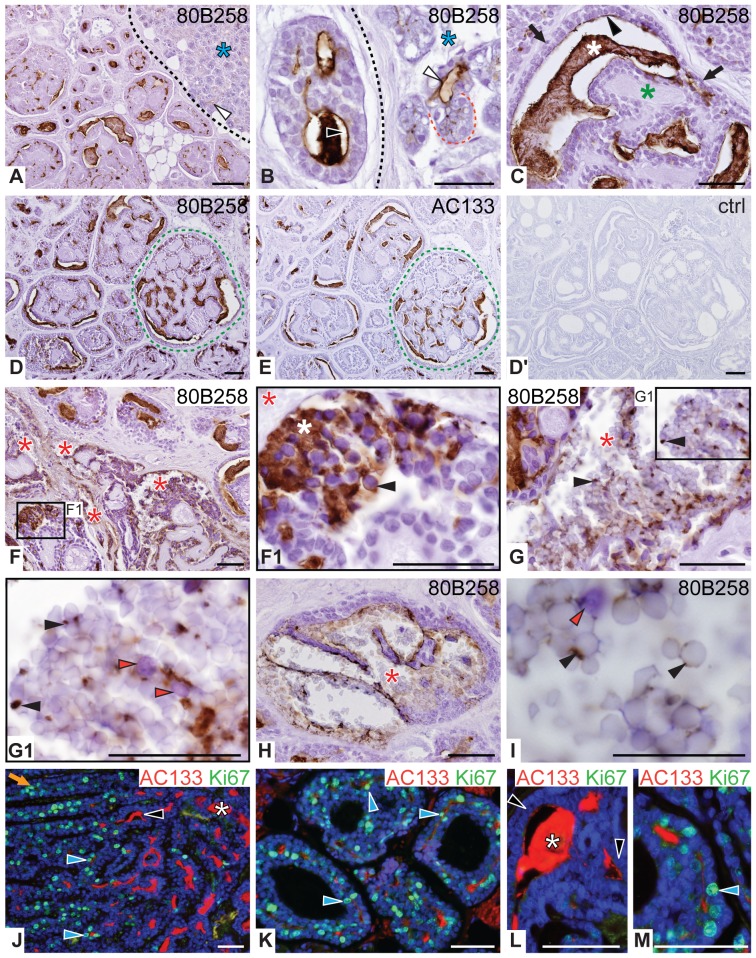
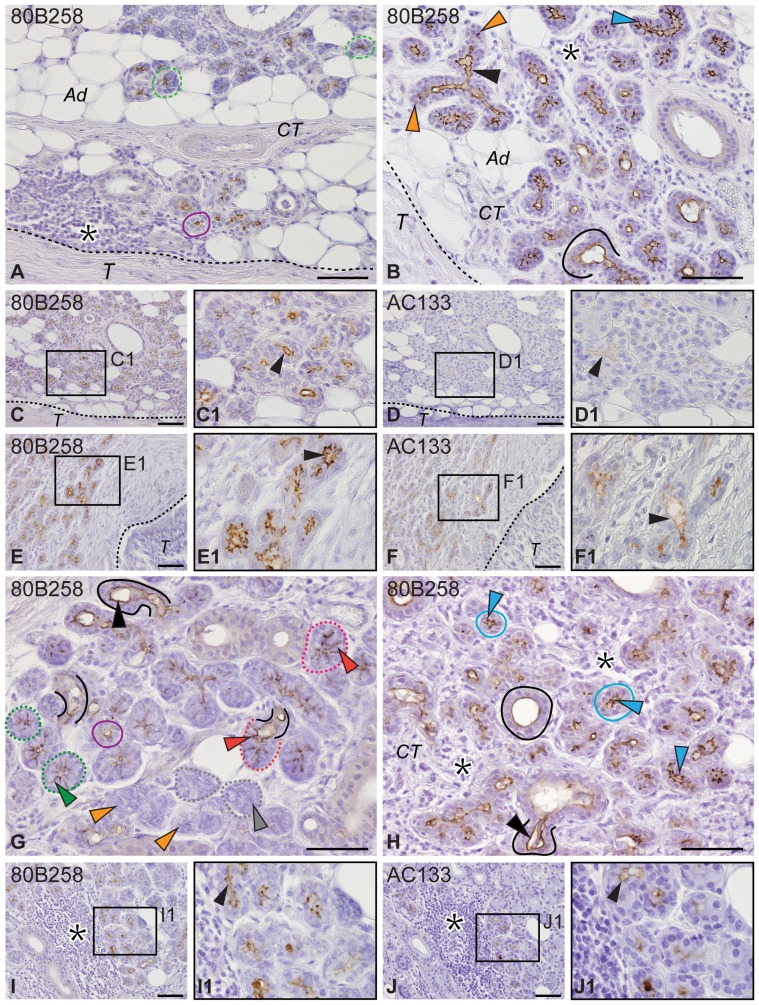
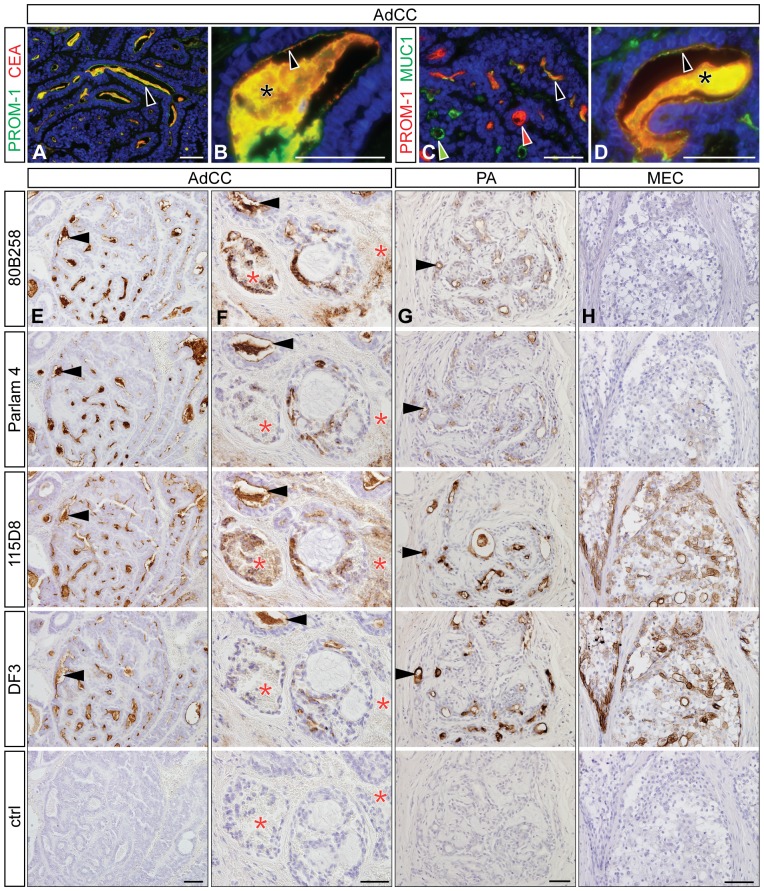
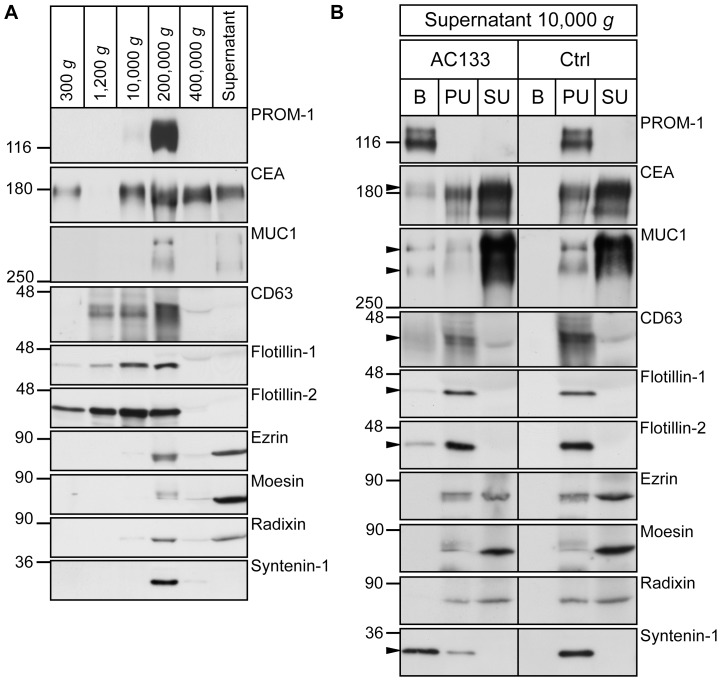
Prominin-1 (CD133) is physiologically expressed at the apical membranes of secretory (serous and mucous) and duct cells of major salivary glands. We investigated its expression in various human salivary gland lesions using two distinct anti-prominin-1 monoclonal antibodies (80B258 and AC133) applied on paraffin-embedded sections and characterized its occurrence in saliva. The 80B258 epitope was extensively expressed in adenoid cystic carcinoma, in lesser extent in acinic cell carcinoma and pleomorphic adenoma, and rarely in mucoepidermoid carcinoma. The 80B258 immunoreactivity was predominately detected at the apical membrane of tumor cells showing acinar or intercalated duct cell differentiation, which lined duct- or cyst-like structures, and in luminal secretions. It was observed on the whole cell membrane in non-luminal structures present in the vicinity of thin-walled blood vessels and hemorrhagic areas in adenoid cystic carcinoma. Of note, AC133 labeled only a subset of 80B258-positive structures. In peritumoral salivary gland tissues as well as in obstructive sialadenitis, an up-regulation of prominin-1 (both 80B258 and AC133 immunoreactivities) was observed in intercalated duct cells. In most tissues, prominin-1 was partially co-expressed with two cancer markers: carcinoembryonic antigen (CEA) and mucin-1 (MUC1). Differential centrifugation of saliva followed by immunoblotting indicated that all three markers were released in association with small membrane vesicles. Immuno-isolated prominin-1-positive vesicles contained CEA and MUC1, but also exosome-related proteins CD63, flotillin-1, flotillin-2 and the adaptor protein syntenin-1. The latter protein was shown to interact with prominin-1 as demonstrated by its co-immunoisolation. A fraction of saliva-associated prominin-1 appeared to be ubiquitinated. Collectively, our findings bring new insights into the biochemistry and trafficking of prominin-1 as well as its immunohistochemical profile in certain types of salivary gland tumors and inflammatory diseases.
Prominin-1(CD133)在大唾液腺的分泌(浆液性和黏液性)细胞及导管细胞的顶端膜上有生理性表达。我们使用两种不同的抗Prominin-1单克隆抗体(80B258和AC133)对石蜡包埋切片进行检测,研究了其在各种人类唾液腺病变中的表达情况,并对其在唾液中的出现情况进行了表征。80B258表位在腺样囊性癌中广泛表达,在腺泡细胞癌和多形性腺瘤中表达程度较低,在黏液表皮样癌中很少表达。80B258免疫反应性主要在显示腺泡或闰管细胞分化的肿瘤细胞顶端膜上检测到,这些细胞排列成导管样或囊样结构,并存在于管腔分泌物中。在腺样囊性癌中薄壁血管和出血区域附近的非管腔结构的整个细胞膜上也观察到了这种反应。值得注意的是,AC133仅标记了80B258阳性结构的一个子集。在肿瘤周围的唾液腺组织以及阻塞性涎腺炎中,在闰管细胞中观察到Prominin-1(80B258和AC133免疫反应性)上调。在大多数组织中,Prominin-1与两种癌症标志物:癌胚抗原(CEA)和黏蛋白-1(MUC1)部分共表达。对唾液进行差速离心后进行免疫印迹分析表明,所有这三种标志物都与小膜泡相关释放。免疫分离的Prominin-1阳性囊泡含有CEA和MUC1,还含有外泌体相关蛋白CD63、flotillin-1、flotillin-2和衔接蛋白syntenin-1。如共免疫分离所示,后一种蛋白被证明与Prominin-1相互作用。一部分与唾液相关的Prominin-1似乎被泛素化。总的来说,我们的研究结果为Prominin-1的生物化学、运输及其在某些类型唾液腺肿瘤和炎症性疾病中的免疫组织化学特征带来了新的见解。