Kalt F R, Cock I E
Biomolecular and Physical Sciences, Nathan Campus, Griffith University, Nathan, Queensland 4111, Australia.
Biomolecular and Physical Sciences, Nathan Campus, Griffith University, Nathan, Queensland 4111, Australia ; Environmental Futures Centre, Nathan Campus, Griffith University, Nathan, Queensland 4111, Australia.
Pharmacogn Mag. 2014 Jan;10(Suppl 1):S37-49. doi: 10.4103/0973-1296.127338.
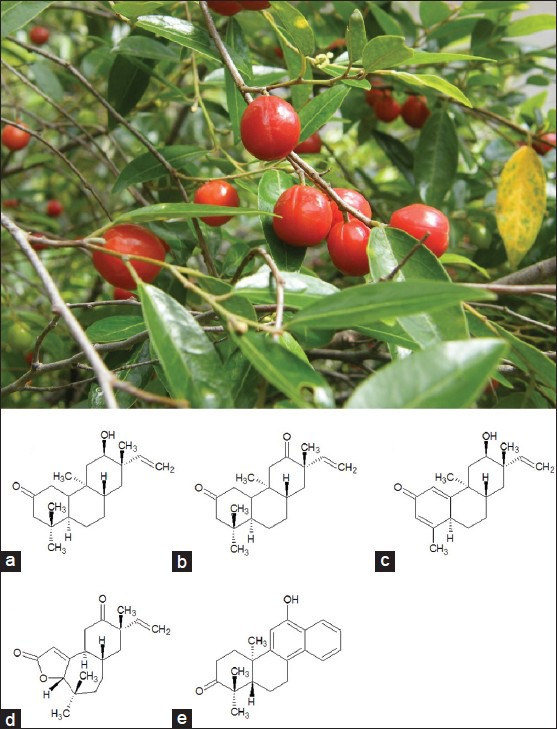
Petalostigma pubescens and Petalostigma triloculare were common components of pharmacopeia's of multiple Australian Aboriginal tribal groupings which traditionally inhabited the areas in which they grow. Among these groups, they had a myriad of medicinal uses in treating a wide variety of bacterial, fungal and viral infections. This study was undertaken to test P. pubescens and P. triloculare leaf and fruit extracts for the ability to inhibit bacterial and viral growth and thus validate Australian Aboriginal usage of these plants in treating bacterial and fungal diseases.
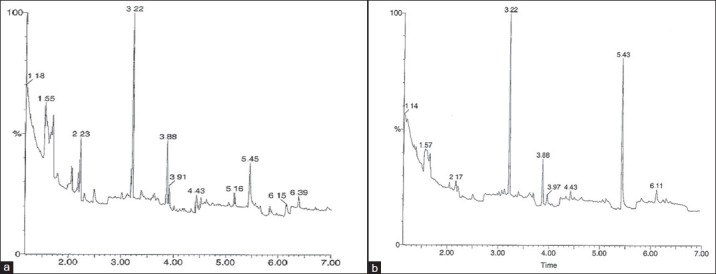
P. pubescens, and P. triloculare leaves and fruit were extracted and tested for antimicrobial, antiviral activity and toxicity. The bioactive extracts were further examined by RP-HPLC and GC-MS to identify the component compounds.
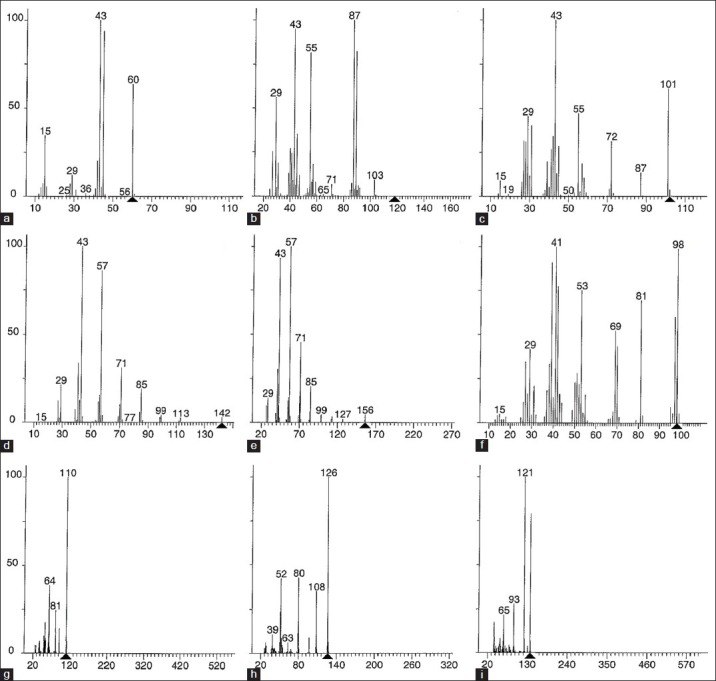
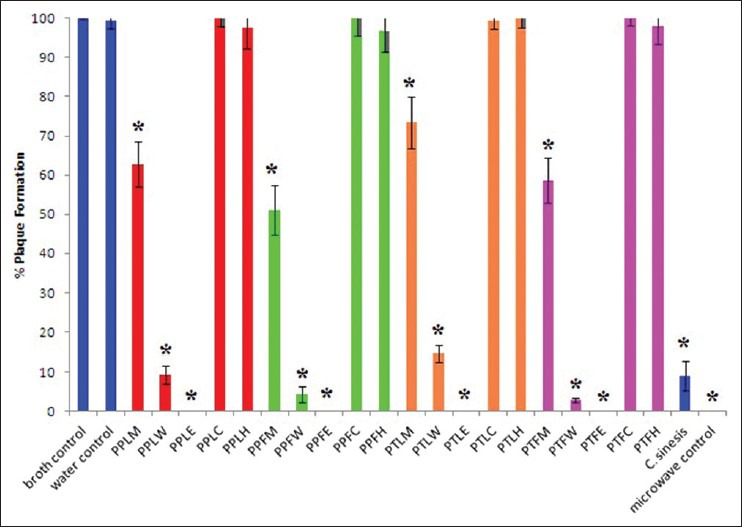
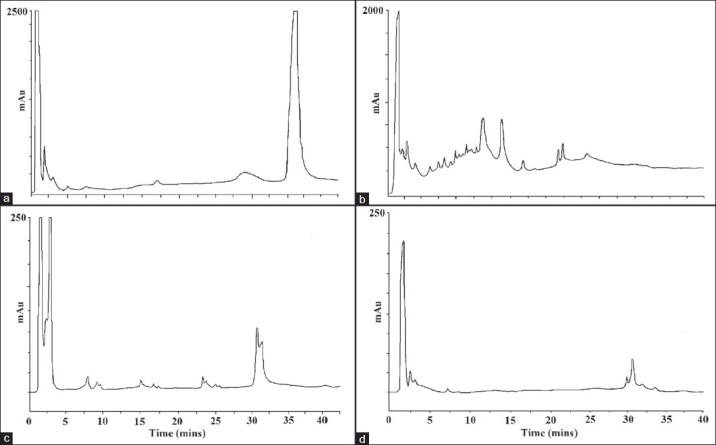
The methanol, water and ethyl acetate leaf and fruit extracts of displayed potent antibacterial activity. The methanol and ethyl acetate extracts displayed the broadest specificity, inhibiting the growth of 10 of the 14 bacteria tested (71%) for the leaf extract and 9 of the 14 bacteria tested (64%) for the fruit extracts. The water extracts also had broad spectrum antibacterial activity, inhibiting the growth of 8 (57%) and 7 (50%) of the 14 bacteria tested, respectively. All antibacterial extracts were approximately equally effective against Gram-positive and Gram-negative bacteria, inhibiting the growth of 50-75% of the bacteria tested. The methanol, water and ethyl acetate extracts also displayed antiviral activity in the MS2 plaque reduction assay. The methanol and water extracts inhibited 26.6-49.0% and 85.4-97.2% of MS2 plaque formation, respectively, with the fruit extracts being more potent inhibitors. All ethyl acetate extracts inhibited 100% of MS2 plaque formation. All extracts were also non-toxic or of low toxicity. Analysis of these extracts by RP-HPLC showed that the P. triloculare ethyl acetate fruit extract was the least complex of the bioactive extracts. Subsequent analysis of this extract by GC-MS revealed that it contained 9 main compounds: acetic acid; 2,2-dimethoxybutane; 4-methyl-1,3-dioxane; decane; unadecane; 2-furanmethanol; 1,2-benzenediol; 1,2,3-benzenetriol; and benzoic acid.
These studies validate Australian Aboriginal therapeutic usage of Petalostigma species and indicate their medicinal potential.
柔毛花瓣木和三室花瓣木是多个澳大利亚原住民部落药典中的常见成分,这些部落传统上居住在它们生长的地区。在这些部落中,它们在治疗多种细菌、真菌和病毒感染方面有无数药用价值。本研究旨在测试柔毛花瓣木和三室花瓣木叶及果实提取物抑制细菌和病毒生长的能力,从而验证澳大利亚原住民对这些植物在治疗细菌和真菌疾病方面的用法。
提取柔毛花瓣木和三室花瓣木的叶及果实,并测试其抗菌、抗病毒活性和毒性。对生物活性提取物进一步采用反相高效液相色谱法(RP-HPLC)和气相色谱-质谱联用仪(GC-MS)进行分析,以鉴定其成分化合物。
甲醇、水和乙酸乙酯叶及果实提取物均显示出强大的抗菌活性。甲醇和乙酸乙酯提取物的特异性最广,叶提取物对14种测试细菌中的10种(71%)有抑制生长作用,果实提取物对14种测试细菌中的9种(64%)有抑制生长作用。水提取物也有广谱抗菌活性,分别对14种测试细菌中的8种(57%)和7种(50%)有抑制生长作用。所有抗菌提取物对革兰氏阳性菌和革兰氏阴性菌的效果大致相同,抑制了50%-75%的测试细菌生长。甲醇、水和乙酸乙酯提取物在MS2噬菌斑减少试验中也显示出抗病毒活性。甲醇和水提取物分别抑制了26.6%-49.0%和85.4%-97.2%的MS2噬菌斑形成,果实提取物是更强效的抑制剂。所有乙酸乙酯提取物均抑制了100%的MS2噬菌斑形成。所有提取物也均无毒或低毒。通过RP-HPLC对这些提取物进行分析表明,三室花瓣木乙酸乙酯果实提取物是生物活性提取物中成分最不复杂的。随后通过GC-MS对该提取物进行分析发现,它含有9种主要化合物:乙酸;2,2-二甲氧基丁烷;4-甲基-1,3-二氧六环;癸烷;十一烷;2-呋喃甲醇;1,2-苯二酚;1,2,3-苯三酚;以及苯甲酸。
这些研究验证了澳大利亚原住民对花瓣木属植物的治疗用途,并表明了它们的药用潜力。