Hinamoto Norikazu, Maeshima Yohei, Saito Daisuke, Yamasaki Hiroko, Tanabe Katsuyuki, Nasu Tatsuyo, Watatani Hiroyuki, Ujike Haruyo, Kinomura Masaru, Sugiyama Hitoshi, Sonoda Hikaru, Sato Yasufumi, Makino Hirofumi
Department of Medicine and Clinical Science, Okayama University Graduate School of Medicine, Dentistry and Pharmaceutical Sciences, Okayama, Japan.
Department of Medicine and Clinical Science, Okayama University Graduate School of Medicine, Dentistry and Pharmaceutical Sciences, Okayama, Japan; Department of Chronic Kidney Disease and cardiovascular disease, Okayama University Graduate School of Medicine, Dentistry and Pharmaceutical Sciences, Okayama, Japan.
PLoS One. 2014 Jun 10;9(6):e96932. doi: 10.1371/journal.pone.0096932. eCollection 2014.
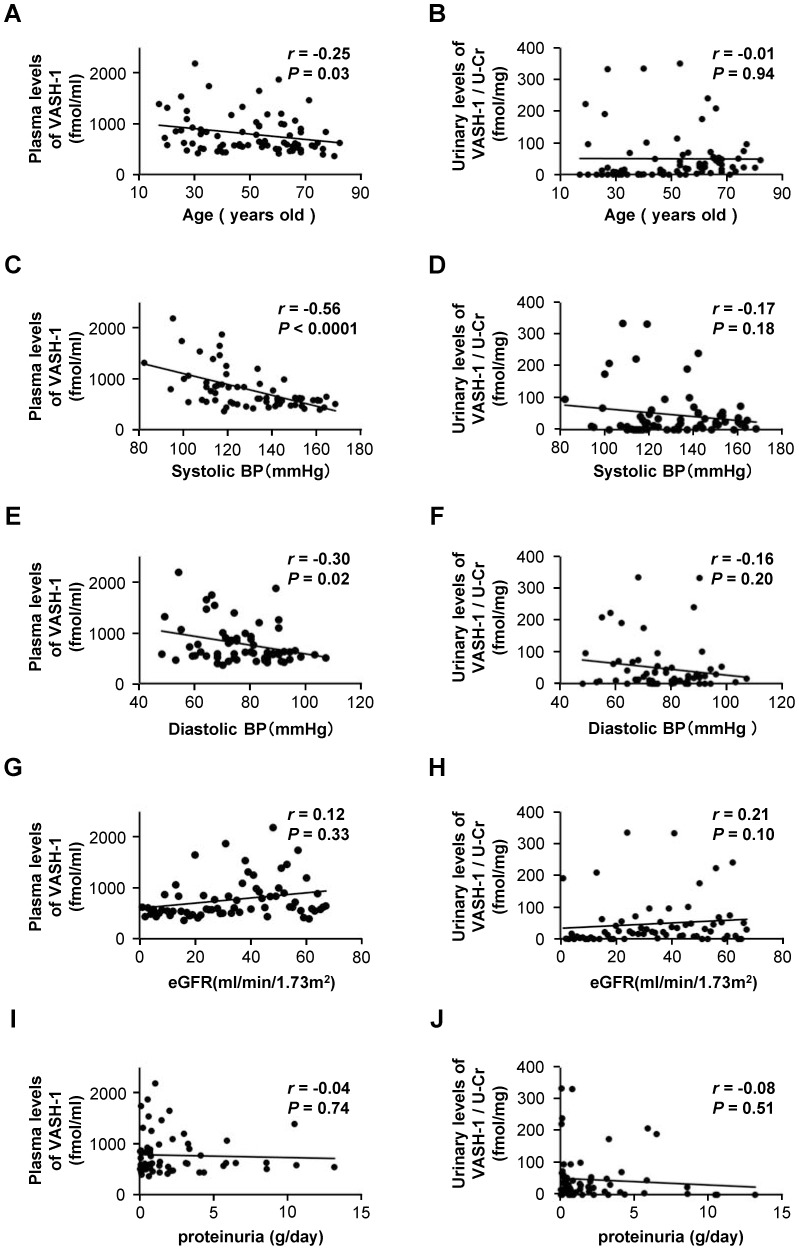
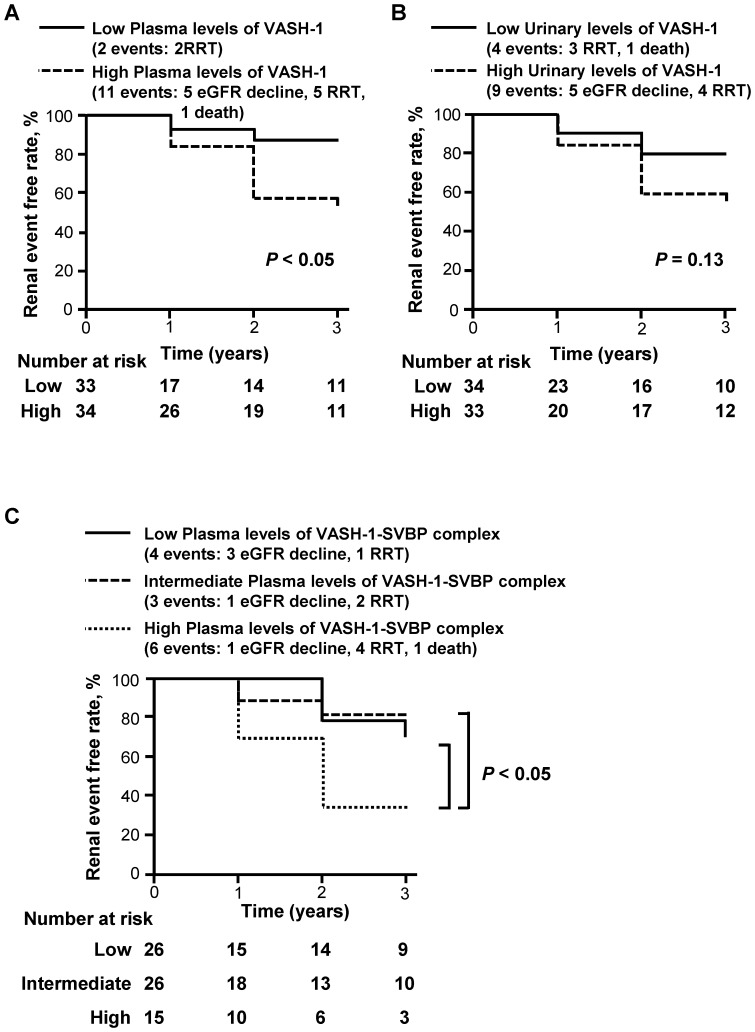
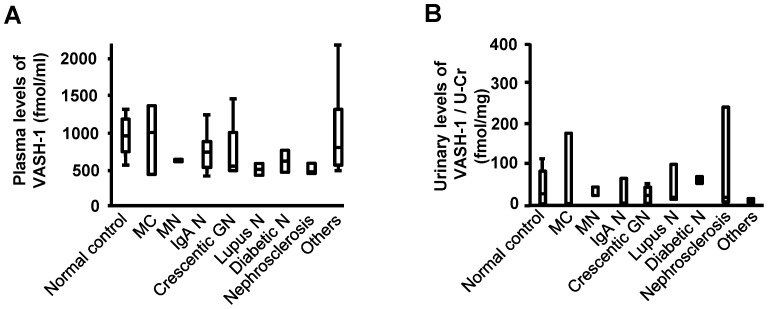
Vasohibin-1 (VASH-1) is a negative feedback regulator of angiogenesis, and a small vasohibin-binding protein (SVBP) serves as its secretory chaperone and contributes to its antiangiogenic effects. In the present study, we aimed to define the clinical significance of VASH-1 and SVBP in patients with chronic kidney disease (CKD). We recruited 67 Japanese hospitalized patients with renal disorders with (n = 45) or without (n = 22) renal biopsy samples and 10 Japanese healthy controls. We evaluated the correlations between the plasma and urinary levels of VASH-1/VASH-1-SVBP complex/SVBP and the clinicopathological parameters. The plasma levels of VASH-1 were inversely correlated with age and systolic and diastolic blood pressure and positively correlated with crescent formation. Increased plasma and urinary levels of VASH-1 and VASH-1-SVBP complex were significantly correlated with worse renal outcomes. These results demonstrate an association between elevated urinary and plasma levels of VASH-1 and progressive decline of the renal function, thus suggesting a potential role for VASH-1 in predicting a worse renal prognosis in patients with renal disease, including CKD.
血管抑制素-1(VASH-1)是血管生成的负反馈调节因子,一种小分子血管抑制素结合蛋白(SVBP)作为其分泌伴侣,有助于其抗血管生成作用。在本研究中,我们旨在明确VASH-1和SVBP在慢性肾脏病(CKD)患者中的临床意义。我们招募了67名患有肾脏疾病的日本住院患者,其中45名有肾活检样本,22名没有肾活检样本,以及10名日本健康对照者。我们评估了VASH-1/VASH-1-SVBP复合物/SVBP的血浆和尿液水平与临床病理参数之间的相关性。VASH-1的血浆水平与年龄、收缩压和舒张压呈负相关,与新月体形成呈正相关。VASH-1和VASH-1-SVBP复合物的血浆和尿液水平升高与更差的肾脏结局显著相关。这些结果表明,VASH-1的尿液和血浆水平升高与肾功能的进行性下降之间存在关联,从而提示VASH-1在预测包括CKD在内的肾脏疾病患者更差的肾脏预后方面具有潜在作用。