Yue Yu-Shan, Wang Xu-Dong, Xie Bin, Li Zhong-Han, Chen Bing-Lin, Wang Xue-Qiang, Zhu Yi
Second School of Clinical Medical, Nanjing University of Chinese Medicine, Nanjing, Jiangsu, China.
Institute of Literature in Chinese Medicine, Nanjing University of Chinese Medicine, Nanjing, Jiangsu, China.
PLoS One. 2014 Jun 11;9(6):e99307. doi: 10.1371/journal.pone.0099307. eCollection 2014.
Trials on sling exercise (SE), commonly performed to manage chronic low back pain (LBP), yield conflicting results. This study aimed to review the effects of SE on chronic LBP.
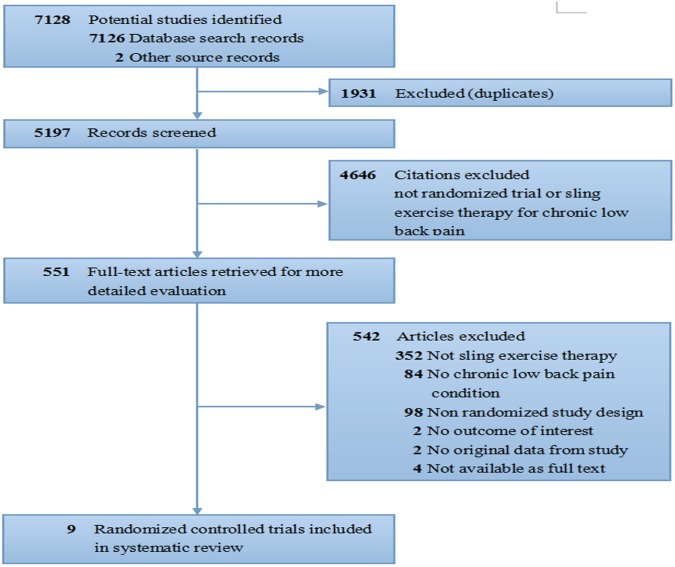
The randomized controlled trials comparing SE with other treatments or no treatment, published up to August 2013, were identified by electronic searches. Primary outcomes were pain, function, and return to work. The weighted mean difference (WMD) and 95% confidence interval (CI) were calculated, using a random-effects model.
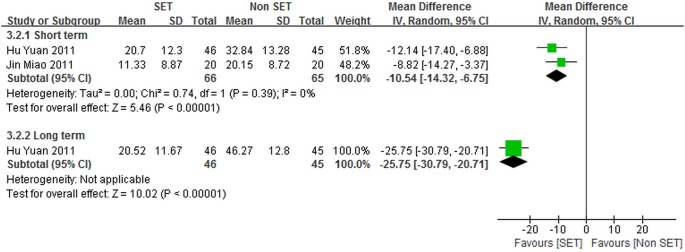
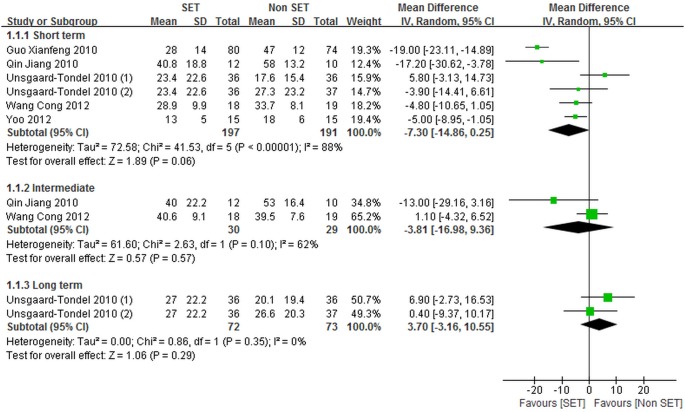
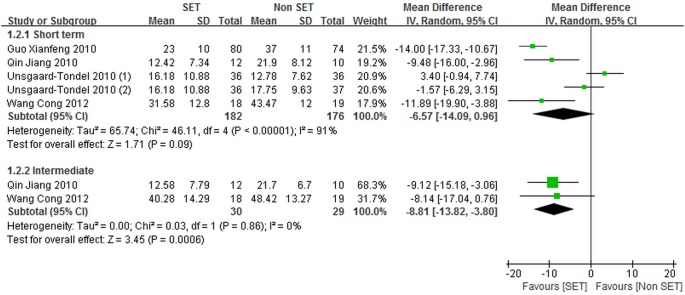
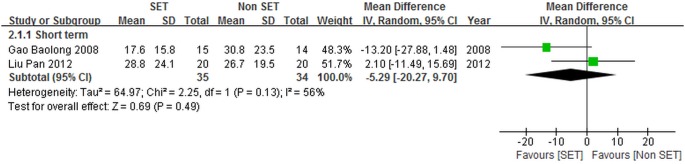
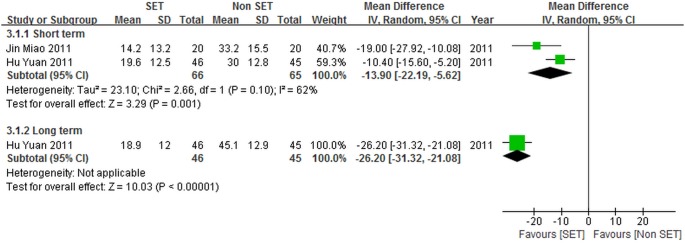
Risk of bias was rated as high in 9 included trials, where some important quality components such as blinding were absent and sample sizes were generally small. We found no clinically relevant differences in pain or function between SE and other forms of exercise, traditional Chinese medical therapy, or in addition to acupuncture. Based on two trials, SE was more effective than thermomagnetic therapy at reducing pain (short-term: WMD -13.90, 95% CI -22.19 to -5.62; long-term: WMD -26.20, 95% CI -31.32 to -21.08) and improving function (short-term: WMD -10.54, 95% CI -14.32 to -6.75; long-term: WMD -25.75, 95% CI -30.79 to -20.71). In one trial we found statistically significant differences between SE and physical agents combined with drug therapy (meloxicam combined with eperisone hydrochloride) but of borderline clinical relevance for pain (short-term: WMD -15.00, 95% CI -19.64 to -10.36) and function (short-term: WMD -10.00; 95% CI -13.70 to -6.30). There was substantial heterogeneity among the two trials comparing SE and thermomagnetic therapy; both these trials and the trial comparing SE with physical agents combined with drug therapy had serious methodological limitations.
Based on limited evidence from 2 trials, SE was more effective for LBP than thermomagnetic therapy. Clinically relevant differences in effects between SE and other forms of exercise, physical agents combined with drug therapy, traditional Chinese medical therapy, or in addition to acupuncture could not be found. More high-quality randomized trials on the topic are warranted.
吊带运动(SE)常用于治疗慢性下腰痛(LBP),但相关试验结果相互矛盾。本研究旨在综述SE对慢性LBP的影响。
通过电子检索确定截至2013年8月发表的比较SE与其他治疗方法或不治疗的随机对照试验。主要结局指标为疼痛、功能和恢复工作情况。采用随机效应模型计算加权平均差(WMD)和95%置信区间(CI)。
纳入的9项试验中偏倚风险被评为高,其中一些重要的质量要素如盲法缺失,样本量普遍较小。我们发现SE与其他形式的运动、中医治疗或针灸加用之间在疼痛或功能方面无临床相关差异。基于两项试验,SE在减轻疼痛(短期:WMD -13.90,95%CI -22.19至-5.62;长期:WMD -26.20,95%CI -31.32至-21.08)和改善功能(短期:WMD -10.54,95%CI -14.32至-6.75;长期:WMD -25.75,95%CI -30.79至-20.71)方面比热磁疗法更有效。在一项试验中,我们发现SE与物理因子联合药物治疗(美洛昔康联合盐酸乙哌立松)之间存在统计学显著差异,但在疼痛(短期:WMD -15.00,95%CI -19.64至-10.36)和功能(短期:WMD -10.00;95%CI -13.70至-6.30)方面临床相关性接近临界值。比较SE和热磁疗法的两项试验之间存在显著异质性;这两项试验以及比较SE与物理因子联合药物治疗的试验均存在严重的方法学局限性。
基于两项试验的有限证据,SE对LBP的疗效比热磁疗法更有效。未发现SE与其他形式的运动、物理因子联合药物治疗、中医治疗或针灸加用在疗效上有临床相关差异。有必要开展更多关于该主题的高质量随机试验。