Ge Xiaodong, Antoine Daniel J, Lu Yongke, Arriazu Elena, Leung Tung-Ming, Klepper Arielle L, Branch Andrea D, Fiel Maria Isabel, Nieto Natalia
Division of Liver Diseases, Department of Medicine and Icahn School of Medicine at Mount Sinai, New York, New York 10029.
Medical Research Council Centre for Drug Safety Science, Molecular and Clinical Pharmacology, University of Liverpool, Sherrington Buildings, Ashton Street, Liverpool L69 3GE, United Kingdom.
J Biol Chem. 2014 Aug 15;289(33):22672-22691. doi: 10.1074/jbc.M114.552141. Epub 2014 Jun 13.
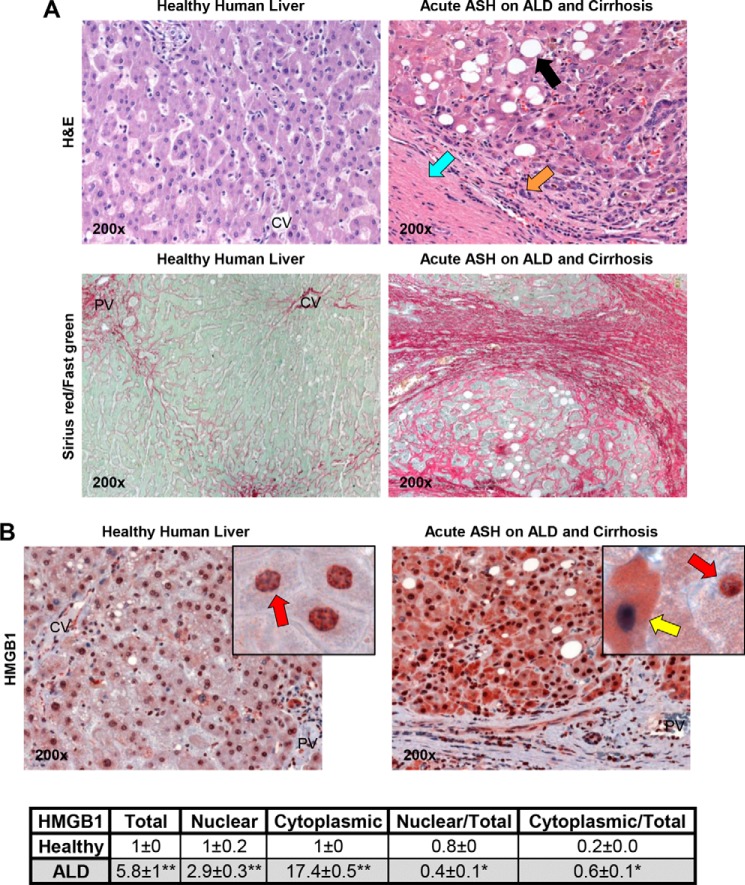
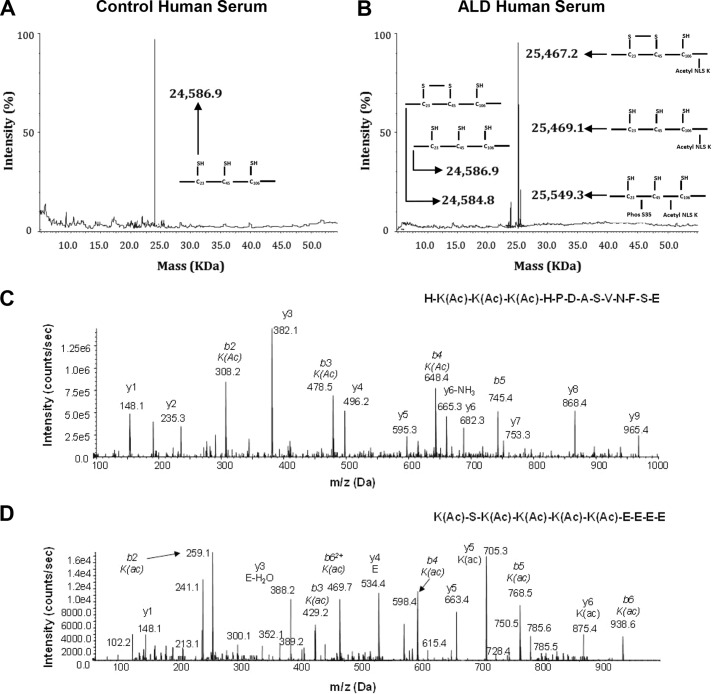
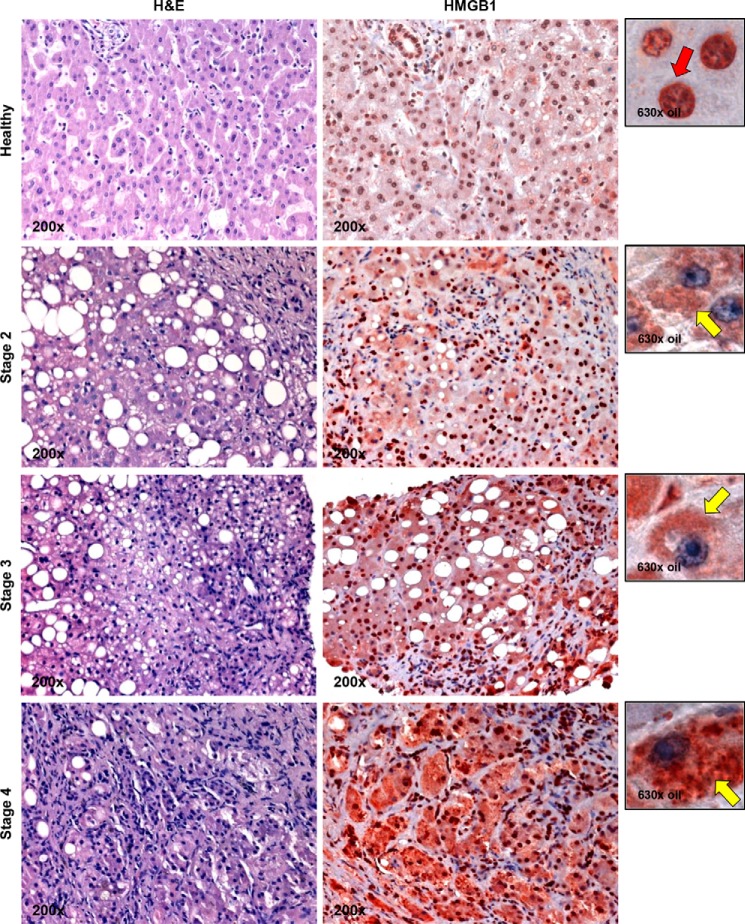
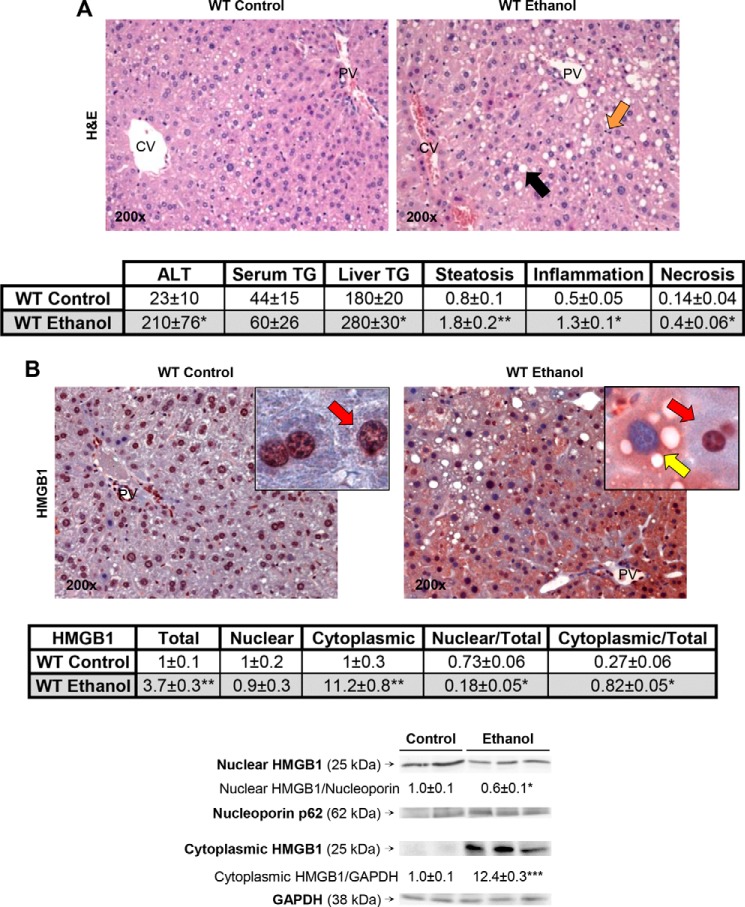
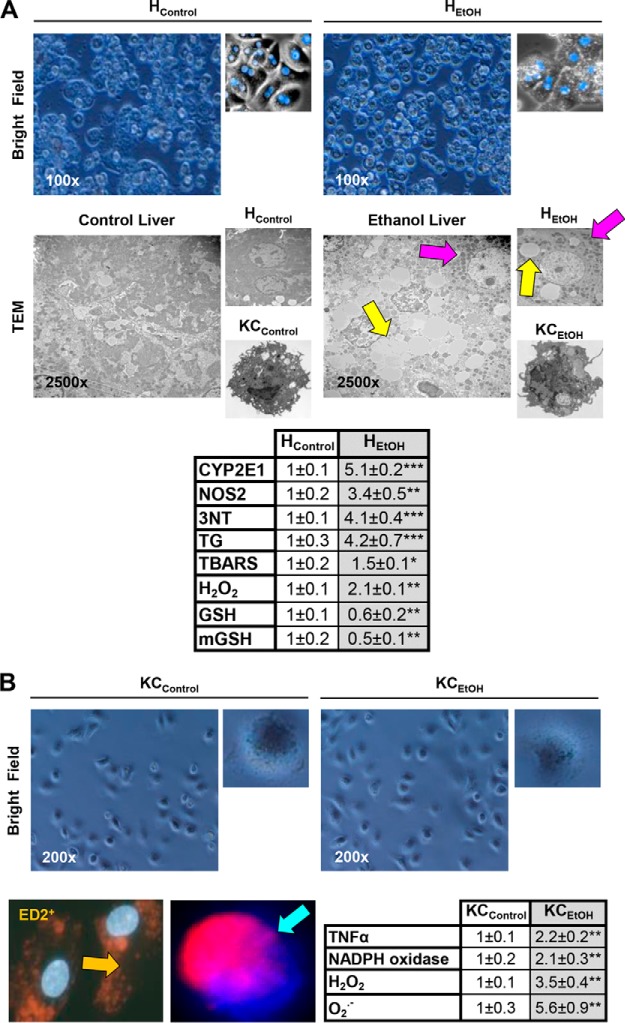
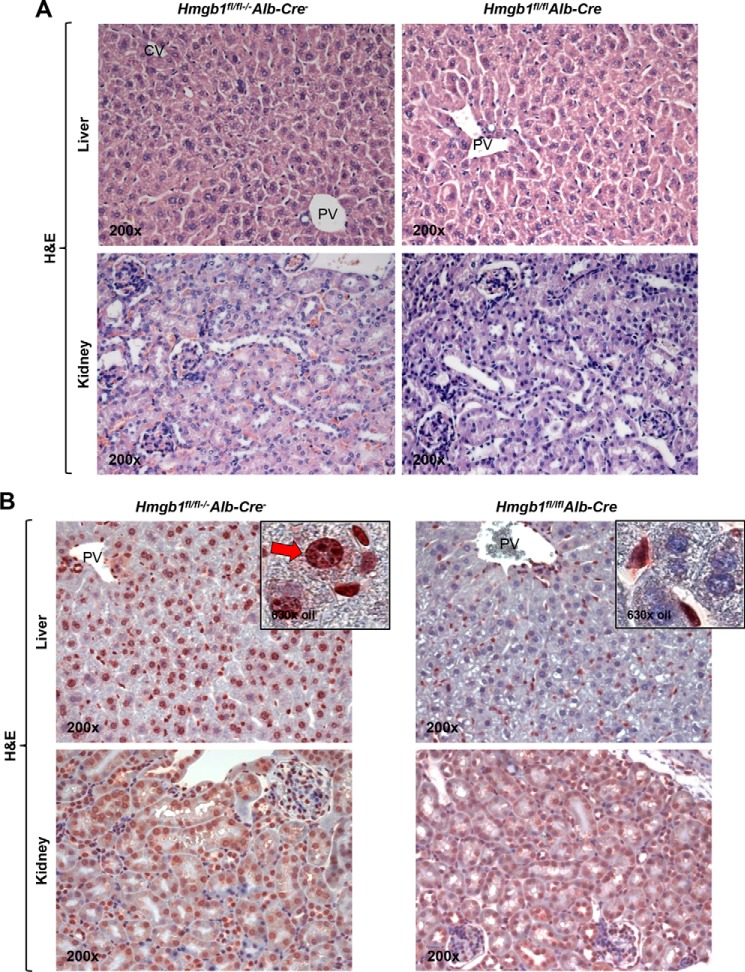
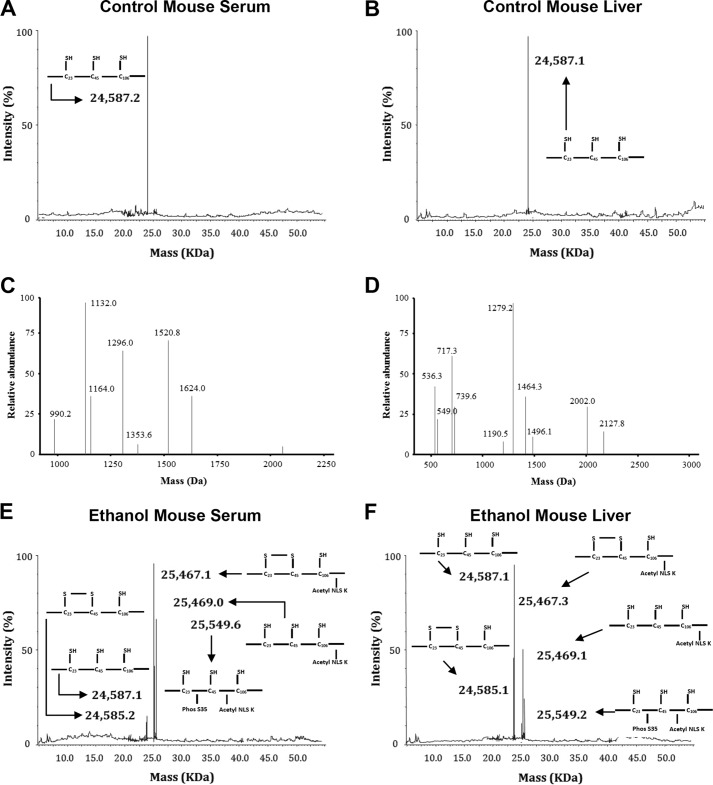
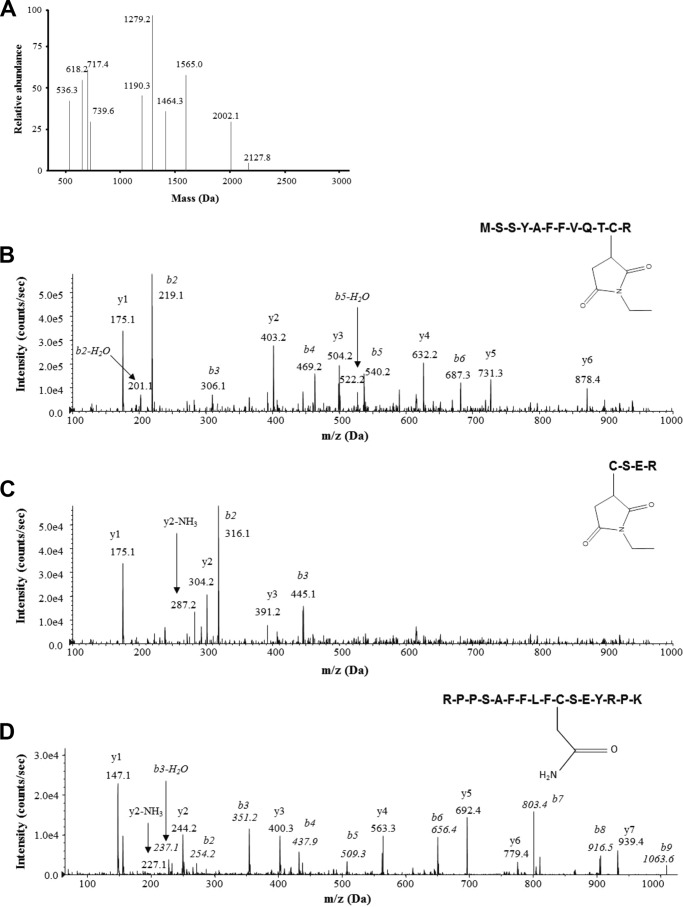
Growing clinical and experimental evidence suggests that sterile inflammation contributes to alcoholic liver disease (ALD). High mobility group box-1 (HMGB1) is highly induced during liver injury; however, a link between this alarmin and ALD has not been established. Thus, the aim of this work was to determine whether HMGB1 contributes to the pathogenesis of ALD. Liver biopsies from patients with ALD showed a robust increase in HMGB1 expression and translocation, which correlated with disease stage, compared with healthy explants. Similar findings were observed in chronic ethanol-fed wild-type (WT) mice. Using primary cell culture, we validated the ability of hepatocytes from ethanol-fed mice to secrete a large amount of HMGB1. Secretion was time- and dose-dependent and responsive to prooxidants and antioxidants. Selective ablation of Hmgb1 in hepatocytes protected mice from alcohol-induced liver injury due to increased carnitine palmitoyltransferase-1, phosphorylated 5'AMP-activated protein kinase-α, and phosphorylated peroxisome proliferator-activated receptor-α expression along with elevated LDL plus VLDL export. Native and post-translationally modified HMGB1 were detected in humans and mice with ALD. In liver and serum from control mice and in serum from healthy volunteers, the lysine residues within the peptides containing nuclear localization signals (NLSs) 1 and 2 were non-acetylated, and all cysteine residues were reduced. However, in livers from ethanol-fed mice, in addition to all thiol/non-acetylated isoforms of HMGB1, we observed acetylated NLS1 and NLS2, a unique phosphorylation site in serine 35, and an increase in oxidation of HMGB1 to the disulfide isoform. In serum from ethanol-fed mice and from patients with ALD, there was disulfide-bonded hyperacetylated HMGB1, disulfide-bonded non-acetylated HMGB1, and HMGB1 phosphorylated in serine 35. Hepatocytes appeared to be a major source of these HMGB1 isoforms. Thus, hepatocyte HMGB1 participates in the pathogenesis of ALD and undergoes post-translational modifications (PTMs) that could condition its toxic effects.
越来越多的临床和实验证据表明,无菌性炎症会导致酒精性肝病(ALD)。高迁移率族蛋白B1(HMGB1)在肝脏损伤期间被高度诱导;然而,这种警报素与ALD之间的联系尚未确立。因此,这项工作的目的是确定HMGB1是否参与ALD的发病机制。与健康肝组织相比,ALD患者的肝活检显示HMGB1表达和转位显著增加,且与疾病阶段相关。在慢性乙醇喂养的野生型(WT)小鼠中也观察到了类似的结果。使用原代细胞培养,我们验证了乙醇喂养小鼠的肝细胞分泌大量HMGB1的能力。分泌具有时间和剂量依赖性,并且对促氧化剂和抗氧化剂有反应。肝细胞中Hmgb1的选择性缺失可保护小鼠免受酒精诱导的肝损伤,这是由于肉碱棕榈酰转移酶-1、磷酸化的5'-AMP激活蛋白激酶-α和磷酸化的过氧化物酶体增殖物激活受体-α表达增加以及低密度脂蛋白(LDL)和极低密度脂蛋白(VLDL)输出升高所致。在患有ALD的人类和小鼠中检测到了天然和翻译后修饰的HMGB1。在对照小鼠的肝脏和血清以及健康志愿者的血清中,含有核定位信号(NLS)1和2的肽段内的赖氨酸残基未被乙酰化,所有半胱氨酸残基均处于还原状态。然而,在乙醇喂养小鼠的肝脏中,除了所有硫醇/未乙酰化的HMGB1异构体之外,我们还观察到乙酰化的NLS1和NLS2、丝氨酸35处的一个独特磷酸化位点以及HMGB1氧化为二硫键异构体的增加。在乙醇喂养小鼠和ALD患者的血清中,存在二硫键结合的高乙酰化HMGB1、二硫键结合的未乙酰化HMGB1以及丝氨酸35处磷酸化的HMGB1。肝细胞似乎是这些HMGB1异构体的主要来源。因此,肝细胞HMGB1参与ALD的发病机制,并经历可能影响其毒性作用的翻译后修饰(PTM)。