Li Kongning, Wu Deng, Chen Xi, Zhang Ting, Zhang Lu, Yi Ying, Miao Zhengqiang, Jin Nana, Bi Xiaoman, Wang Hongwei, Xu Jianzhen, Wang Dong
College of Bioinformatics Science and Technology, Harbin Medical University, Harbin 150081, China.
College of Bioengineering, Henan University of Technology, Zhengzhou 450001, China.
Biomed Res Int. 2014;2014:690103. doi: 10.1155/2014/690103. Epub 2014 May 18.
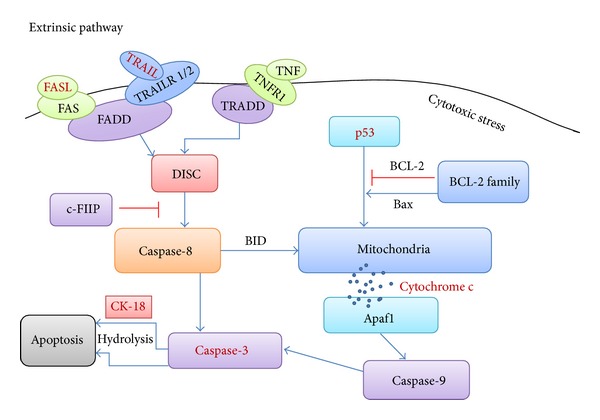
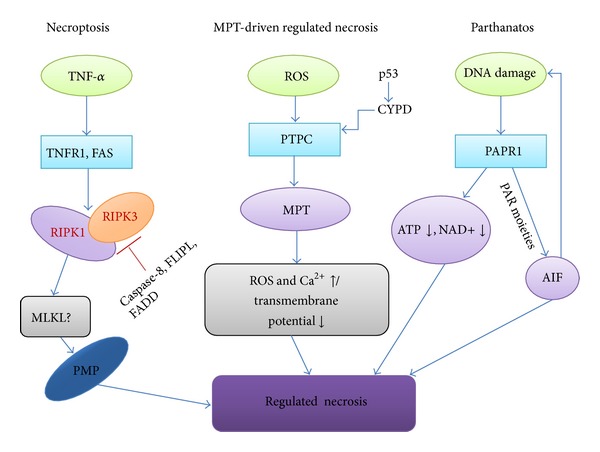
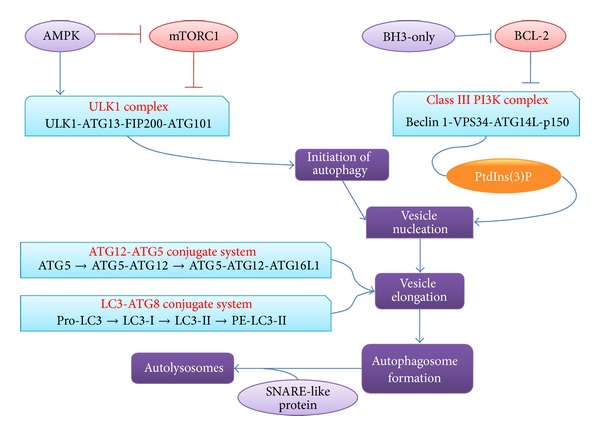
Cell death is a critical biological process, serving many important functions within multicellular organisms. Aberrations in cell death can contribute to the pathology of human diseases. Significant progress made in the research area enormously speeds up our understanding of the biochemical and molecular mechanisms of cell death. According to the distinct morphological and biochemical characteristics, cell death can be triggered by extrinsic or intrinsic apoptosis, regulated necrosis, autophagic cell death, and mitotic catastrophe. Nevertheless, the realization that all of these efforts seek to pursue an effective treatment and cure for the disease has spurred a significant interest in the development of promising biomarkers of cell death to early diagnose disease and accurately predict disease progression and outcome. In this review, we summarize recent knowledge about cell death, survey current and emerging biomarkers of cell death, and discuss the relationship with human diseases.
细胞死亡是一个关键的生物学过程,在多细胞生物中发挥着许多重要功能。细胞死亡异常可导致人类疾病的病理变化。该研究领域取得的重大进展极大地加速了我们对细胞死亡的生化和分子机制的理解。根据不同的形态和生化特征,细胞死亡可由外源性或内源性凋亡、调节性坏死、自噬性细胞死亡和有丝分裂灾难引发。然而,意识到所有这些努力都是为了寻求一种有效的疾病治疗方法,这激发了人们对开发有前景的细胞死亡生物标志物的浓厚兴趣,以便早期诊断疾病并准确预测疾病进展和结果。在本综述中,我们总结了关于细胞死亡的最新知识,概述了当前和新兴的细胞死亡生物标志物,并讨论了它们与人类疾病的关系。