
介孔二氧化硅包裹的金纳米棒用于双光子激活光动力疗法中的增强型等离子体共振能量转移
Enhanced plasmonic resonance energy transfer in mesoporous silica-encased gold nanorod for two-photon-activated photodynamic therapy.
作者信息
Chen Nai-Tzu, Tang Kuo-Chun, Chung Ming-Fang, Cheng Shih-Hsun, Huang Ching-Mao, Chu Chia-Hui, Chou Pi-Tai, Souris Jeffrey S, Chen Chin-Tu, Mou Chung-Yuan, Lo Leu-Wei
机构信息
1. Institute of Biomedical Engineering and Nanomedicine (I-BEN), National Health Research Institutes, Zhunan, Miaoli 350, Taiwan. ; 2. Department of Chemistry, National Taiwan University, Taipei 106, Taiwan.
2. Department of Chemistry, National Taiwan University, Taipei 106, Taiwan.
出版信息
Theranostics. 2014 May 30;4(8):798-807. doi: 10.7150/thno.8934. eCollection 2014.
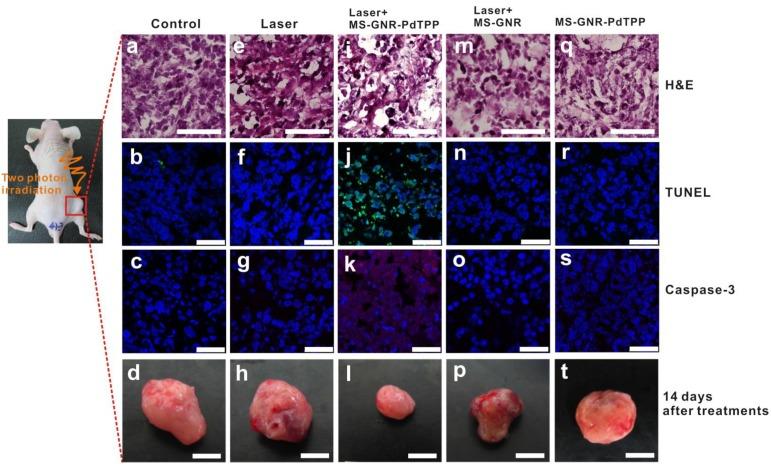
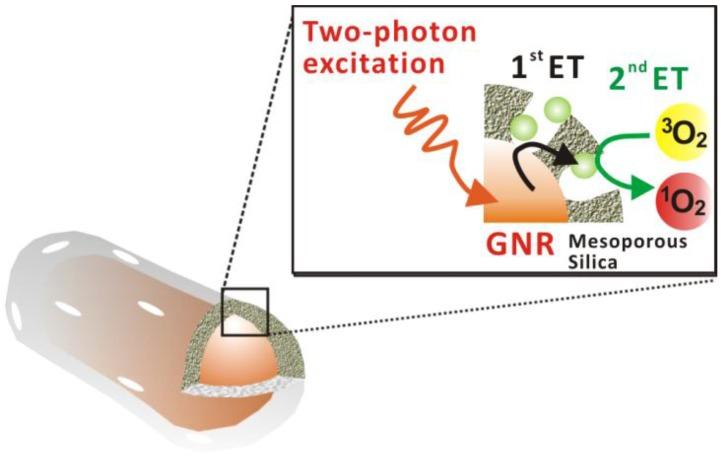
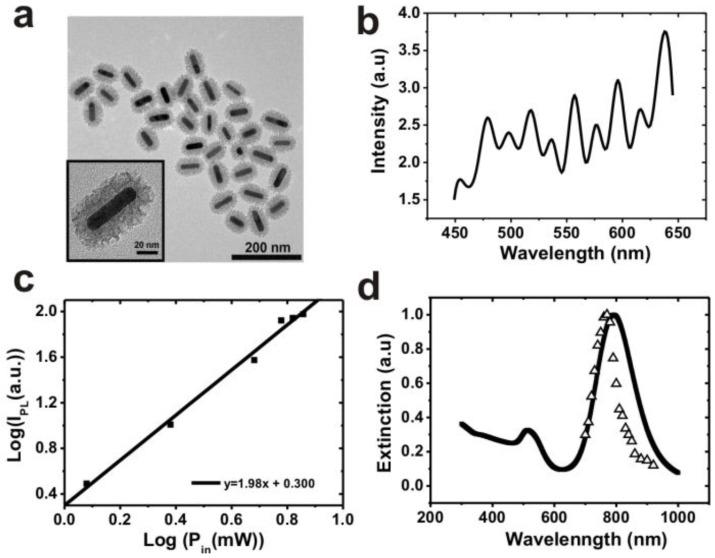
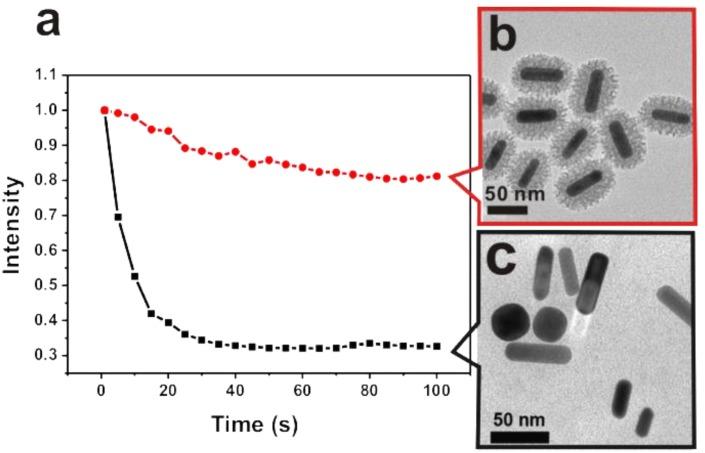
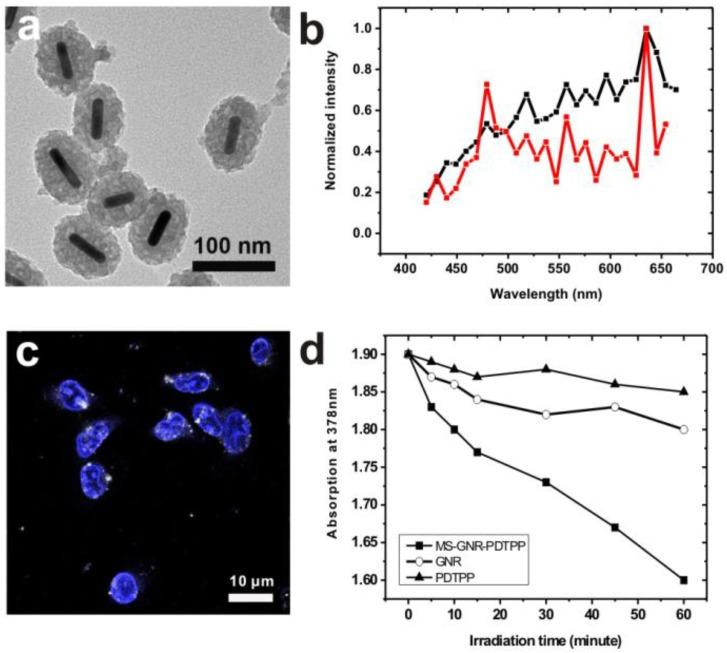
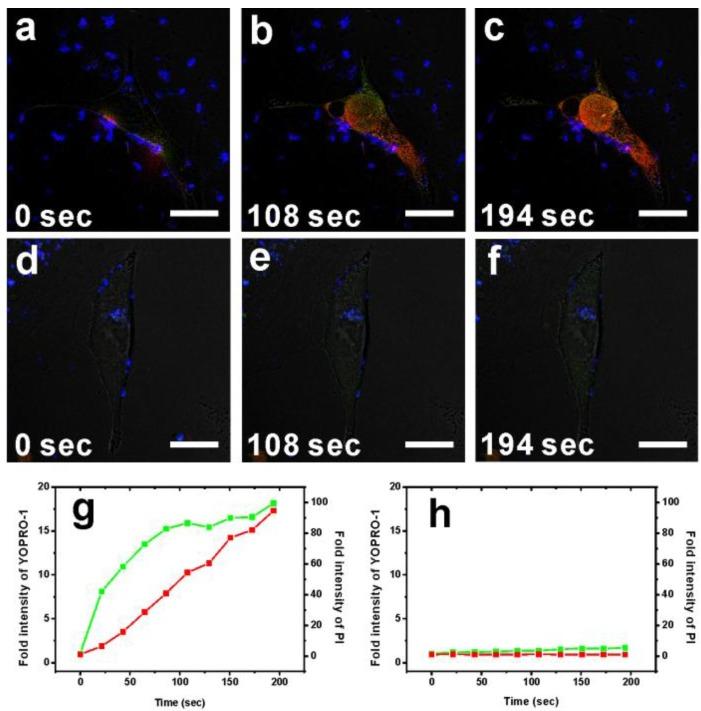
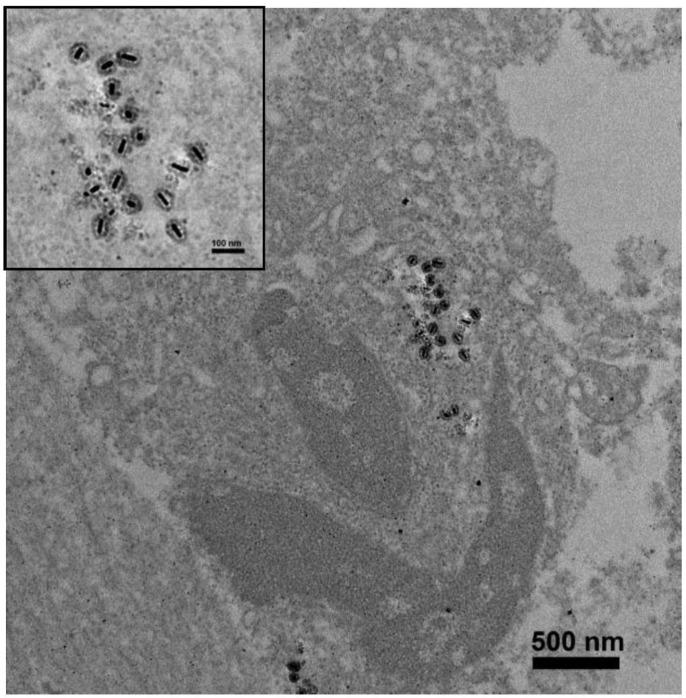
The unique optical properties of gold nanorods (GNRs) have recently drawn considerable interest from those working in in vivo biomolecular sensing and bioimaging. Especially appealing in these applications is the plasmon-enhanced photoluminescence of GNRs induced by two-photon excitation at infrared wavelengths, owing to the significant penetration depth of infrared light in tissue. Unfortunately, many studies have also shown that often the intensity of pulsed coherent irradiation of GNRs needed results in irreversible deformation of GNRs, greatly reducing their two-photon luminescence (TPL) emission intensity. In this work we report the design, synthesis, and evaluation of mesoporous silica-encased gold nanorods (MS-GNRs) that incorporate photosensitizers (PSs) for two-photon-activated photodynamic therapy (TPA-PDT). The PSs, doped into the nano-channels of the mesoporous silica shell, can be efficiently excited via intra-particle plasmonic resonance energy transfer from the encased two-photon excited gold nanorod and further generates cytotoxic singlet oxygen for cancer eradication. In addition, due to the mechanical support provided by encapsulating mesoporous silica matrix against thermal deformation, the two-photon luminescence stability of GNRs was significantly improved; after 100 seconds of 800 nm repetitive laser pulse with the 30 times higher than average power for imaging acquisition, MS-GNR luminescence intensity exhibited ~260% better resistance to deformation than that of the uncoated gold nanorods. These results strongly suggest that MS-GNRs with embedded PSs might provide a promising photodynamic therapy for the treatment of deeply situated cancers via plasmonic resonance energy transfer.
金纳米棒(GNRs)独特的光学性质最近引起了体内生物分子传感和生物成像领域研究人员的极大兴趣。在这些应用中,特别吸引人的是由于红外光在组织中的显著穿透深度,GNRs在红外波长下通过双光子激发产生的等离子体增强光致发光。不幸的是,许多研究也表明,通常所需的GNRs脉冲相干辐照强度会导致GNRs发生不可逆变形,大大降低其双光子发光(TPL)发射强度。在这项工作中,我们报告了用于双光子激活光动力疗法(TPA-PDT)的、包含光敏剂(PSs)的介孔二氧化硅包裹金纳米棒(MS-GNRs)的设计、合成和评估。掺杂在介孔二氧化硅壳纳米通道中的PSs可以通过包裹的双光子激发金纳米棒的颗粒内等离子体共振能量转移被有效激发,并进一步产生细胞毒性单线态氧以根除癌症。此外,由于包裹的介孔二氧化硅基质提供的机械支撑可防止热变形,GNRs的双光子发光稳定性得到显著提高;在以高于成像采集平均功率30倍的功率进行800 nm重复激光脉冲照射100秒后,MS-GNR的发光强度表现出比未涂层金纳米棒约260%更好的抗变形能力。这些结果有力地表明,嵌入PSs的MS-GNRs可能通过等离子体共振能量转移为深部癌症的治疗提供一种有前景的光动力疗法。
 Zotero 插件