CSIRO Biosecurity Flagship, Australian Animal Health Laboratory, Geelong, Victoria 3220, Australia.
Nat Rev Immunol. 2013 Dec;13(12):851-61. doi: 10.1038/nri3551. Epub 2013 Oct 25.
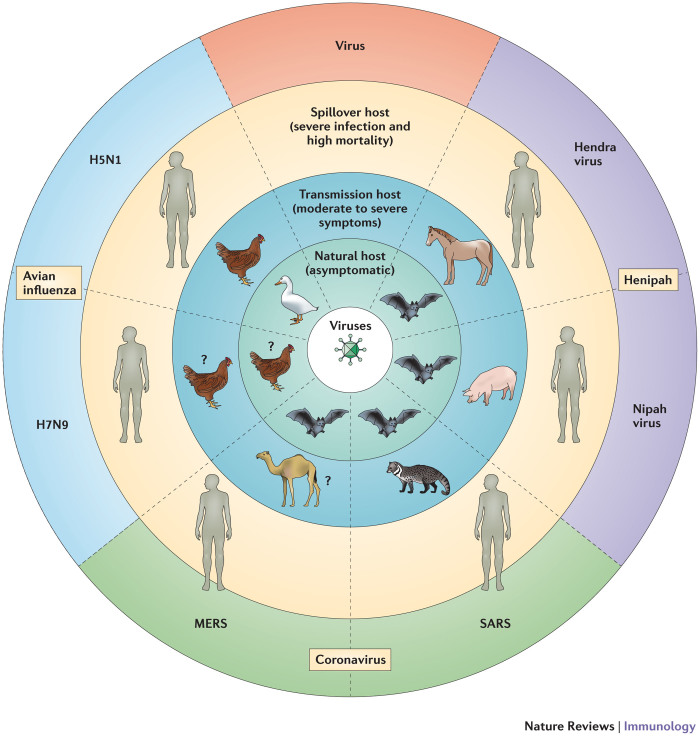
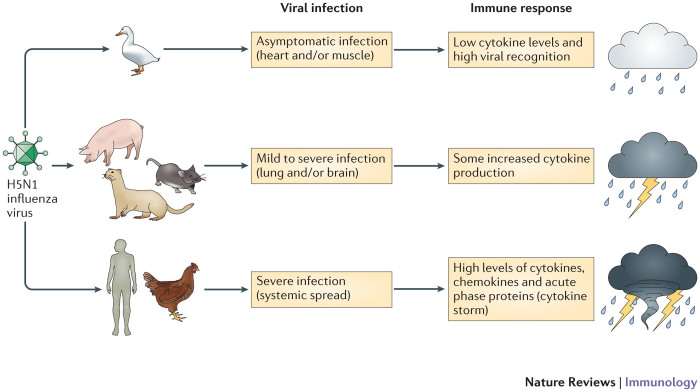
Zoonotic viruses that emerge from wildlife and domesticated animals pose a serious threat to human and animal health. In many instances, mouse models have improved our understanding of the human immune response to infection; however, when dealing with emerging zoonotic diseases, they may be of limited use. This is particularly the case when the model fails to reproduce the disease status that is seen in the natural reservoir, transmission species or human host. In this Review, we discuss how researchers are placing more emphasis on the study of the immune response to zoonotic infections in the natural reservoir hosts and spillover species. Such studies will not only lead to a greater understanding of how these infections induce variable disease and immune responses in distinct species but also offer important insights into the evolution of mammalian immune systems.
从野生动物和驯养动物中出现的人畜共患病毒对人类和动物健康构成严重威胁。在许多情况下,鼠模型提高了我们对人类感染免疫反应的理解;然而,当处理新出现的人畜共患病时,它们的用途可能有限。当模型无法再现天然储主、传播物种或人类宿主中所见的疾病状态时,尤其如此。在这篇综述中,我们讨论了研究人员如何更加重视对天然储主和溢出物种中对人畜共感染免疫反应的研究。这些研究不仅将导致对这些感染如何在不同物种中引起不同的疾病和免疫反应有更深入的了解,还将为哺乳动物免疫系统的进化提供重要的见解。