Köfeler Harald C, Fauland Alexander, Rechberger Gerald N, Trötzmüller Martin
Core Facility for Mass Spectrometry, Medical University of Graz, Stiftingtalstrasse 24, 8010 Graz, Austria.
Institute of Analytical Chemistry and Food Chemistry, Graz University of Technology, Stremayrgasse 9/II, 8010 Graz, Austria.
Metabolites. 2012 Jan 5;2(1):19-38. doi: 10.3390/metabo2010019.
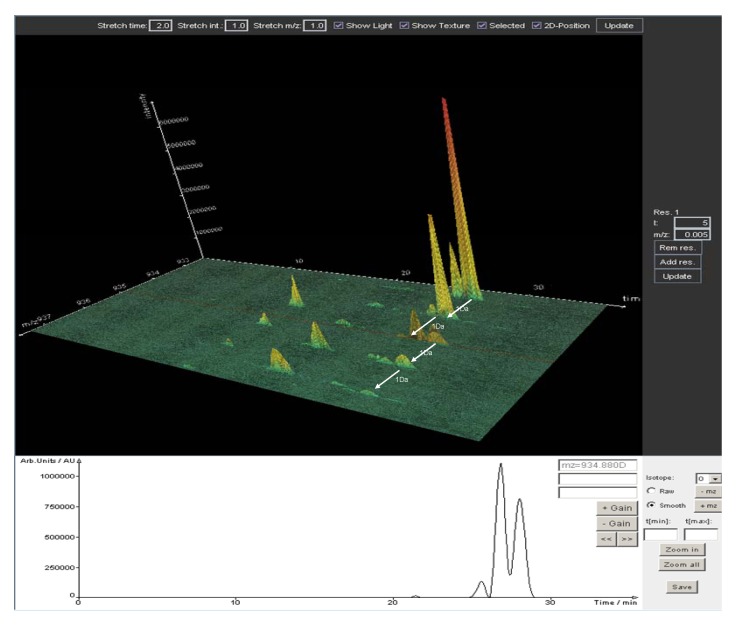
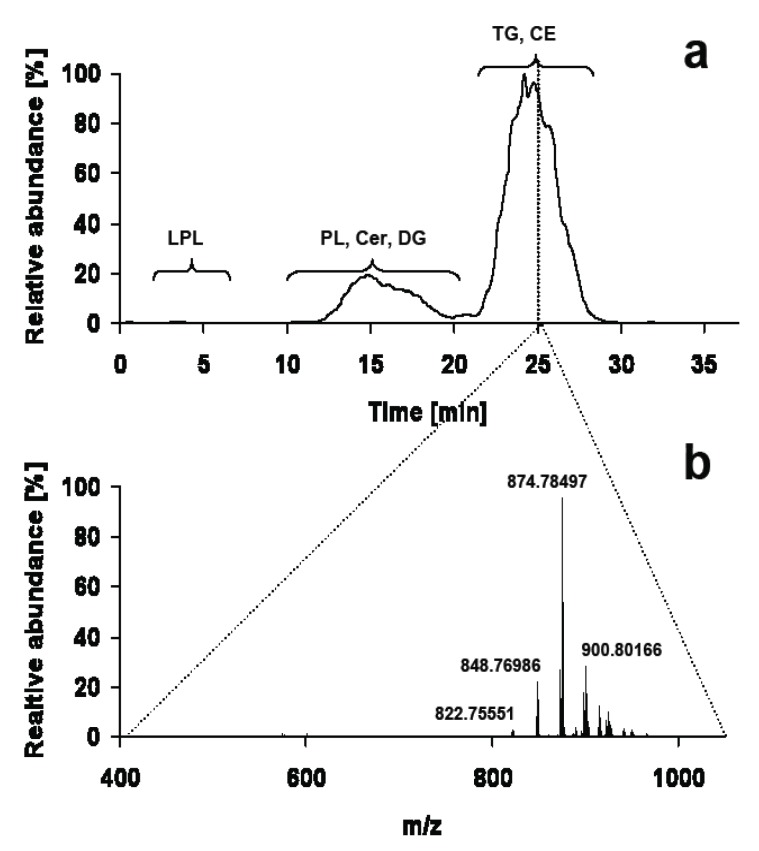
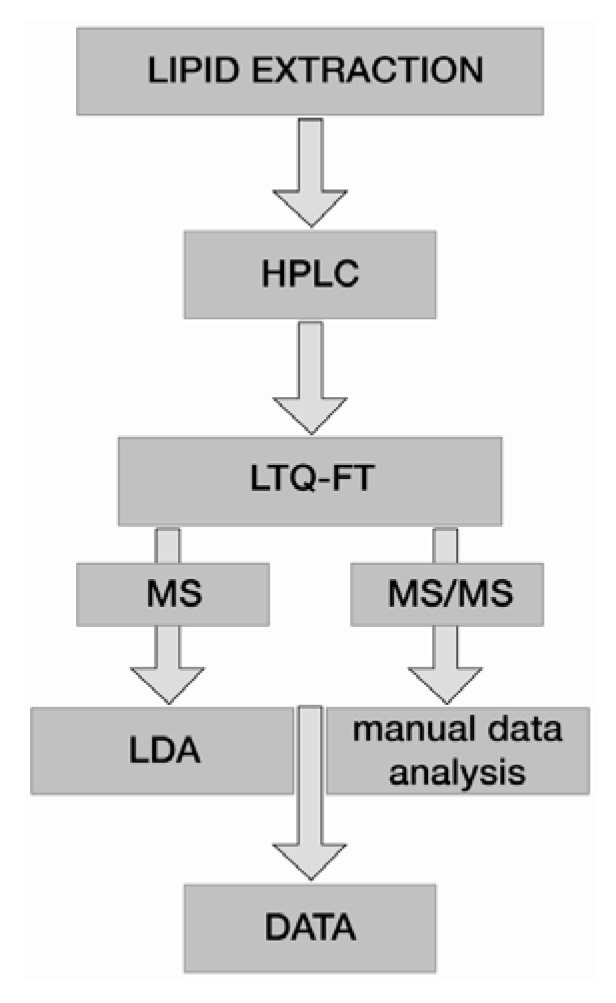
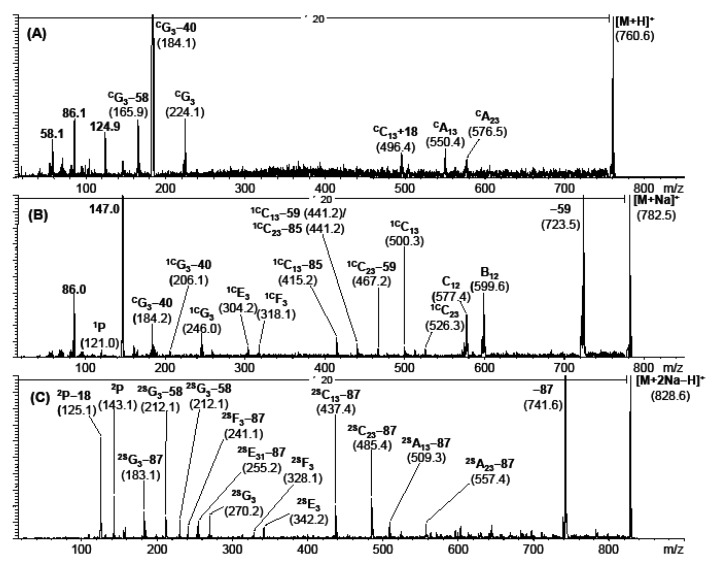
One decade after the genomic and the proteomic life science revolution, new 'omics' fields are emerging. The metabolome encompasses the entity of small molecules-Most often end products of a catalytic process regulated by genes and proteins-with the lipidome being its fat soluble subdivision. Within recent years, lipids are more and more regarded not only as energy storage compounds but also as interactive players in various cellular regulation cycles and thus attain rising interest in the bio-medical community. The field of lipidomics is, on one hand, fuelled by analytical technology advances, particularly mass spectrometry and chromatography, but on the other hand new biological questions also drive analytical technology developments. Compared to fairly standardized genomic or proteomic high-throughput protocols, the high degree of molecular heterogeneity adds a special analytical challenge to lipidomic analysis. In this review, we will take a closer look at various mass spectrometric platforms for lipidomic analysis. We will focus on the advantages and limitations of various experimental setups like 'shotgun lipidomics', liquid chromatography-Mass spectrometry (LC-MS) and matrix assisted laser desorption ionization-time of flight (MALDI-TOF) based approaches. We will also examine available software packages for data analysis, which nowadays is in fact the rate limiting step for most 'omics' workflows.
在基因组学和蛋白质组学引发的生命科学革命过去十年后,新的“组学”领域正在兴起。代谢组包含小分子实体——通常是由基因和蛋白质调控的催化过程的终产物——脂质组是其脂溶性细分部分。近年来,脂质越来越被视为不仅是能量储存化合物,而且是各种细胞调节周期中的相互作用参与者,因此在生物医学界受到越来越多的关注。脂质组学领域一方面受到分析技术进步的推动,特别是质谱和色谱技术,另一方面新的生物学问题也推动了分析技术的发展。与相当标准化的基因组学或蛋白质组学高通量方案相比,高度的分子异质性给脂质组学分析带来了特殊的分析挑战。在这篇综述中,我们将更深入地探讨用于脂质组学分析的各种质谱平台。我们将关注各种实验设置的优缺点,如“鸟枪法脂质组学”、液相色谱-质谱联用(LC-MS)和基于基质辅助激光解吸电离飞行时间(MALDI-TOF)的方法。我们还将研究用于数据分析的可用软件包,如今这实际上是大多数“组学”工作流程的限速步骤。