Cucchi Thomas, Barnett Ross, Martínková Natália, Renaud Sabrina, Renvoisé Elodie, Evin Allowen, Sheridan Alison, Mainland Ingrid, Wickham-Jones Caroline, Tougard Christelle, Quéré Jean Pierre, Pascal Michel, Pascal Marine, Heckel Gerald, O'Higgins Paul, Searle Jeremy B, Dobney Keith M
CNRS-Muséum National d'Histoire Naturelle, UMR 7209, Archéoozoologie, histoire des sociétés humaines et de peuplements animaux, 55 rue Buffon, 75005, Paris, France; Department of Archaeology, University of Aberdeen, St. Mary's, Elphinstone Road, Aberdeen, United Kingdom.
Evolution. 2014 Oct;68(10):2804-20. doi: 10.1111/evo.12476. Epub 2014 Jul 29.
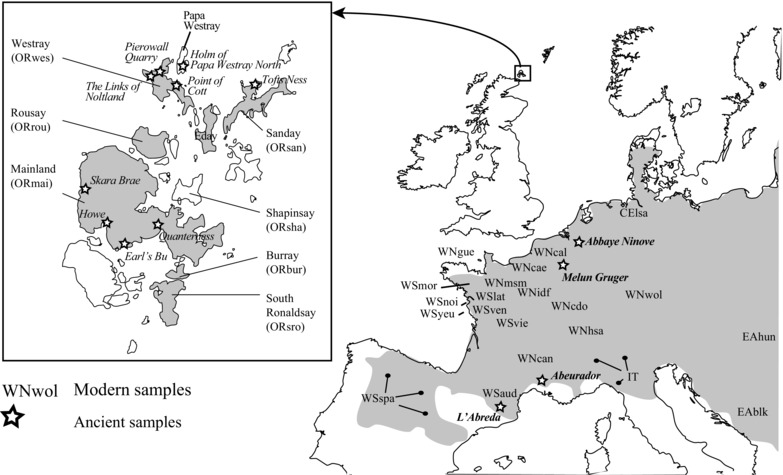
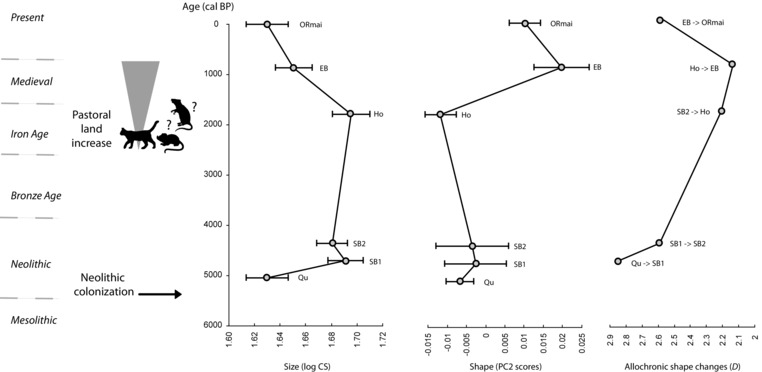
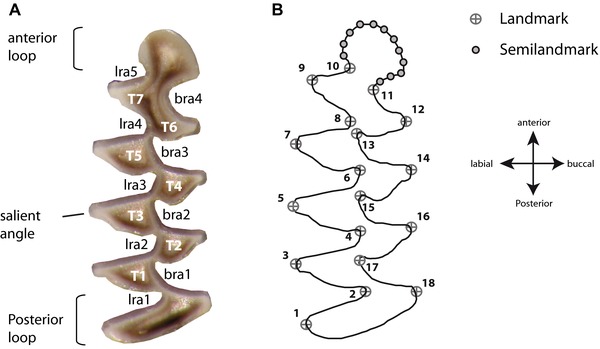
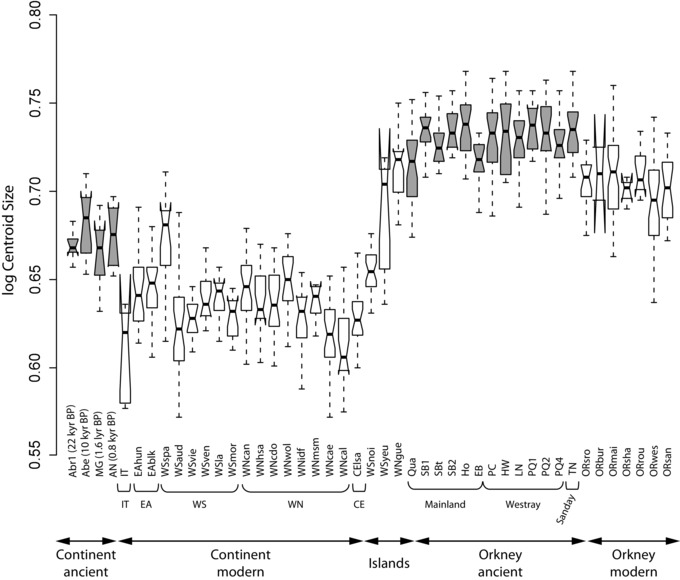
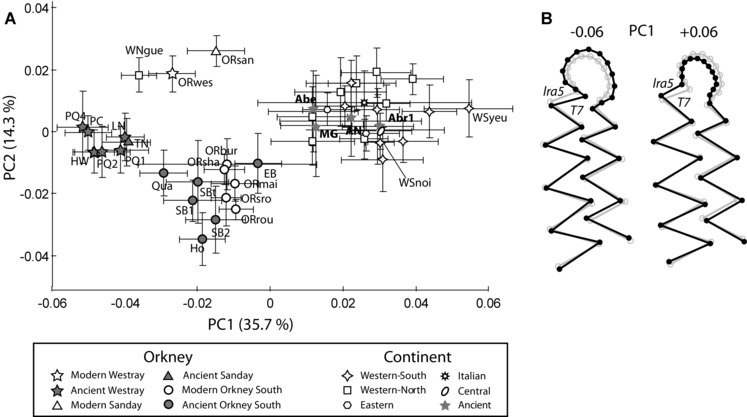
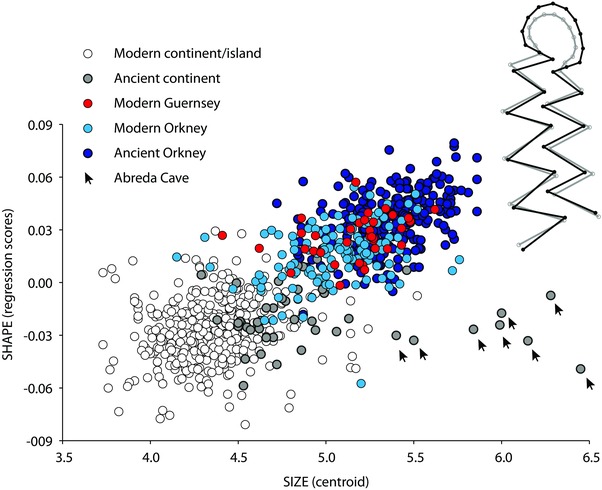
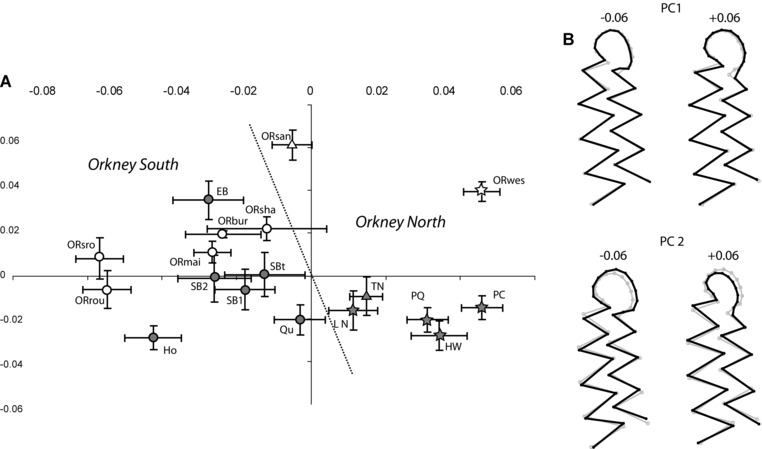
Island evolution may be expected to involve fast initial morphological divergence followed by stasis. We tested this model using the dental phenotype of modern and ancient common voles (Microtus arvalis), introduced onto the Orkney archipelago (Scotland) from continental Europe some 5000 years ago. First, we investigated phenotypic divergence of Orkney and continental European populations and assessed climatic influences. Second, phenotypic differentiation among Orkney populations was tested against geography, time, and neutral genetic patterns. Finally, we examined evolutionary change along a time series for the Orkney Mainland. Molar gigantism and anterior-lobe hypertrophy evolved rapidly in Orkney voles following introduction, without any transitional forms detected. Founder events and adaptation appear to explain this initial rapid evolution. Idiosyncrasy in dental features among different island populations of Orkney voles is also likely the result of local founder events following Neolithic translocation around the archipelago. However, against our initial expectations, a second marked phenotypic shift occurred between the 4th and 12th centuries AD, associated with increased pastoral farming and introduction of competitors (mice and rats) and terrestrial predators (foxes and cats). These results indicate that human agency can generate a more complex pattern of morphological evolution than might be expected in island rodents.
岛屿演化可能会经历快速的初始形态分化,随后进入停滞期。我们利用现代和古代普通田鼠(Microtus arvalis)的牙齿表型对该模型进行了测试,这些田鼠约在5000年前从欧洲大陆被引入到奥克尼群岛(苏格兰)。首先,我们调查了奥克尼群岛和田鼠欧洲大陆种群的表型差异,并评估了气候影响。其次,针对地理、时间和中性遗传模式对奥克尼群岛种群之间的表型分化进行了测试。最后,我们研究了奥克尼主岛随时间序列的进化变化。引入后,奥克尼田鼠的臼齿巨型化和前叶肥大迅速进化,未检测到任何过渡形式。奠基者事件和适应性似乎可以解释这种最初的快速进化。奥克尼田鼠不同岛屿种群牙齿特征的独特性也可能是新石器时代群岛间迁移后局部奠基者事件的结果。然而,与我们最初的预期相反,在公元4世纪至12世纪之间发生了第二次明显的表型转变,这与畜牧业的增加以及竞争者(老鼠和大鼠)和陆地捕食者(狐狸和猫)的引入有关。这些结果表明,与岛屿啮齿动物可能出现的情况相比,人类活动能够产生更为复杂的形态演化模式。