Dlugosz Aldona, Muschiol Sandra, Zakikhany Katherina, Assadi Ghazaleh, D'Amato Mauro, Lindberg Greger
Karolinska Institutet, Department of Medicine, Division of Gastroenterology and Hepatology, Karolinska University Hospital, Gastrocentrum Huddinge K63, Stockholm, Sweden.
Karolinska Institutet, Department of Microbiology, Tumor and Cell Biology (MTC), Stockholm, Sweden.
Gut Pathog. 2014 Jun 16;6:24. doi: 10.1186/1757-4749-6-24. eCollection 2014.
Enteroendocrine cells (EEC) are highly specialized cells producing signalling molecules vital to the normal functions of the gut. Recently, we showed altered protein distribution in Chlamydia infected EEC in vitro. The aim of this study was to perform a microarray analysis of the response pattern of EEC from both large and small bowel to infection in vitro, using Chlamydia trachomatis infection as a model.
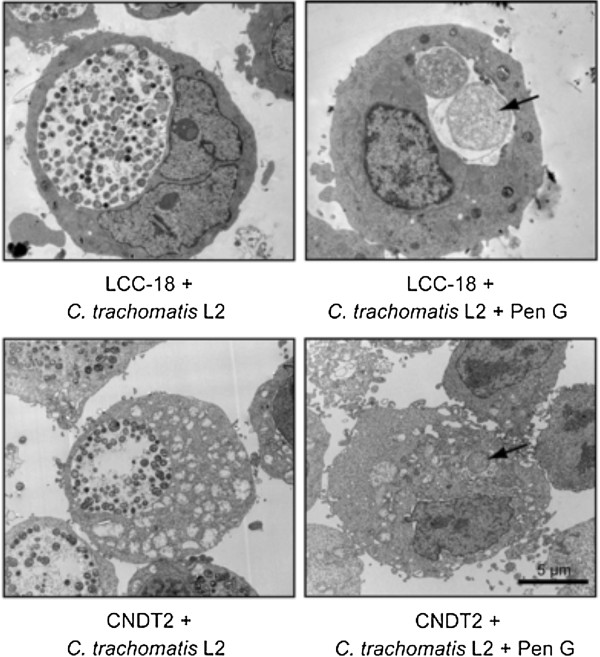
TWO HUMAN EEC LINES: LCC-18, derived from a neuroendocrine colonic tumour, and CNDT-2, derived from a small intestinal carcinoid, were infected using cultured C. trachomatis serovar LGV II strain 434 (ATCC VR-902B). Penicillin G was used to induce persistent infection. We used microarray analysis (Affymetrix GeneChip®) for studying changes in gene expression at different stages of infection.
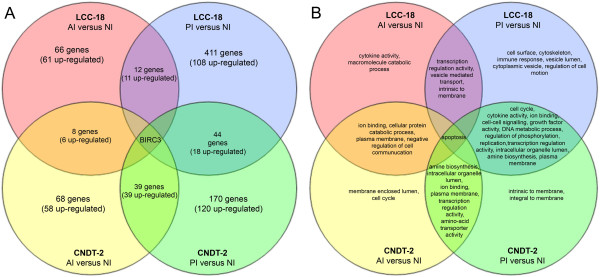
Twenty-four hours after active and persistent infection, 66 and 411 genes in LCC-18 and 68 and 170 genes in CNDT-2 cells, respectively showed mean expression ratios >2-fold compared to non-infected cells. These genes encoded factors regulating apoptosis, cell differentiation, transcription regulation, cytokine activity, amine biosynthesis and vesicular transport. We found significant differences in gene transcription levels between persistently infected and non-infected cells in 10 genes coding for different solute carrier transporters (SLC) and in 5 genes related to endocrine function (GABARAPL1, GRIP1, DRD2, SYT5 and SYT7).
Infected EEC cells exhibit cell-type specific patterns related to vesicular transport, secretion and neurotransmitters. EEC play a pivotal role in regulation of gut motility and an impairment of enteroendocrine function can contribute to motility disorders.
肠内分泌细胞(EEC)是高度特化的细胞,可产生对肠道正常功能至关重要的信号分子。最近,我们在体外研究中发现沙眼衣原体感染的EEC中蛋白质分布发生了改变。本研究旨在以沙眼衣原体感染为模型,对大肠和小肠的EEC在体外感染后的反应模式进行微阵列分析。
使用培养的沙眼衣原体血清型LGV II菌株434(ATCC VR - 902B)感染两个人类EEC细胞系:LCC - 18(源自神经内分泌结肠肿瘤)和CNDT - 2(源自小肠类癌)。使用青霉素G诱导持续性感染。我们使用微阵列分析(Affymetrix GeneChip®)研究感染不同阶段的基因表达变化。
在活跃感染和持续感染24小时后,LCC - 18细胞中有66个和411个基因,CNDT - 2细胞中有68个和170个基因,与未感染细胞相比,平均表达率>2倍。这些基因编码调节细胞凋亡、细胞分化、转录调控、细胞因子活性、胺生物合成和囊泡运输的因子。我们发现,在编码不同溶质载体转运蛋白(SLC)的10个基因以及与内分泌功能相关的5个基因(GABARAPL1、GRIP1、DRD2、SYT5和SYT7)中,持续感染细胞与未感染细胞之间的基因转录水平存在显著差异。
受感染的EEC细胞表现出与囊泡运输、分泌和神经递质相关的细胞类型特异性模式。EEC在肠道运动调节中起关键作用,肠内分泌功能受损可能导致运动障碍。