Strina Agostino, Barreto Mauricio L, Cooper Philip J, Rodrigues Laura C
Universidade Federal da Bahia, Instituto de Saude Coletiva, Rua Basilio da Gama s/n, 40110-040 Salvador, Bahia, Brazil.
St George's University of London, Division of Clinical Sciences, Cranmer Terrace, London SW17 ORE, UK.
Emerg Themes Epidemiol. 2014 Jun 6;11:5. doi: 10.1186/1742-7622-11-5. eCollection 2014.
The study of non-atopic asthma/wheeze in children separately from atopic asthma is relatively recent. Studies have focused on single risk factors and had inconsistent findings.
To review evidence on factors associated with non-atopic asthma/wheeze in children and adolescents.
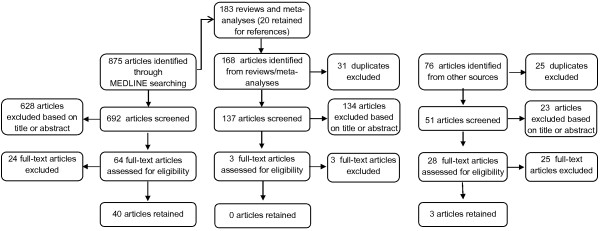
A review of studies of risk factors for non-atopic asthma/wheeze which had a non-asthmatic comparison group, and assessed atopy by skin-prick test or allergen-specific IgE.
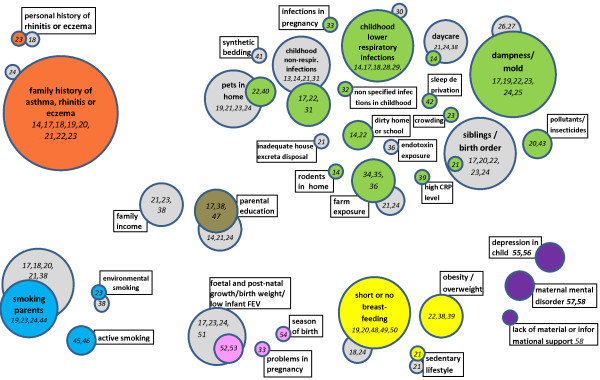
Studies of non-atopic asthma/wheeze used a wide diversity of definitions of asthma/wheeze, comparison groups and methods to assess atopy. Among 30 risk factors evaluated in the 43 studies only 3 (family history of asthma/rhinitis/eczema, dampness/mold in the household, and lower respiratory tract infections in childhood) showed consistent associations with non-atopic asthma/wheeze. No or limited period of breastfeeding was less consistently associated with non-atopic asthma/wheeze. The few studies examining the effects of overweight/obesity and psychological/social factors showed consistent associations. We used a novel graphical presentation of different risk factors for non-atopic asthma/wheeze, allowing a more complete perception of the complex pattern of effects.
More research using standardized methodology is needed on the causes of non-atopic asthma.
将儿童非特应性哮喘/喘息与特应性哮喘分开研究是相对较新的。以往研究聚焦于单一风险因素,结果并不一致。
综述与儿童及青少年非特应性哮喘/喘息相关因素的证据。
对有非哮喘对照组且通过皮肤点刺试验或过敏原特异性IgE评估特应性的非特应性哮喘/喘息风险因素研究进行综述。
非特应性哮喘/喘息的研究对哮喘/喘息、对照组及评估特应性的方法采用了多种不同定义。在43项研究中评估的30个风险因素里,只有3个(哮喘/鼻炎/湿疹家族史、家庭潮湿/霉菌、儿童期下呼吸道感染)与非特应性哮喘/喘息呈现出一致的关联。无母乳喂养或母乳喂养时间有限与非特应性哮喘/喘息的关联不太一致。少数研究超重/肥胖和心理/社会因素的影响呈现出一致的关联。我们使用了一种新颖的图形展示非特应性哮喘/喘息的不同风险因素,以便更全面地了解复杂的效应模式。
需要更多采用标准化方法的研究来探究非特应性哮喘的病因。