Drexler Anna L, Pietri Jose E, Pakpour Nazzy, Hauck Eric, Wang Bo, Glennon Elizabeth K K, Georgis Martha, Riehle Michael A, Luckhart Shirley
Department of Medical Microbiology and Immunology, School of Medicine, University of California, Davis, Davis, California, United States of America.
Department of Entomology, University of Arizona, Tucson, Arizona, United States of America.
PLoS Pathog. 2014 Jun 26;10(6):e1004231. doi: 10.1371/journal.ppat.1004231. eCollection 2014 Jun.
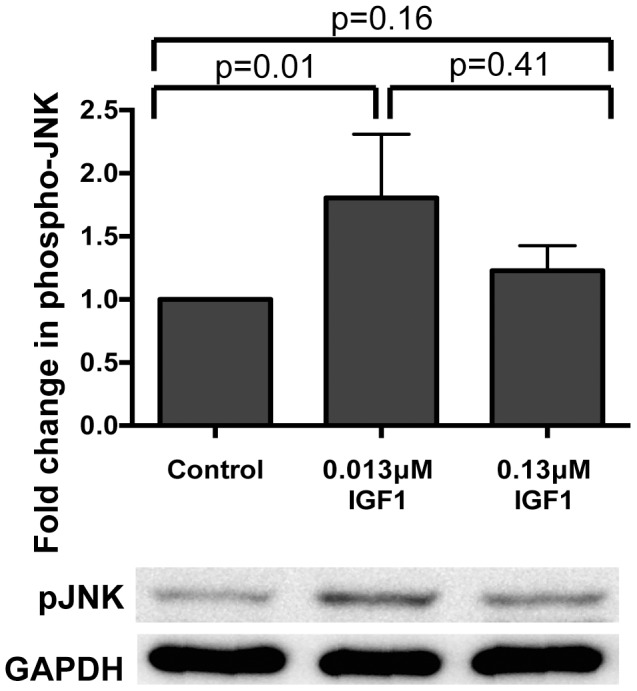
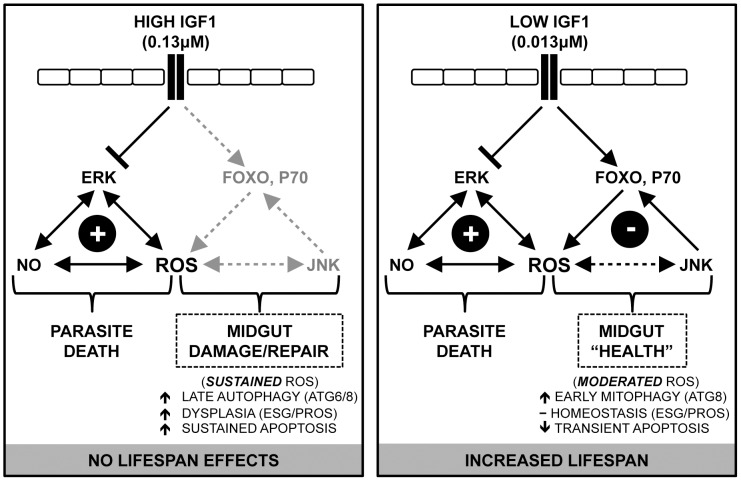
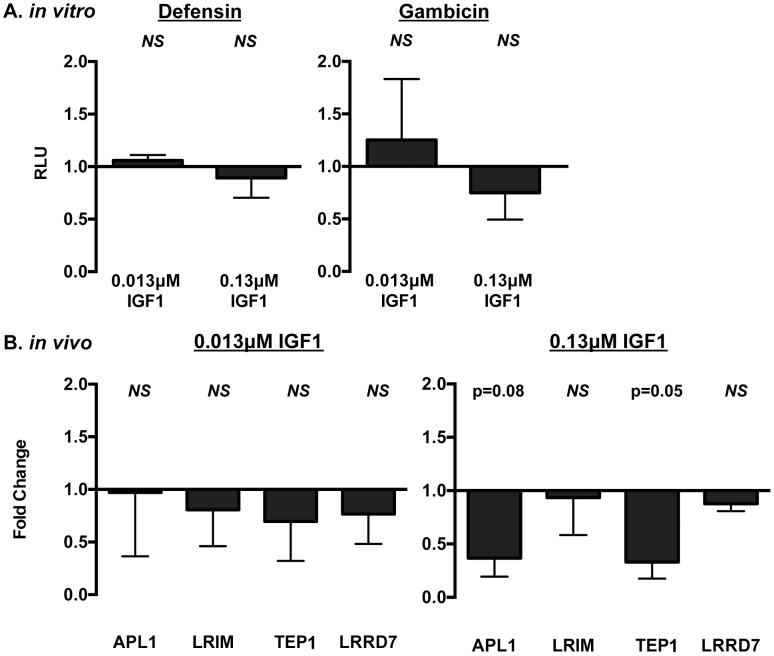
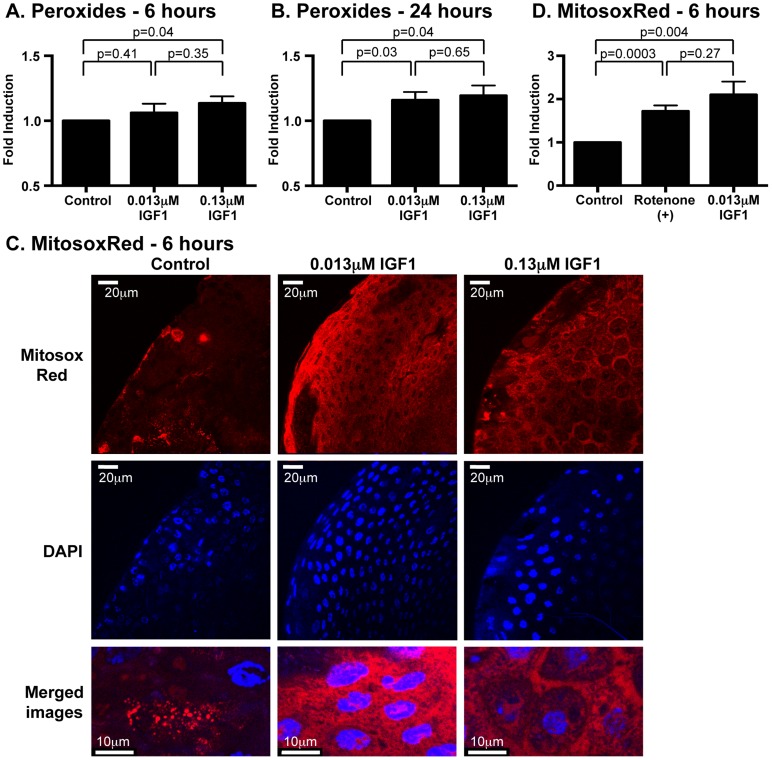
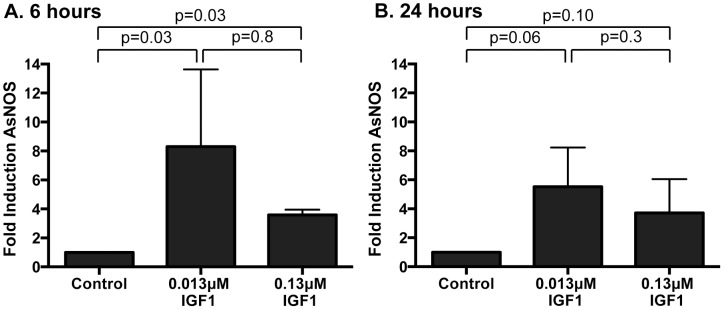
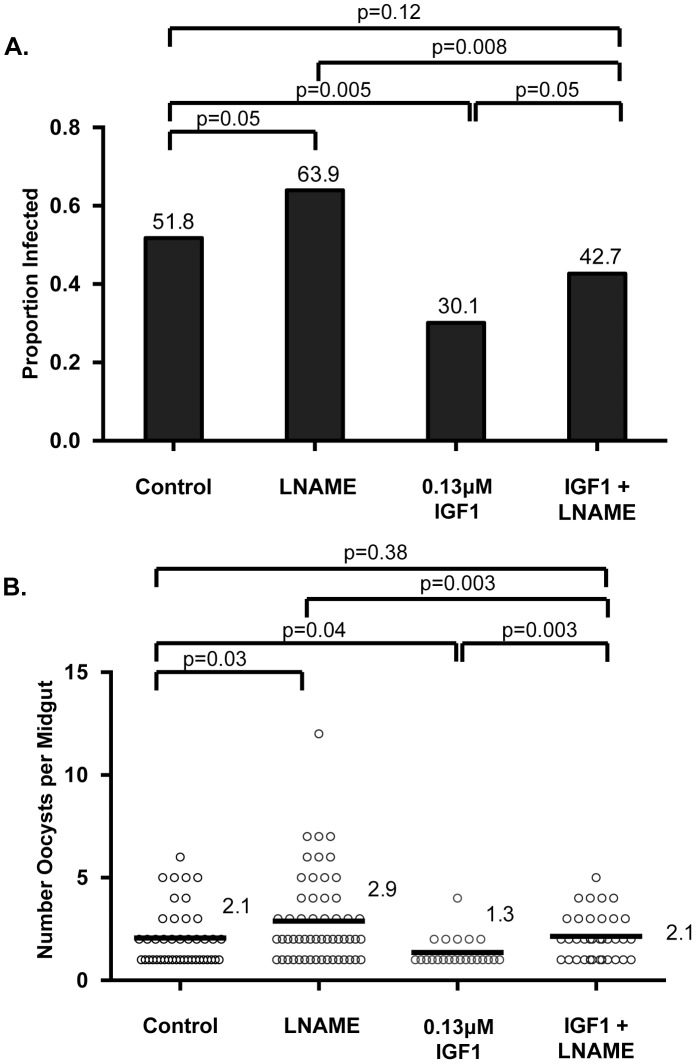
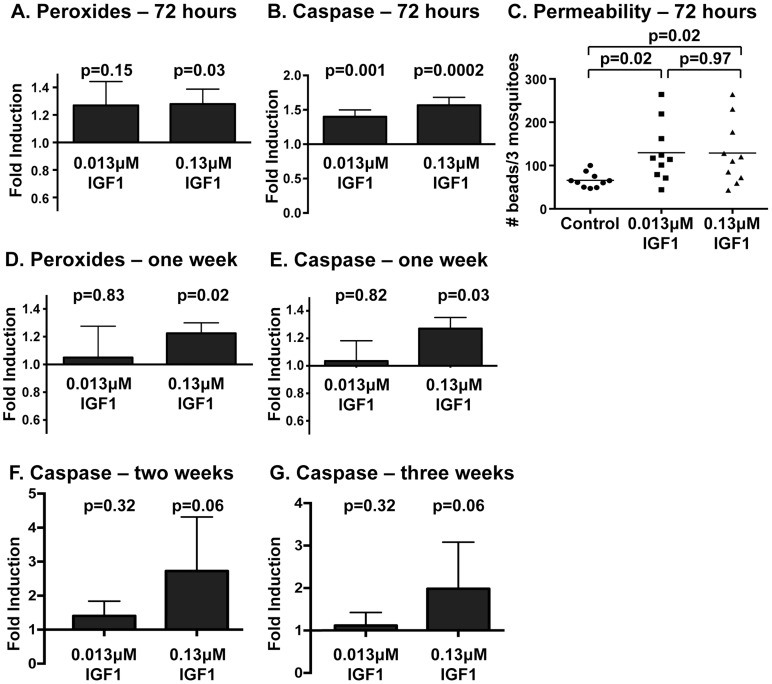
Insulin and insulin-like growth factor signaling (IIS) regulates cell death, repair, autophagy, and renewal in response to stress, damage, and pathogen challenge. Therefore, IIS is fundamental to lifespan and disease resistance. Previously, we showed that insulin-like growth factor 1 (IGF1) within a physiologically relevant range (0.013-0.13 µM) in human blood reduced development of the human parasite Plasmodium falciparum in the Indian malaria mosquito Anopheles stephensi. Low IGF1 (0.013 µM) induced FOXO and p70S6K activation in the midgut and extended mosquito lifespan, whereas high IGF1 (0.13 µM) did not. In this study the physiological effects of low and high IGF1 were examined in detail to infer mechanisms for their dichotomous effects on mosquito resistance and lifespan. Following ingestion, low IGF1 induced phosphorylation of midgut c-Jun-N-terminal kinase (JNK), a critical regulator of epithelial homeostasis, but high IGF1 did not. Low and high IGF1 induced midgut mitochondrial reactive oxygen species (ROS) synthesis and nitric oxide (NO) synthase gene expression, responses which were necessary and sufficient to mediate IGF1 inhibition of P. falciparum development. However, increased ROS and apoptosis-associated caspase-3 activity returned to baseline levels following low IGF1 treatment, but were sustained with high IGF1 treatment and accompanied by aberrant expression of biomarkers for mitophagy, stem cell division and proliferation. Low IGF1-induced ROS are likely moderated by JNK-induced epithelial cytoprotection as well as p70S6K-mediated growth and inhibition of apoptosis over the lifetime of A. stephensi to facilitate midgut homeostasis and enhanced survivorship. Hence, mitochondrial integrity and homeostasis in the midgut, a key signaling center for IIS, can be targeted to coordinately optimize mosquito fitness and anti-pathogen resistance for improved control strategies for malaria and other vector-borne diseases.
胰岛素和胰岛素样生长因子信号传导(IIS)可调节细胞死亡、修复、自噬以及对应激、损伤和病原体挑战的更新。因此,IIS对寿命和抗病性至关重要。此前,我们发现人血液中生理相关浓度范围(0.013 - 0.13 μM)的胰岛素样生长因子1(IGF1)可减少人类疟原虫恶性疟原虫在印度疟疾媒介斯氏按蚊中的发育。低浓度IGF1(0.013 μM)可诱导中肠中FOXO和p70S6K激活并延长蚊子寿命,而高浓度IGF1(0.13 μM)则无此作用。在本研究中,详细研究了低浓度和高浓度IGF1的生理效应,以推断它们对蚊子抗性和寿命产生二分效应的机制。摄入后,低浓度IGF1可诱导中肠c-Jun氨基末端激酶(JNK)磷酸化,JNK是上皮细胞稳态的关键调节因子,而高浓度IGF1则不能。低浓度和高浓度IGF1均可诱导中肠线粒体活性氧(ROS)合成和一氧化氮(NO)合酶基因表达,这些反应对于介导IGF1对恶性疟原虫发育的抑制作用是必要且充分的。然而,低浓度IGF1处理后,ROS增加和凋亡相关的半胱天冬酶-3活性恢复到基线水平,但高浓度IGF1处理后则持续存在,并伴有线粒体自噬、干细胞分裂和增殖生物标志物的异常表达。低浓度IGF1诱导的ROS可能通过JNK诱导的上皮细胞保护以及p70S6K介导的生长和对斯氏按蚊寿命期内凋亡的抑制作用来调节,以促进中肠稳态和增强生存能力。因此,中肠中的线粒体完整性和稳态作为IIS的关键信号中心,可作为靶点来协调优化蚊子的适应性和抗病原体抗性,以改进疟疾和其他媒介传播疾病的控制策略。