Cain Kelli L, Millstein Rachel A, Sallis James F, Conway Terry L, Gavand Kavita A, Frank Lawrence D, Saelens Brian E, Geremia Carrie M, Chapman James, Adams Marc A, Glanz Karen, King Abby C
University of California, United States.
San Diego State University/University of California San Diego, United States.
Soc Sci Med. 2014 Sep;116:82-92. doi: 10.1016/j.socscimed.2014.06.042. Epub 2014 Jun 24.
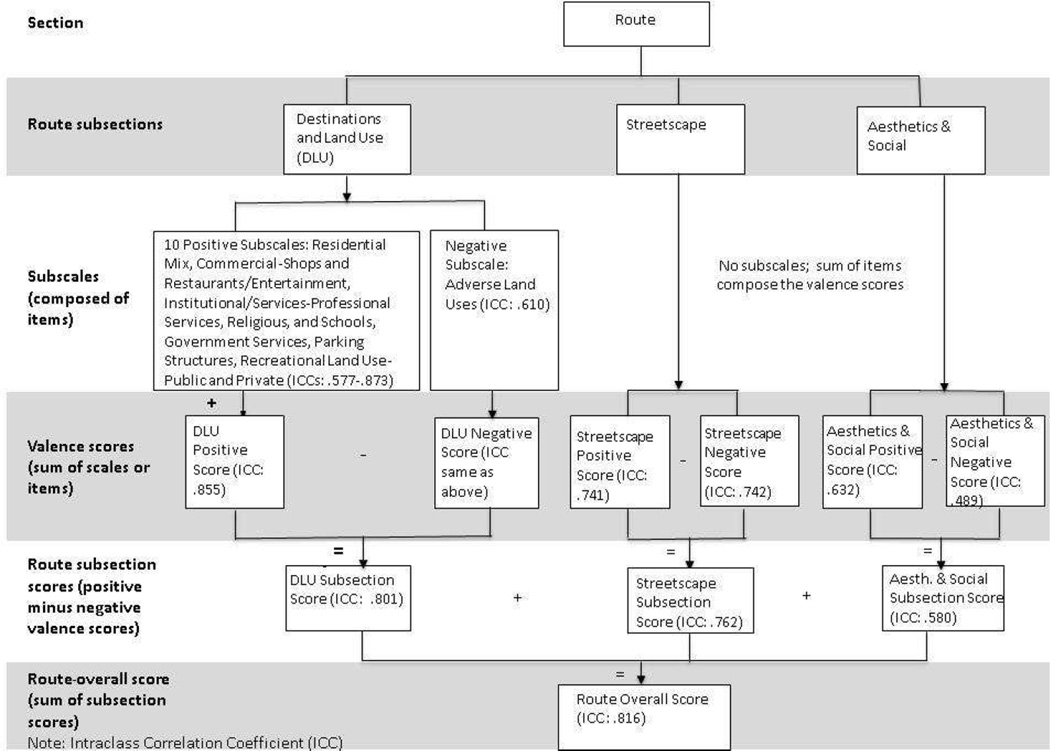
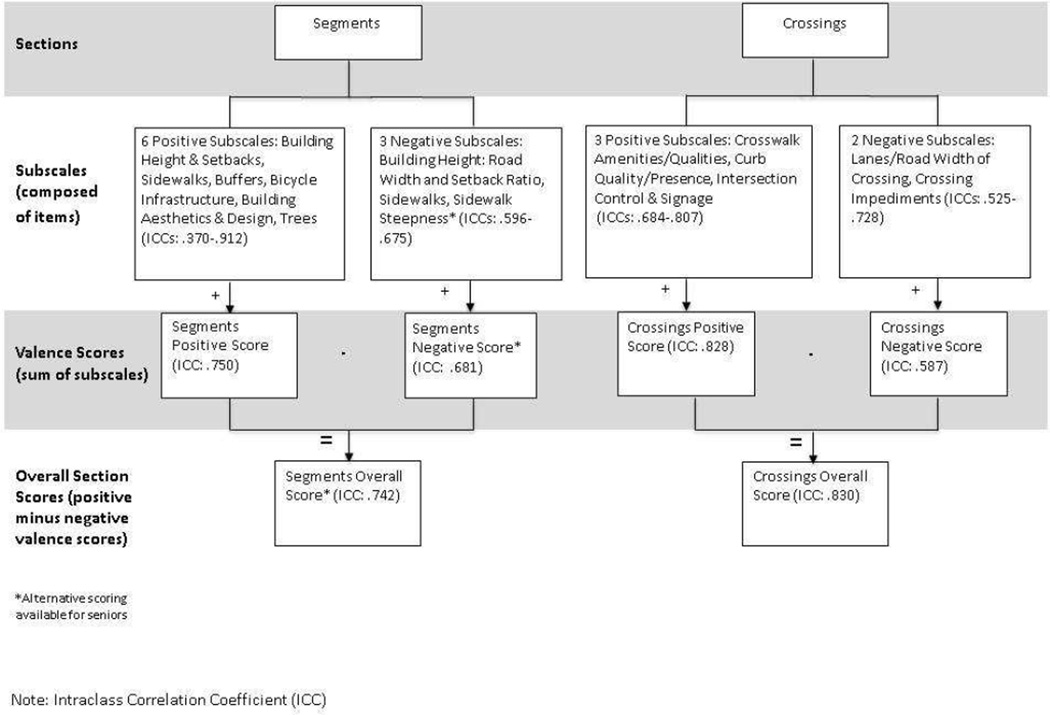
Ecological models of physical activity emphasize the effects of environmental influences. "Microscale" streetscape features that may affect pedestrian experience have received less research attention than macroscale walkability (e.g., residential density). The Microscale Audit of Pedestrian Streetscapes (MAPS) measures street design, transit stops, sidewalk qualities, street crossing amenities, and features impacting aesthetics. The present study examined associations of microscale attributes with multiple physical activity (PA) measures across four age groups. Areas in the San Diego, Seattle, and the Baltimore metropolitan areas, USA, were selected that varied on macro-level walkability and neighborhood income. Participants (n = 3677) represented four age groups (children, adolescents, adults, older adults). MAPS audits were conducted along a 0.25 mile route along the street network from participant residences toward the nearest non-residential destination. MAPS data were collected in 2009-2010. Subscale and overall summary scores were created. Walking/biking for transportation and leisure/neighborhood PA were measured with age-appropriate surveys. Objective PA was measured with accelerometers. Mixed linear regression analyses were adjusted for macro-level walkability. Across all age groups 51.2%, 22.1%, and 15.7% of all MAPS scores were significantly associated with walking/biking for transport, leisure/neighborhood PA, and objectively-measured PA, respectively. Supporting the ecological model principle of behavioral specificity, destinations and land use, streetscape, street segment, and intersection variables were more related to transport walking/biking, while aesthetic variables were related to leisure/neighborhood PA. The overall score was related to objective PA in children and older adults. Present findings provide strong evidence that microscale environment attributes are related to PA across the lifespan. Improving microscale features may be a feasible approach to creating activity-friendly environments.
身体活动的生态模型强调环境影响的作用。与宏观层面的步行适宜性(如居住密度)相比,可能影响行人体验的“微观尺度”街道景观特征受到的研究关注较少。行人街道景观微观尺度审计(MAPS)衡量街道设计、公交站点、人行道质量、街道交叉设施以及影响美观的特征。本研究考察了微观尺度属性与四个年龄组多种身体活动(PA)指标之间的关联。在美国圣地亚哥、西雅图和巴尔的摩大都市区,选择了在宏观层面步行适宜性和邻里收入方面存在差异的区域。参与者(n = 3677)代表四个年龄组(儿童、青少年、成年人、老年人)。沿着从参与者住所到最近非居住目的地的街道网络,在一条0.25英里的路线上进行MAPS审计。MAPS数据于2009 - 2010年收集。创建了子量表和总体汇总分数。通过适合各年龄组的调查来衡量用于交通和休闲/邻里PA的步行/骑行情况。用加速度计测量客观PA。混合线性回归分析针对宏观层面的步行适宜性进行了调整。在所有年龄组中,所有MAPS分数的51.2%、22.1%和15.7%分别与用于交通的步行/骑行、休闲/邻里PA以及客观测量的PA显著相关。支持行为特异性、目的地和土地利用、街道景观、路段和交叉路口变量与交通步行/骑行的生态模型原则,而美观变量与休闲/邻里PA相关。总体分数与儿童和老年人的客观PA相关。目前的研究结果提供了有力证据,表明微观尺度环境属性在整个生命周期中都与PA相关。改善微观尺度特征可能是创建有利于活动的环境的一种可行方法。