Chen Zhu, Chen Ming, Xu Zhao-shi, Li Lian-cheng, Chen Xue-ping, Ma You-zhi
Department of Chemistry, University of Science and Technology of China, Hefei, Anhui, China; Institute of Crop Science, Chinese Academy of Agricultural Sciences, National Key Facility for Crop Gene Resources and Genetic Improvement, Key Laboratory of Biology and Genetic Improvement of Triticeae Crops, Ministry of Agriculture, Beijing, China.
Institute of Crop Science, Chinese Academy of Agricultural Sciences, National Key Facility for Crop Gene Resources and Genetic Improvement, Key Laboratory of Biology and Genetic Improvement of Triticeae Crops, Ministry of Agriculture, Beijing, China.
PLoS One. 2014 Jul 2;9(7):e101136. doi: 10.1371/journal.pone.0101136. eCollection 2014.
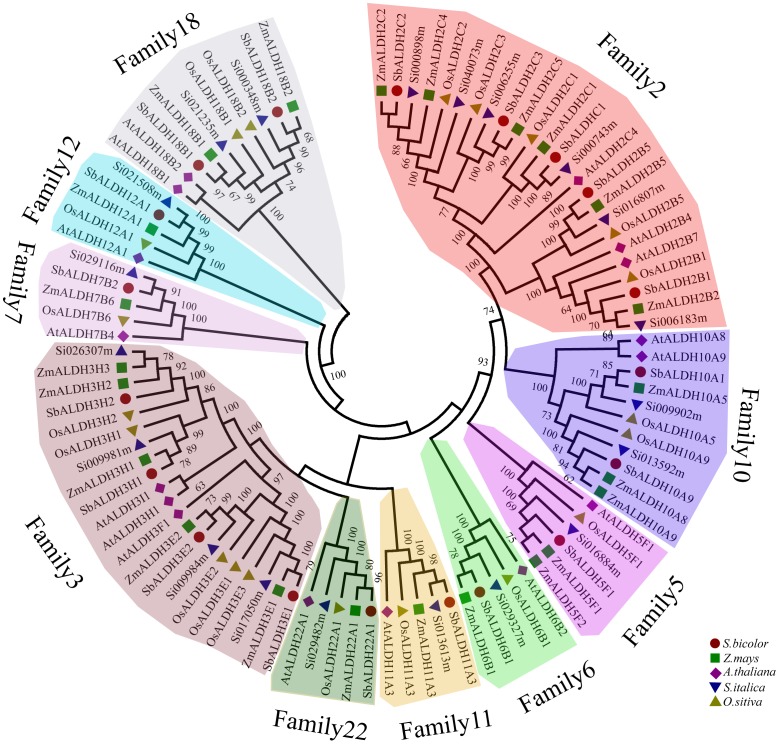
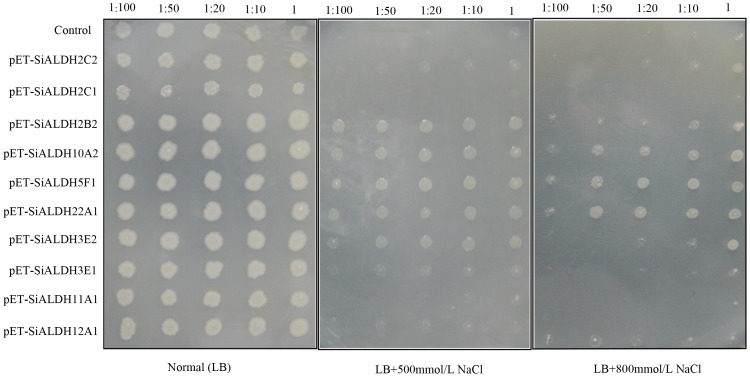
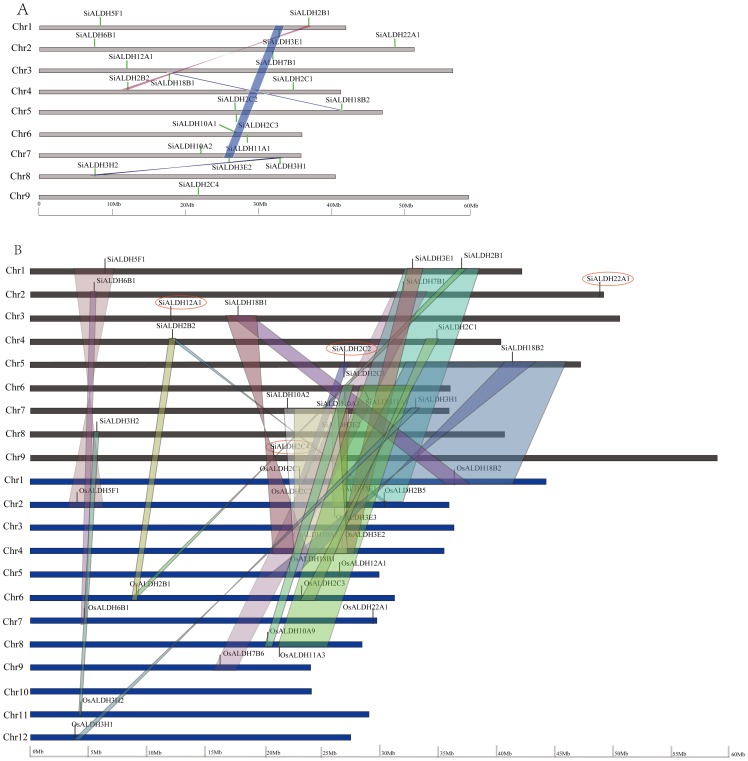
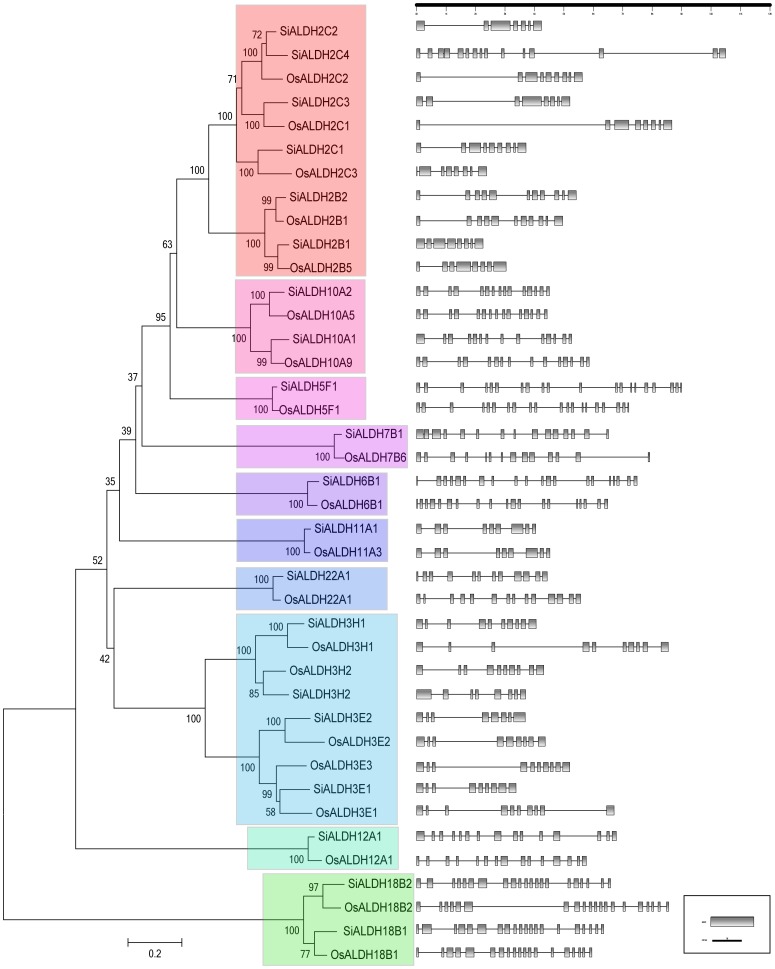
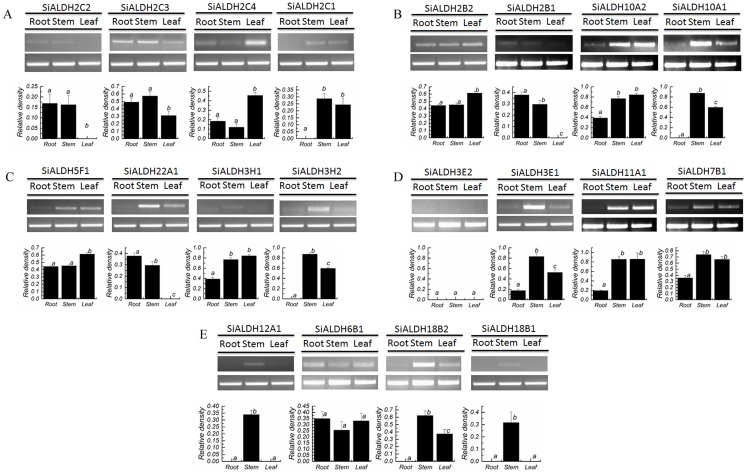
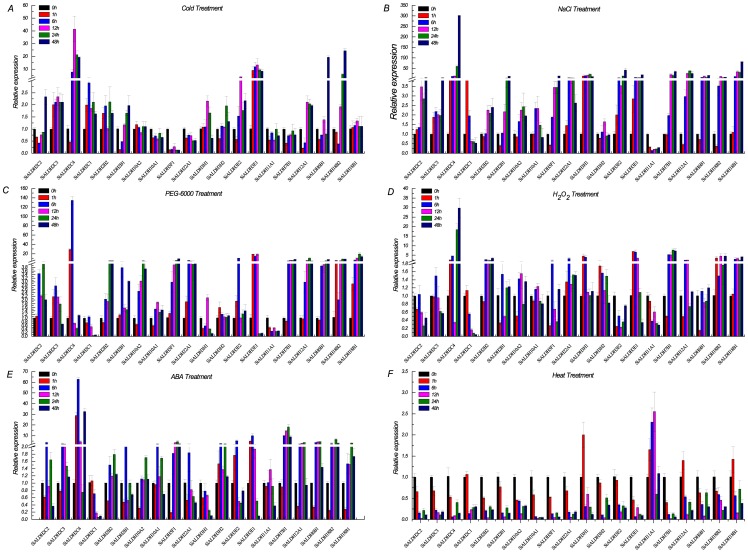
Recent genomic sequencing of the foxtail millet, an abiotic, stress-tolerant crop, has provided a great opportunity for novel gene discovery and functional analysis of this popularly-grown grass. However, few stress-mediated gene families have been studied. Aldehyde dehydrogenases (ALDHs) comprise a gene superfamily encoding NAD (P) +-dependent enzymes that play the role of "aldehyde scavengers", which indirectly detoxify cellular ROS and reduce the effect of lipid peroxidation meditated cellular toxicity under various environmental stresses. In the current paper, we identified a total of 20 ALDH genes in the foxtail millet genome using a homology search and a phylogenetic analysis and grouped them into ten distinct families based on their amino acid sequence identity. Furthermore, evolutionary analysis of foxtail millet reveals that both tandem and segmental duplication contributed significantly to the expansion of its ALDH genes. The exon-intron structures of members of the same family in foxtail millet or the orthologous genes in rice display highly diverse distributions of their exonic and intronic regions. Also, synteny analysis shows that the majority of foxtail millet and rice ALDH gene homologs exist in the syntenic blocks between the two, implying that these ALDH genes arose before the divergence of cereals. Semi-quantitative and real-time quantitative PCR data reveals that a few SiALDH genes are expressed in an organ-specific manner and that the expression of a number of foxtail millet ALDH genes, such as, SiALDH7B1, SiALDH12A1 and SiALDH18B2 are up-regulated by osmotic stress, cold, H2O2, and phytohormone abscisic acid (ABA). Furthermore, the transformation of SiALDH2B2, SiALDH10A2, SiALDH5F1, SiALDH22A1, and SiALDH3E2 into Escherichia coli (E.coli) was able to improve their salt tolerance. Taken together, our results show that genome-wide identification characteristics and expression analyses provide unique opportunities for assessing the functional roles of foxtail millet ALDH genes in stress responses.
最近,对非生物胁迫耐受性作物谷子进行的基因组测序,为这种广泛种植的禾本科作物的新基因发现和功能分析提供了绝佳机会。然而,很少有胁迫介导的基因家族得到研究。醛脱氢酶(ALDHs)构成一个基因超家族,编码依赖NAD(P)+的酶,这些酶发挥“醛清除剂”的作用,在各种环境胁迫下间接清除细胞内的活性氧(ROS),并减轻脂质过氧化介导的细胞毒性作用。在本文中,我们通过同源性搜索和系统发育分析,在谷子基因组中总共鉴定出20个ALDH基因,并根据它们的氨基酸序列同一性将它们分为10个不同的家族。此外,对谷子的进化分析表明,串联重复和片段重复都对其ALDH基因的扩增有显著贡献。谷子中同一家族成员或水稻中的直系同源基因的外显子-内含子结构,显示出其外显子和内含子区域的高度多样化分布。同时,共线性分析表明,谷子和水稻的大多数ALDH基因同源物存在于两者之间的共线性区域,这意味着这些ALDH基因在谷类作物分化之前就已出现。半定量和实时定量PCR数据表明,一些SiALDH基因以器官特异性方式表达,并且许多谷子ALDH基因,如SiALDH7B1、SiALDH12A1和SiALDH18B2的表达,受到渗透胁迫、冷、H2O2和植物激素脱落酸(ABA)的上调。此外,将SiALDH2B2、SiALDH10A2、SiALDH5F1、SiALDH22A1和SiALDH3E2转化到大肠杆菌中,能够提高它们的耐盐性。综上所述,我们的结果表明,全基因组鉴定特征和表达分析为评估谷子ALDH基因在胁迫反应中的功能作用提供了独特的机会。