Kakkar Sahil, Bais Souravh
Department of Pharmacology, Rayat Institute of Pharmacy, Railmajra, District S.B.S. Nagar, Punjab 144533, India.
ISRN Pharmacol. 2014 Mar 26;2014:952943. doi: 10.1155/2014/952943. eCollection 2014.
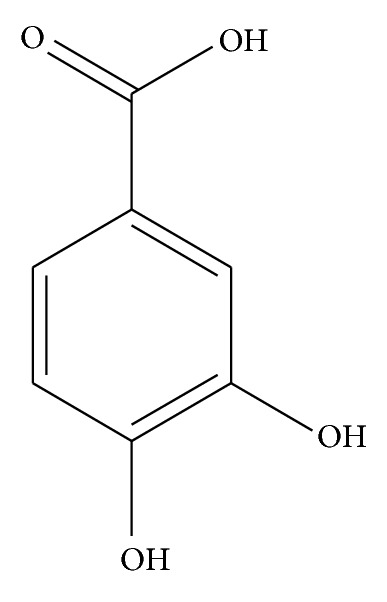
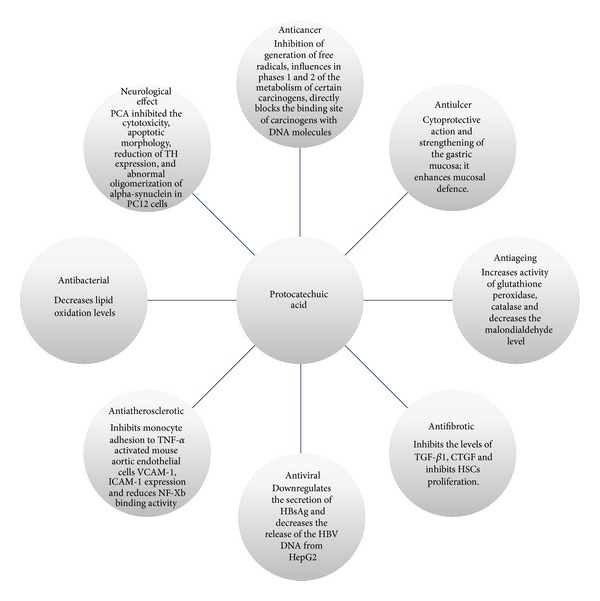
Flavonoids and polyphenols are heterocyclic molecules that have been associated with beneficial effects on human health, such as reducing the risk of various diseases like cancer, diabetes, and cardiovascular and brain diseases. Protocatechuic acid (PCA) is a type of widely distributed naturally occurring phenolic acid. PCA has structural similarity with gallic acid, caffeic acid, vanillic acid, and syringic acid which are well-known antioxidant compounds. More than 500 plants contain PCA as active constituents imparting various pharmacological activity and these effects are due to their antioxidant activities, along with other possible mechanisms, such as anti-inflammatory properties and interaction with several enzymes. Over the past two decades, there have been an increasing number of publications on polyphenols and flavonoids, which demonstrate the importance of understanding the chemistry behind the antioxidant activities of both natural and synthesized compounds, considering the benefits from their dietary ingestion as well as pharmacological use. This work aims to review the pharmacological effects of PCA molecules in humans and the structural aspects that contribute to these effects.
黄酮类化合物和多酚类化合物是杂环分子,它们对人体健康具有有益作用,例如降低患癌症、糖尿病以及心血管和脑部疾病等各种疾病的风险。原儿茶酸(PCA)是一种广泛分布的天然酚酸。PCA与没食子酸、咖啡酸、香草酸和丁香酸结构相似,而后几种都是著名的抗氧化化合物。500多种植物含有PCA作为活性成分,赋予其各种药理活性,这些作用归因于它们的抗氧化活性以及其他可能的机制,如抗炎特性和与多种酶的相互作用。在过去二十年中,关于多酚类和黄酮类化合物的出版物越来越多,鉴于从饮食摄入以及药理用途中获得的益处,这表明了解天然和合成化合物抗氧化活性背后的化学原理非常重要。这项工作旨在综述PCA分子对人体的药理作用以及促成这些作用的结构方面。