Sharan D, Manjula M, Urmi D, Ajeesh Ps
Academics Department, RECOUP Neuromusculoskeletal Rehabilitation Center, Bangalore, India.
Int J Yoga. 2014 Jan;7(1):54-9. doi: 10.4103/0973-6131.123486.
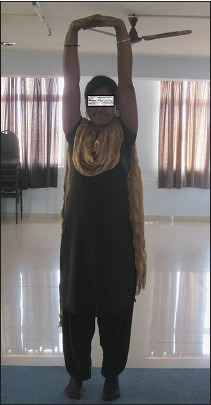
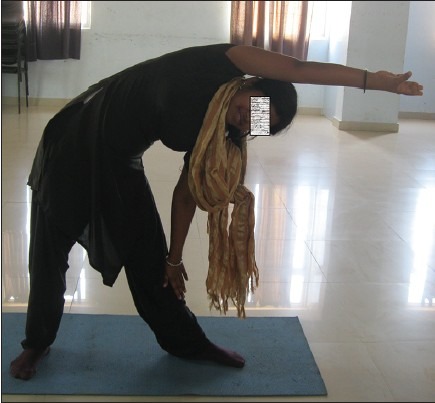
Myofascial Pain Syndrome (MPS) refers to pain attributed to muscle and its surrounding fascia, which is associated with "myofascial trigger points" (MTrPs). MTrPs in the trapezius has been proposed as the main cause of temporal and cervicogenic headache and neck pain. Literature shows that the prevalence of various musculoskeletal disorders (MSD) among physiotherapists is high. Yoga has traditionally been used to treat MSDs in various populations. But there is scarcity of literature which explains the effects of yoga on reducing MPS of the neck in terms of various physical parameters and subjective responses. Therefore, a pilot study was done among eight physiotherapists with minimum six months of experience. A structured yoga protocol was designed and implemented for five days in a week for four weeks. The outcome variables were Disability of Arm, Shoulder and Hands (DASH) score, Neck Disability Index (NDI), Visual Analogue Scale (VAS), Pressure Pain Threshold (PPT) for Trigger Points, Cervical Range of Motion (CROM) - active & passive, grip and pinch strengths. The variables were compared before and after the intervention. Finally, the result revealed that all the variables (DASH: P<0.00, NDI: P<0.00, VAS: P<0.00, PPT: Left: P<0.00, PPT: Right: P<0.00, Grip strength: left: P<0.00, Grip strength: right: P<0.01, Key pinch: left: P<0.01, Key pinch: right: P<0.01, Palmar pinch: left: P<0.01, Palmar pinch: right: P<0.00, Tip pinch: left: P<0.01, Tip pinch: Right: P<0.01) improved significantly after intervention.
肌筋膜疼痛综合征(MPS)是指由肌肉及其周围筋膜引起的疼痛,与“肌筋膜触发点”(MTrP)相关。斜方肌中的MTrP被认为是颞部和颈源性头痛及颈部疼痛的主要原因。文献表明,物理治疗师中各种肌肉骨骼疾病(MSD)的患病率很高。传统上,瑜伽一直用于治疗不同人群的MSD。但缺乏从各种身体参数和主观反应方面解释瑜伽对减轻颈部MPS效果的文献。因此,针对八名有至少六个月经验的物理治疗师开展了一项初步研究。设计并实施了一项结构化瑜伽方案,每周五天,共四周。结果变量包括手臂、肩部和手部功能障碍(DASH)评分、颈部功能障碍指数(NDI)、视觉模拟量表(VAS)、触发点的压痛阈值(PPT)、颈椎活动范围(CROM)——主动和被动、握力和捏力。在干预前后对这些变量进行了比较。最后,结果显示所有变量(DASH:P<0.00,NDI:P<0.00,VAS:P<0.00,PPT:左侧:P<0.00,PPT:右侧:P<0.00,握力:左侧:P<0.00,握力:右侧:P<0.01,关键捏力:左侧:P<0.01,关键捏力:右侧:P<0.01,掌侧捏力:左侧:P<0.01,掌侧捏力:右侧:P<0.00,指尖捏力:左侧:P<0.01,指尖捏力:右侧:P<0.01)在干预后均有显著改善。