Panuccio M R, Jacobsen S E, Akhtar S S, Muscolo A
Department of Agriculture, Mediterranea University, località Feo di Vito, 89126 Reggio Calabria, Italy.
Department of Plant and Environmental Sciences, Faculty of Science, University of Copenhagen, Højbakkegård Allé 13, DK-2630 Tåstrup, Denmark.
AoB Plants. 2014 Aug 19;6:plu047. doi: 10.1093/aobpla/plu047.
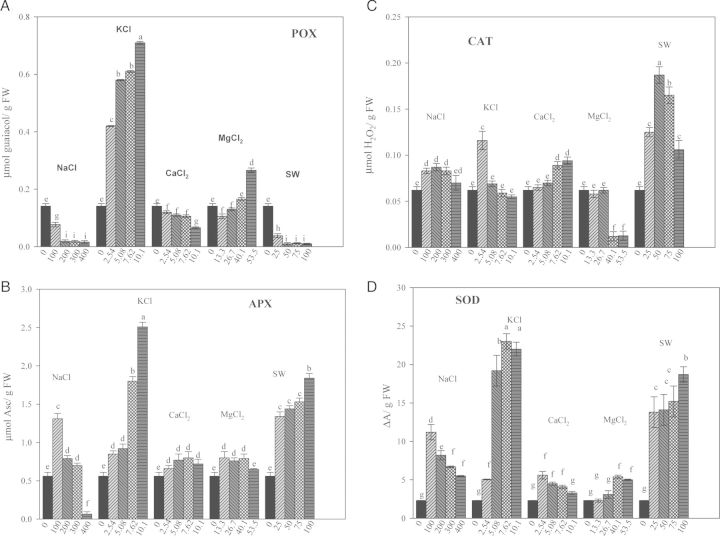
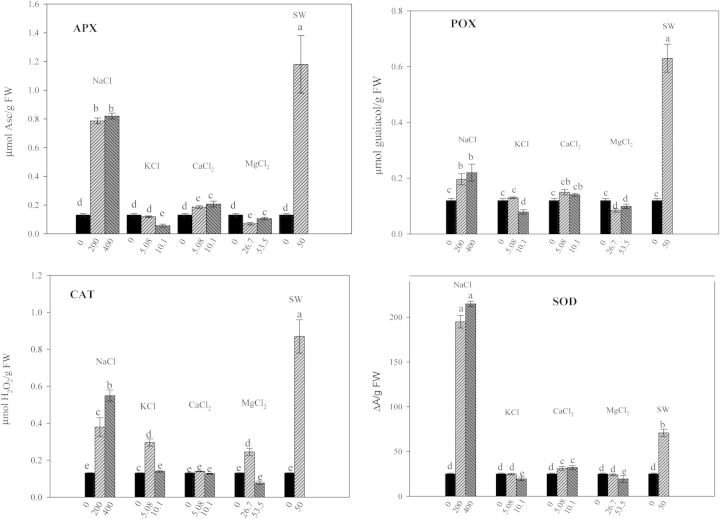
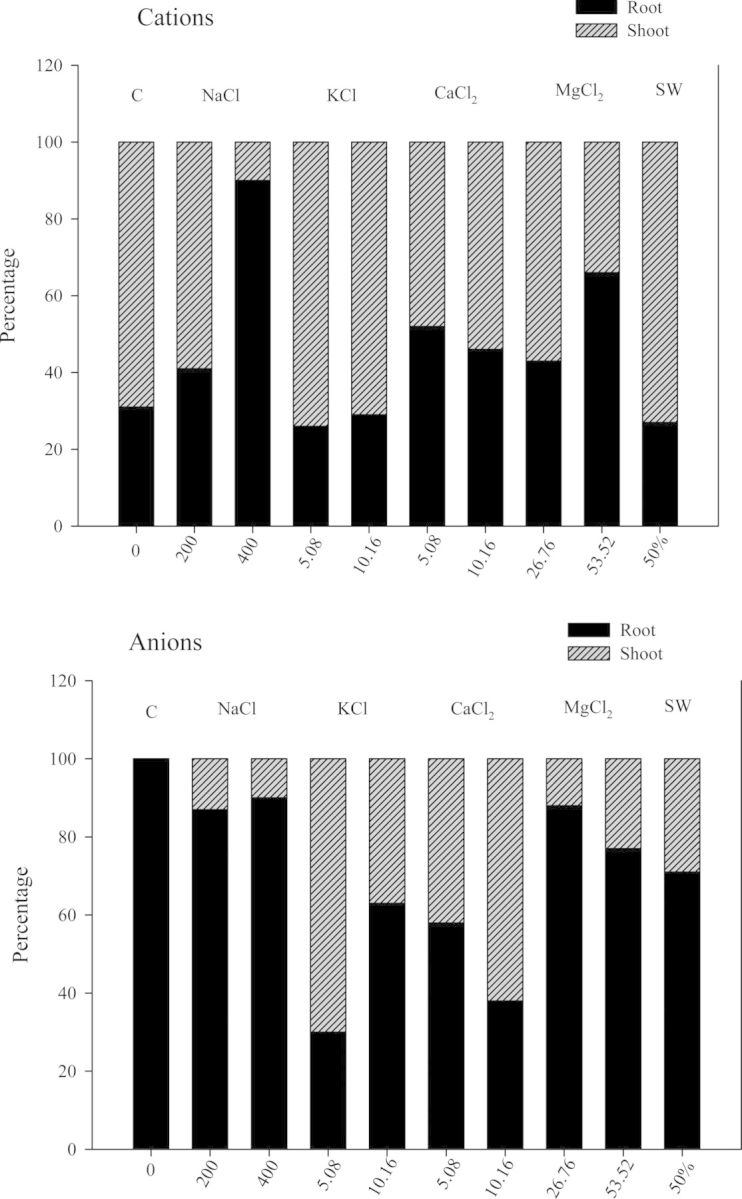
Salinization is increasing on a global scale, decreasing average yields for most major crop plants. Investigations into salt resistance have, unfortunately, mainly been focused on conventional crops, with few studies screening the potential of available halophytes as new crops. This study has been carried out to investigate the mechanisms used by quinoa, a facultative halophytic species, in order to cope with high salt levels at various stages of its development. Quinoa is regarded as one of the crops that might sustain food security in this century, grown primarily for its edible seeds with their high protein content and unique amino acid composition. Although the species has been described as a facultative halophyte, and its tolerance to salt stress has been investigated, its physiological and molecular responses to seawater (SW) and other salts have not been studied. We evaluated the effects of SW and different salts on seed germination, seedling emergence and the antioxidative pathway of quinoa. Seeds were germinated in Petri dishes and seedlings grown in pots with SW solutions (25, 50, 75 and 100 %) and NaCl, CaCl2, KCl and MgCl2 individually, at the concentrations in which they are present in SW. Our results demonstrated that all salts, at lower concentrations, increased the germination rate but not the germination percentages, compared with control (pure water). Conversely, seedlings were differently affected by treatments in respect to salt type and concentration. Growth parameters affected were root and shoot length, root morphology, fresh and dry weight, and water content. An efficient antioxidant mechanism was present in quinoa, activated by salts during germination and early seedling growth, as shown by the activities of antioxidant enzymes. Total antioxidant capacity was always higher under salt stress than in water. Moreover, osmotic and ionic stress factors had different degrees of influence on germination and development.
土壤盐渍化正在全球范围内加剧,导致大多数主要农作物的平均产量下降。遗憾的是,对耐盐性的研究主要集中在传统作物上,很少有研究筛选现有盐生植物作为新作物的潜力。本研究旨在探究兼性盐生植物藜麦在其发育的各个阶段应对高盐水平所采用的机制。藜麦被视为本世纪可能维持粮食安全的作物之一,主要因其可食用种子的高蛋白含量和独特的氨基酸组成而种植。尽管该物种被描述为兼性盐生植物,并且已经对其耐盐胁迫能力进行了研究,但其对海水(SW)和其他盐分的生理和分子反应尚未得到研究。我们评估了SW和不同盐分对藜麦种子萌发、幼苗出土及抗氧化途径的影响。种子在培养皿中萌发,幼苗在花盆中用SW溶液(25%、50%、75%和100%)以及分别以SW中存在的浓度的NaCl、CaCl2、KCl和MgCl2进行培养。我们的结果表明,与对照(纯水)相比,所有盐分在较低浓度下均提高了发芽率,但未提高发芽百分比。相反,幼苗受到的处理在盐类型和浓度方面有不同影响。受影响的生长参数包括根和茎的长度、根形态、鲜重和干重以及含水量。藜麦中存在一种有效的抗氧化机制,在萌发和幼苗早期生长期间被盐分激活,抗氧化酶的活性表明了这一点。在盐胁迫下,总抗氧化能力始终高于在水中的情况。此外,渗透胁迫和离子胁迫因素对萌发和发育有不同程度的影响。