Kim Ga Ram, Kang Jeeun, Kwak Jin Young, Chang Jin Ho, Kim Seung Il, Youk Ji Hyun, Moon Hee Jung, Kim Min Jung, Kim Eun-Kyung
Department of Radiology and Research Institute of Radiological Science, Severance Hospital, Yonsei University College of Medicine, Seoul, Republic of Korea.
Sogang Institute of Advanced Technology, Sogang University, Seoul, Republic of Korea; Interdisciplinary Program of Integrated Biotechnology, Seoul, Republic of Korea.
PLoS One. 2014 Aug 25;9(8):e105878. doi: 10.1371/journal.pone.0105878. eCollection 2014.
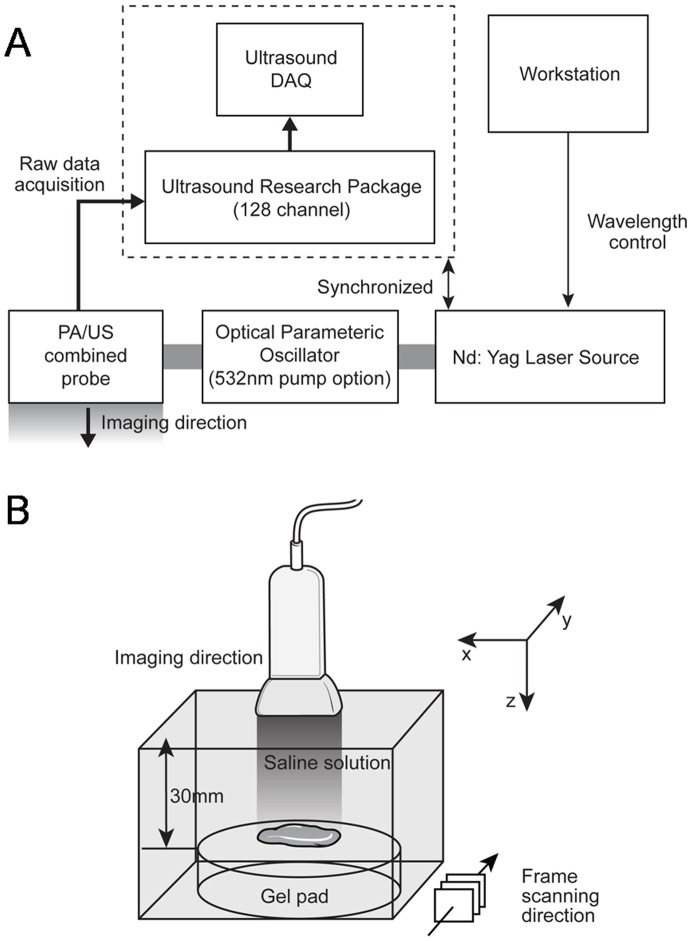
We presented the photoacoustic imaging (PAI) tool and to evaluate whether microcalcifications in breast tissue can be detected on photoacoustic (PA) images.
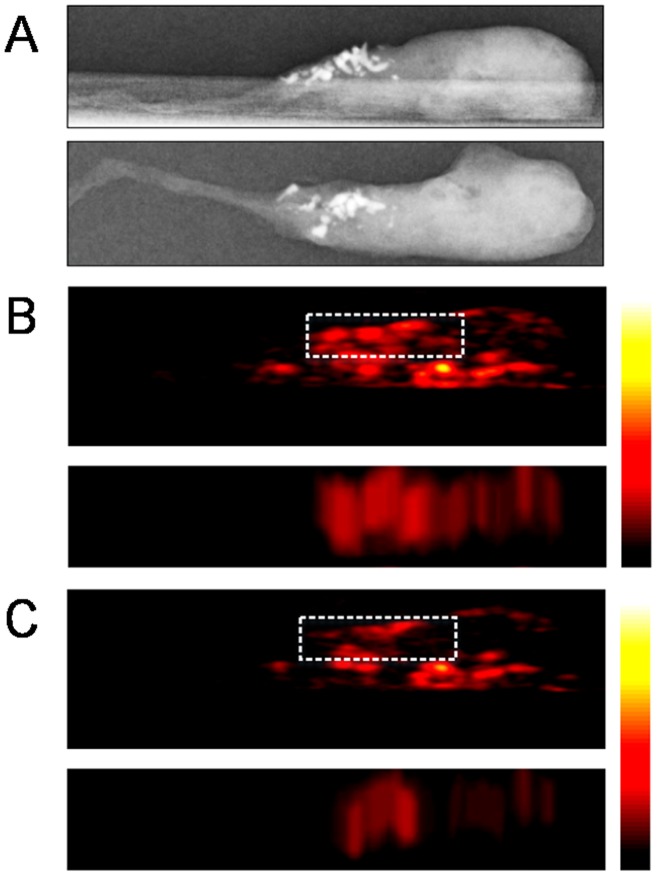
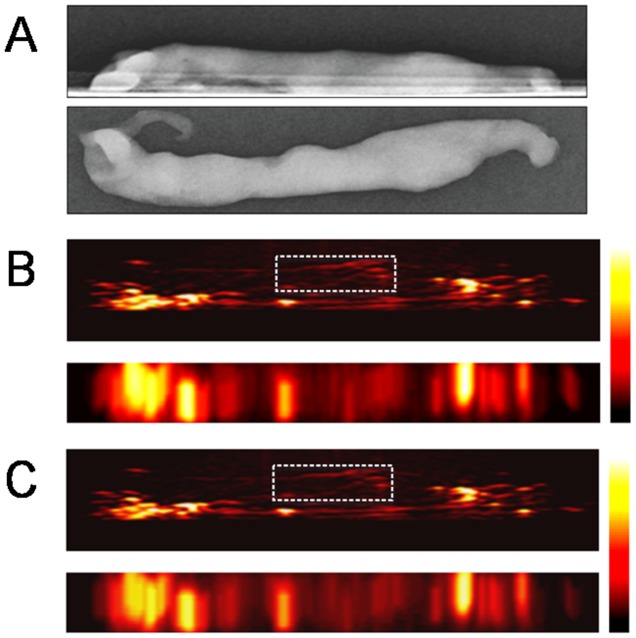
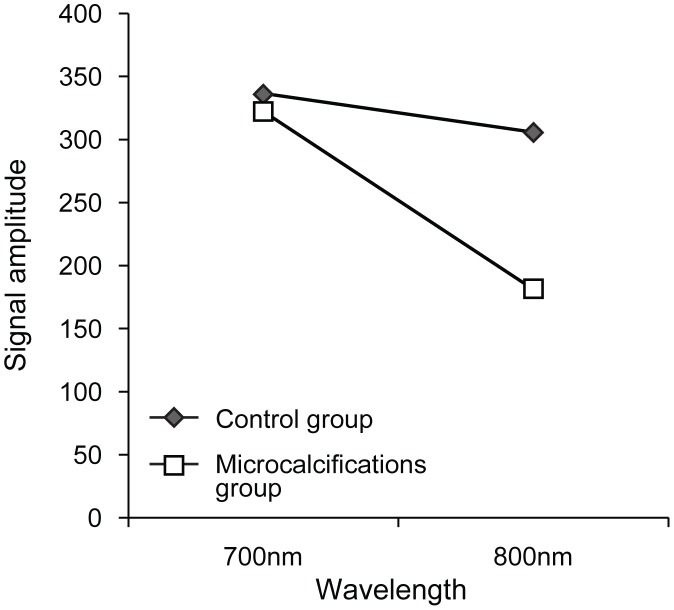
We collected 21 cores containing microcalcifications (n = 11, microcalcification group) and none (n = 10, control group) in stereotactic or ultrasound (US) guided 8-gauge vacuum-assisted biopsies. Photoacoustic (PA) images were acquired through ex vivo experiments by transmitting laser pulses with two different wavelengths (700 nm and 800 nm). The presence of microcalcifications in PA images were blindly assessed by two radiologists and compared with specimen mammography. A ratio of the signal amplitude occurring at 700 nm to that occurring at 800 nm was calculated for each PA focus and was called the PAI ratio.
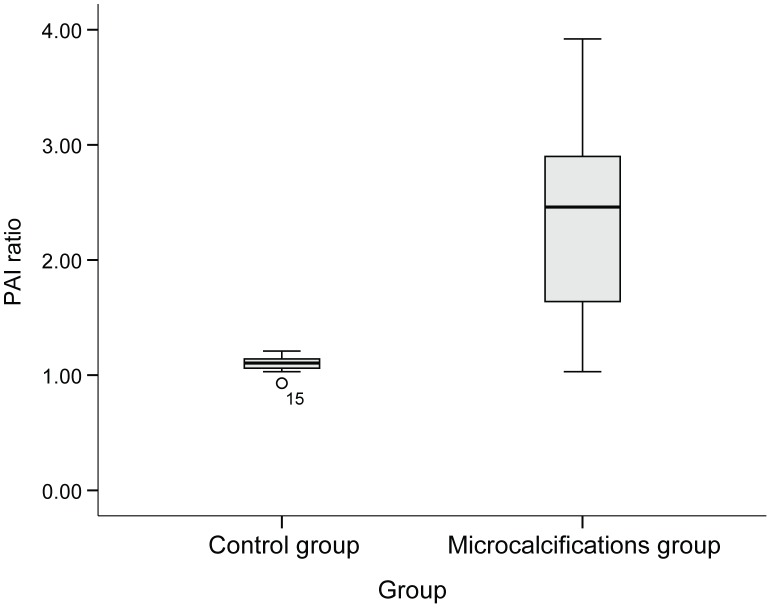
Based on the change of PA signal amplitude between 700 nm and 800 nm, 10 out of 11 specimens containing microcalcifications and 8 out of 10 specimens without calcifications were correctly identified on blind review; the sensitivity, specificity, accuracy, positive predictive and negative predictive values of our blind review were 90.91%, 80.0%, 85.71%, 83.33% and 88.89%. The PAI ratio in the microcalcification group was significantly higher than that in the control group (the median PAI ratio, 2.46 versus 1.11, respectively, P = .001). On subgroup analysis in the microcalcification group, neither malignant diagnosis nor the number or size of calcification-foci was proven to contribute to PAI ratios.
Breast microcalcifications generated distinguishable PA signals unlike breast tissue without calcifications. So, PAI, a non-ionizing and non-invasive hybrid imaging technique, can be an alternative in overcoming the limitations of conventional US imaging.
我们展示了光声成像(PAI)工具,并评估乳腺组织中的微钙化是否能在光声(PA)图像上被检测到。
我们在立体定向或超声(US)引导下的8号真空辅助活检中收集了21个样本芯,其中11个含有微钙化(微钙化组),10个不含微钙化(对照组)。通过体外实验,用两种不同波长(700nm和800nm)的激光脉冲传输来获取光声(PA)图像。两名放射科医生对PA图像中微钙化的存在进行盲法评估,并与标本乳腺X线摄影进行比较。计算每个PA焦点在700nm处出现的信号幅度与在800nm处出现的信号幅度之比,称为PAI比值。
基于700nm和800nm之间PA信号幅度的变化,在盲法评估中,11个含微钙化的标本中有10个、10个无钙化的标本中有8个被正确识别;我们盲法评估的敏感性、特异性、准确性、阳性预测值和阴性预测值分别为90.91%、80.0%、85.71%、83.33%和88.89%。微钙化组的PAI比值显著高于对照组(PAI比值中位数分别为2.46和1.11,P = 0.001)。在微钙化组的亚组分析中,恶性诊断以及钙化灶的数量或大小均未被证明对PAI比值有影响。
乳腺微钙化产生的PA信号与无钙化的乳腺组织不同。因此,PAI作为一种非电离、非侵入性的混合成像技术,可作为克服传统超声成像局限性的一种替代方法。