Chi Xiaoyuan, Hu Ruibo, Zhang Xiaowen, Chen Mingna, Chen Na, Pan Lijuan, Wang Tong, Wang Mian, Yang Zhen, Wang Quanfu, Yu Shanlin
Shandong Peanut Research Institute, Qingdao, P R China; Key Laboratory of Biology and Genetic Improvement of Oil Crops, Ministry of Agriculture, Oil Crops Research Institute, Chinese Academy of Agricultural Sciences, Wuhan, P R China.
Qingdao Institute of BioEnergy and Bioprocess Technology, Chinese Academy of Sciences (QIBEBT-CAS), Qingdao, P R China.
PLoS One. 2014 Sep 2;9(9):e105834. doi: 10.1371/journal.pone.0105834. eCollection 2014.
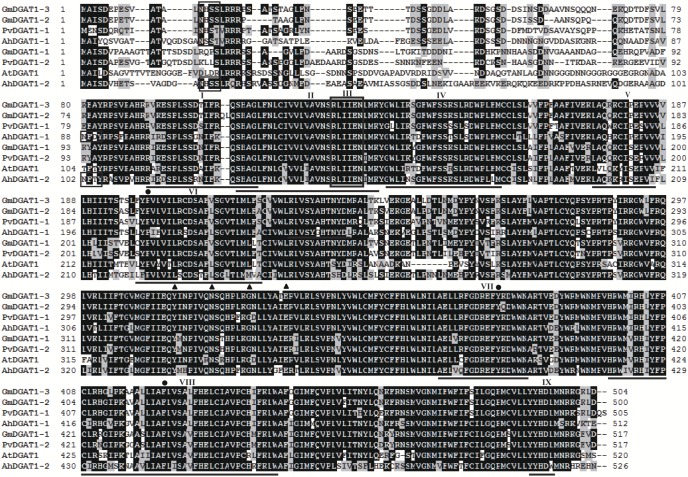
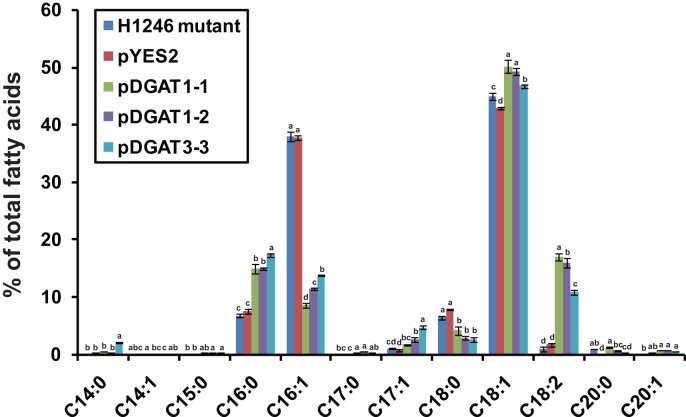
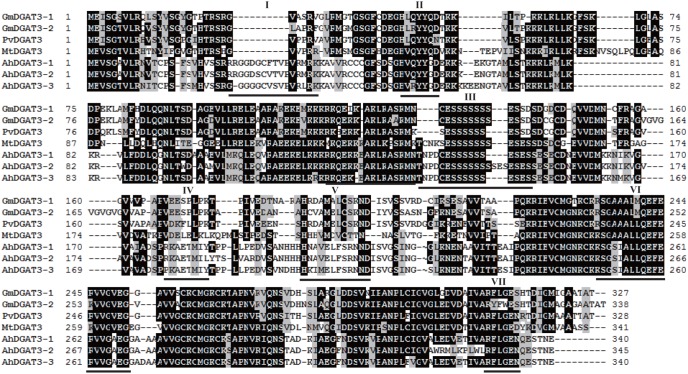
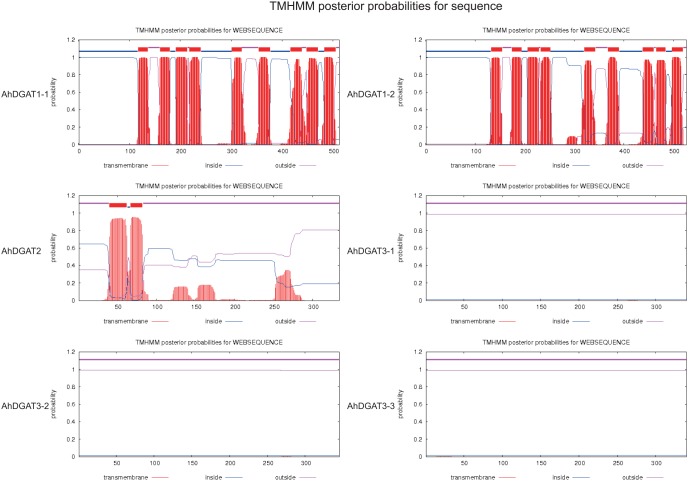
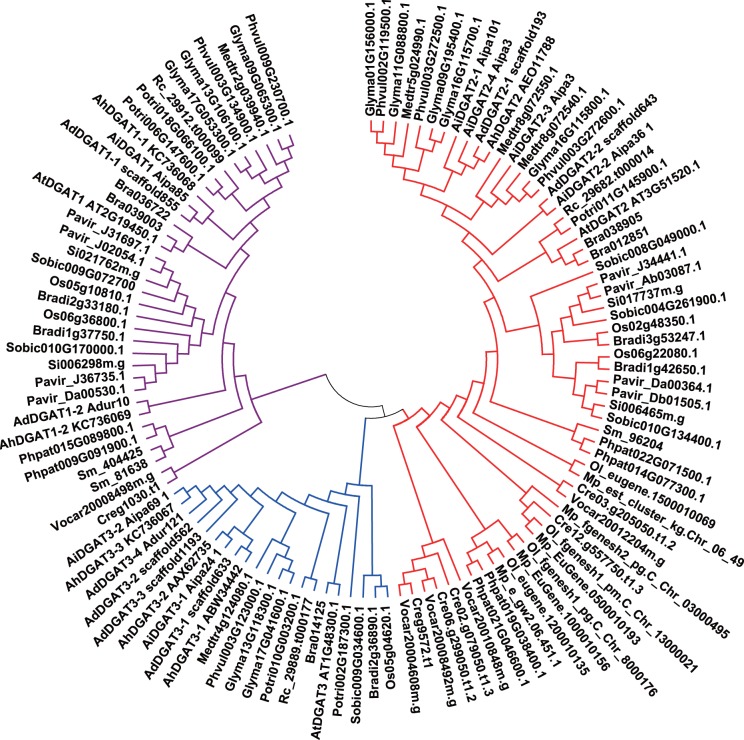
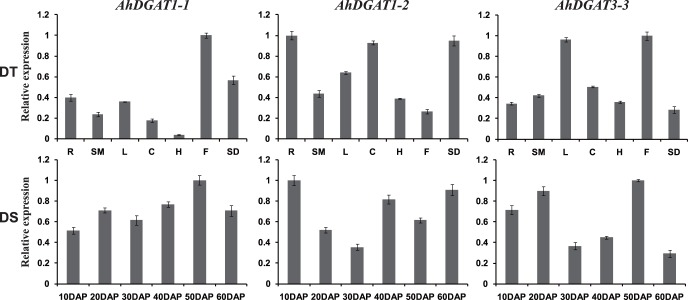
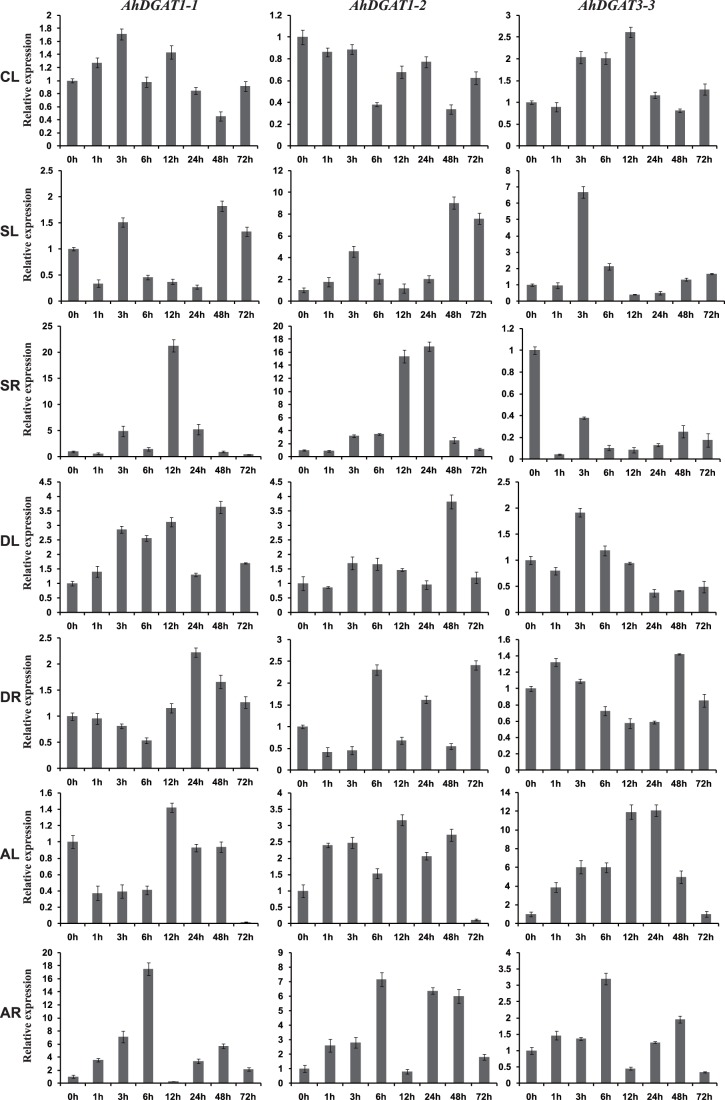
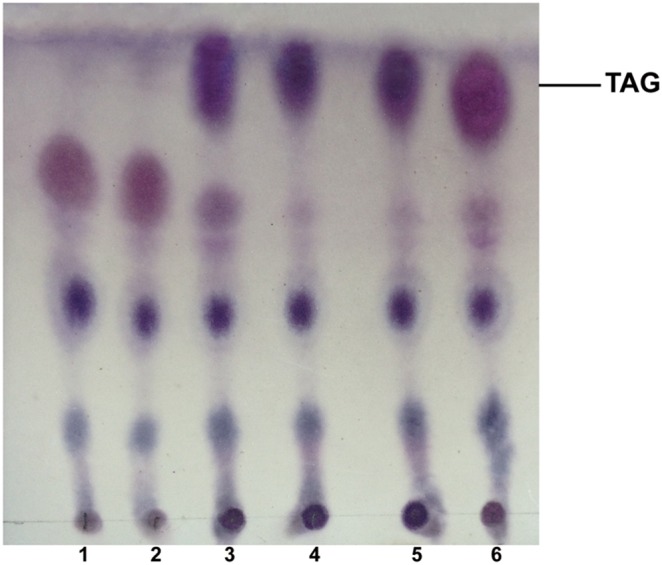
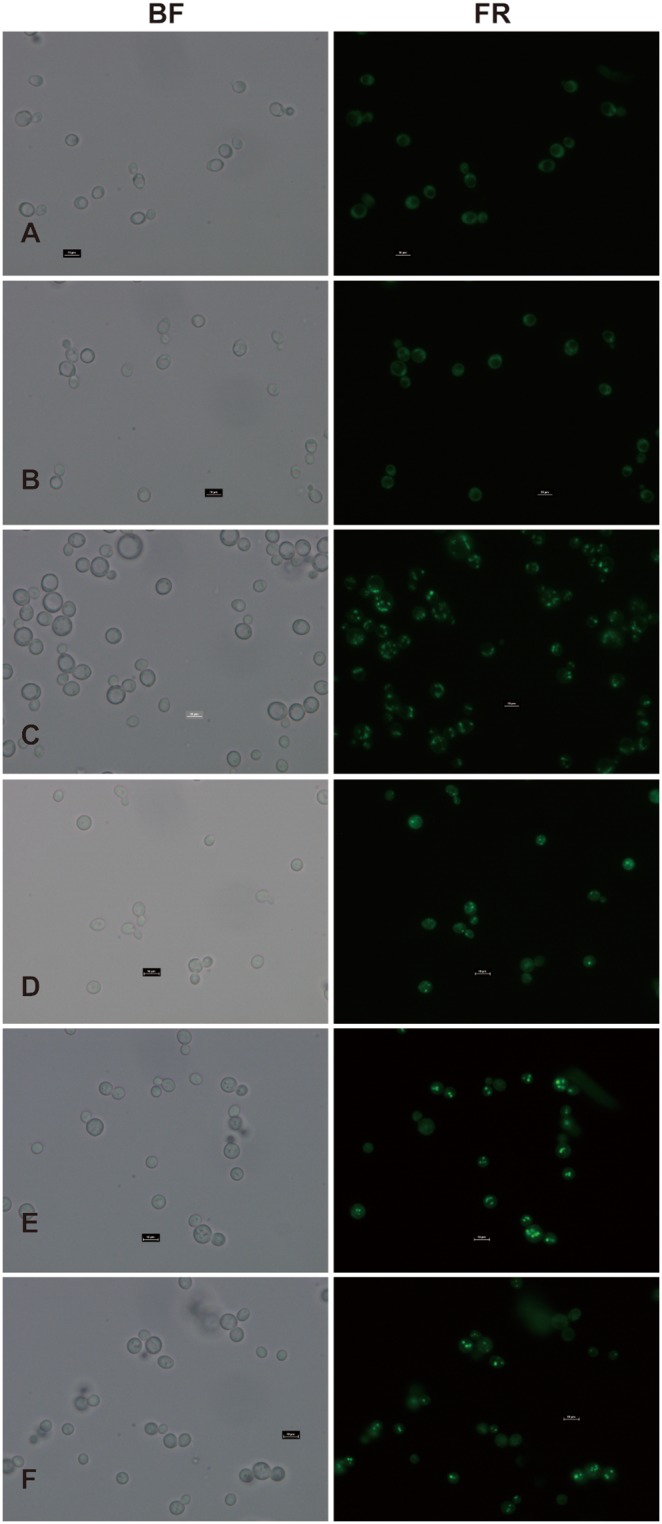
Diacylglycerol acyltransferase (DGAT) catalyzes the final and only committed acylation step in the synthesis of triacylglycerols. In this study, three novel AhDGATs genes were identified and isolated from peanut. Quantitative real-time RT-PCR analysis indicated that the AhDGAT1-2 transcript was more abundant in roots, seeds, and cotyledons, whereas the transcript abundances of AhDGAT1-1 and AhDGAT3-3 were higher in flowers than in the other tissues examined. During seed development, transcript levels of AhDGAT1-1 remained relatively low during the initial developmental stage but increased gradually during later stages, peaking at 50 days after pegging (DAP). Levels of AhDGAT1-2 transcripts were higher at 10 and 60 DAPs and much lower during other stages, whereas AhDGAT3-3 showed higher expression levels at 20 and 50 DAPs. In addition, AhDGAT transcripts were differentially expressed following exposure to abiotic stresses or abscisic acid. The activity of the three AhDGAT genes was confirmed by heterologous expression in a Saccharomyces cerevisiae TAG-deficient quadruple mutant. The recombinant yeasts restored lipid body formation and TAG biosynthesis, and preferentially incorporated unsaturated C18 fatty acids into lipids. The present study provides significant information useful in modifying the oil deposition of peanut through molecular breeding.
二酰基甘油酰基转移酶(DGAT)催化三酰甘油合成中最后且唯一的酰化步骤。在本研究中,从花生中鉴定并分离出三个新的AhDGATs基因。实时定量RT-PCR分析表明,AhDGAT1-2转录本在根、种子和子叶中更为丰富,而AhDGAT1-1和AhDGAT3-3的转录本丰度在花中高于其他检测组织。在种子发育过程中,AhDGAT1-1的转录水平在发育初期相对较低,但在后期逐渐增加,在入土后50天(DAP)达到峰值。AhDGAT1-2转录本水平在10和60 DAP时较高,在其他阶段则低得多,而AhDGAT3-3在20和50 DAP时表达水平较高。此外,在暴露于非生物胁迫或脱落酸后,AhDGAT转录本的表达存在差异。通过在酿酒酵母TAG缺陷四重突变体中的异源表达证实了三个AhDGAT基因的活性。重组酵母恢复了脂质体形成和TAG生物合成,并优先将不饱和C18脂肪酸掺入脂质中。本研究提供了有助于通过分子育种改良花生油脂沉积的重要信息。