Chekanov Konstantin, Lobakova Elena, Selyakh Irina, Semenova Larisa, Sidorov Roman, Solovchenko Alexei
Biological Faculty of Lomonosov Moscow State University, 1/12 Leninskie Gori, Moscow 119234, Russia.
Timiryazev Institute of Plant Physiology, Russian Academy of Sciences, 35, Botanicheskaya str., Moscow 127276, Russia.
Mar Drugs. 2014 Aug 15;12(8):4504-20. doi: 10.3390/md12084504.
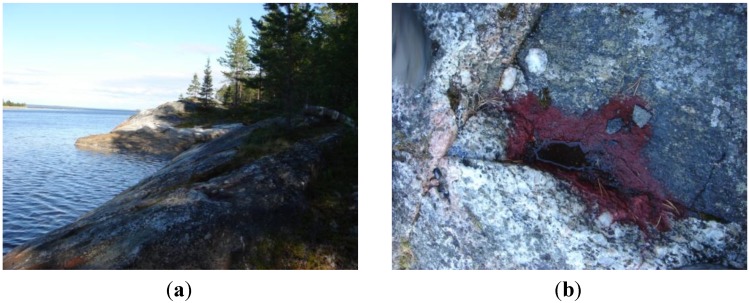
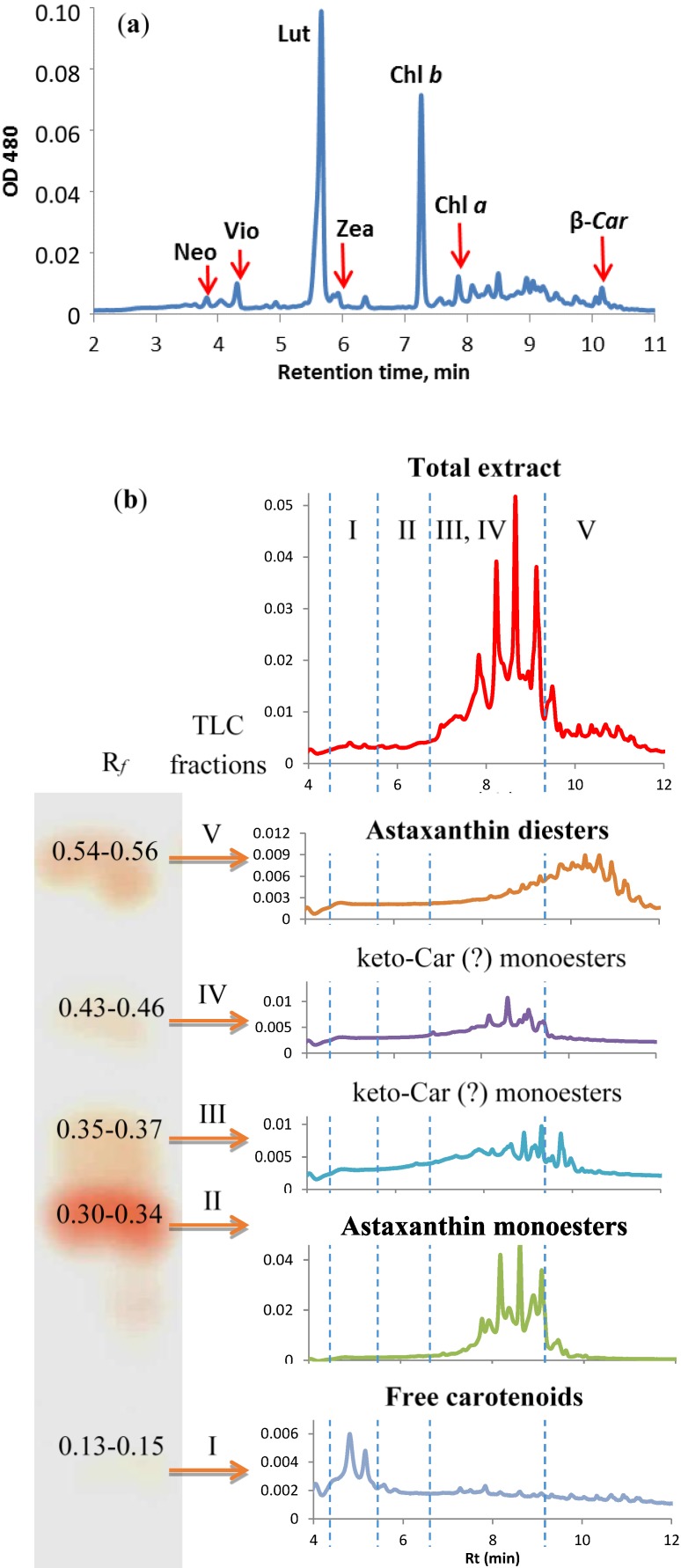
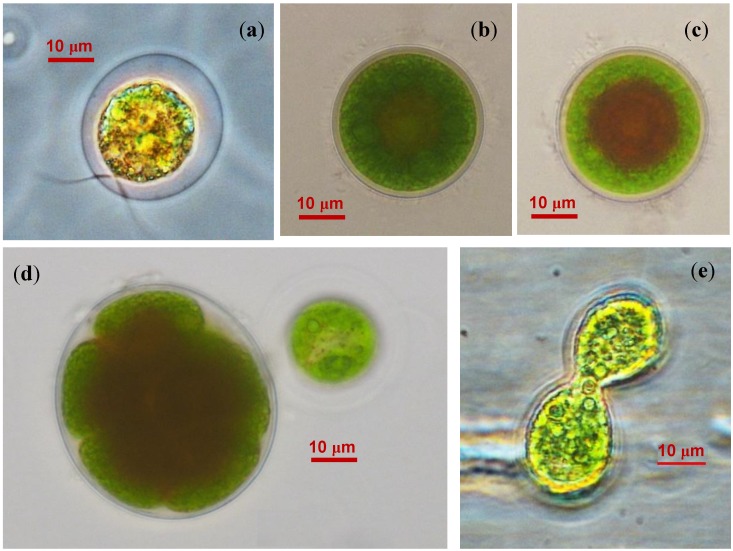
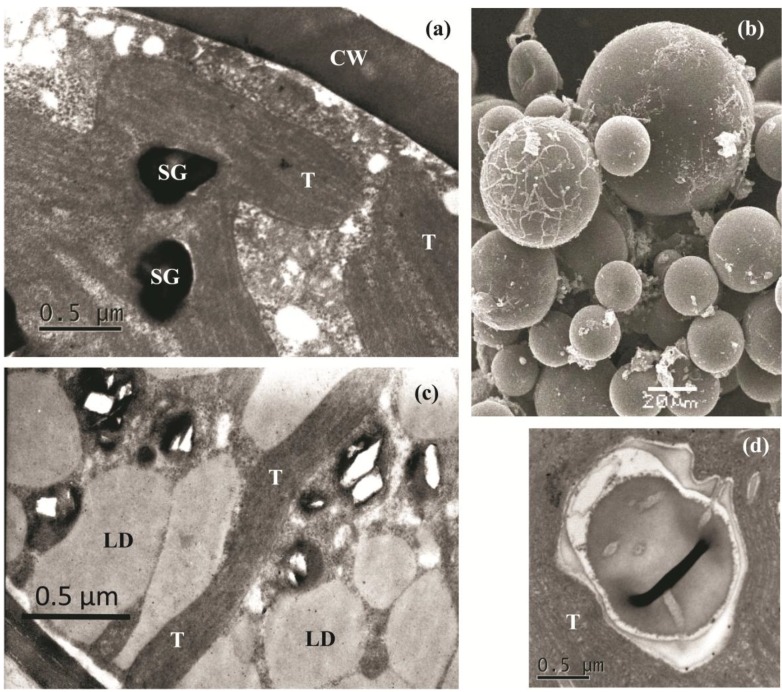
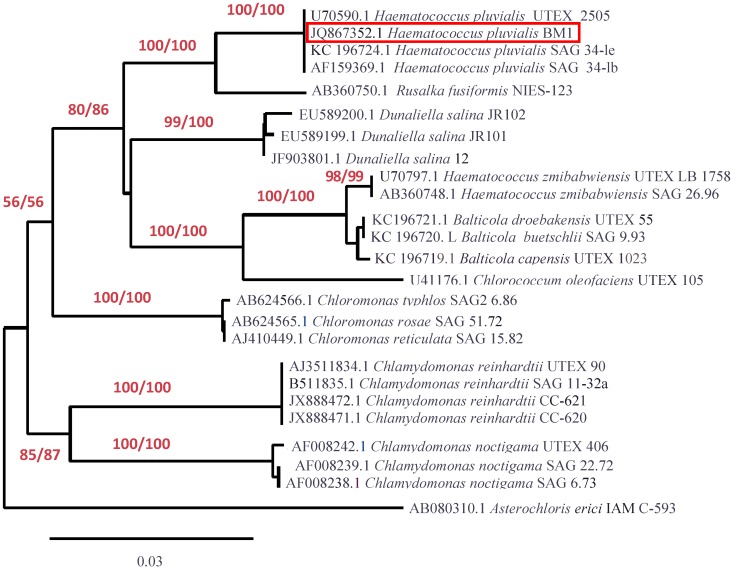
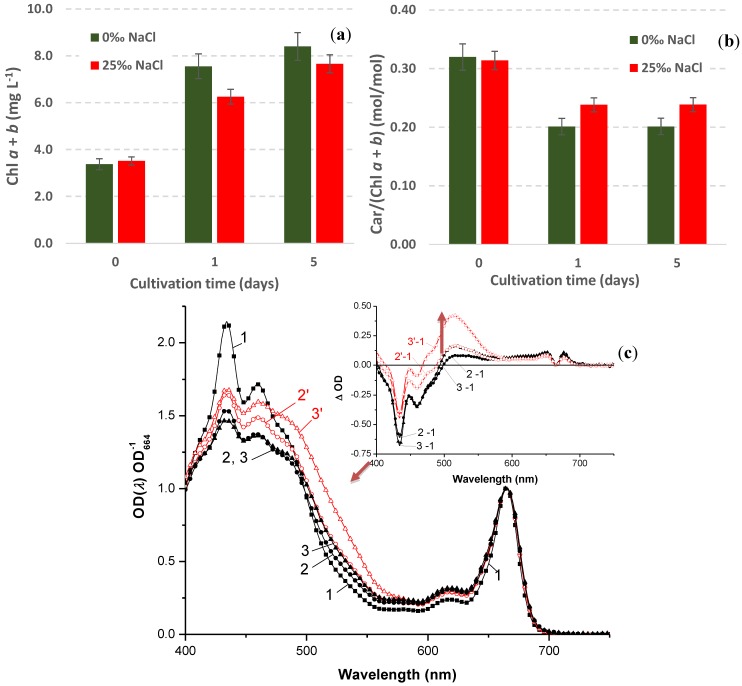
We report on a novel arctic strain BM1 of a carotenogenic chlorophyte from a coastal habitat with harsh environmental conditions (wide variations in solar irradiance, temperature, salinity and nutrient availability) identified as Haematococcus pluvialis Flotow. Increased (25‰) salinity exerted no adverse effect on the growth of the green BM1 cells. Under stressful conditions (high light, nitrogen and phosphorus deprivation), green vegetative cells of H. pluvialis BM1 grown in BG11 medium formed non-motile palmelloid cells and, eventually, hematocysts capable of a massive accumulation of the keto-carotenoid astaxanthin with a high nutraceutical and therapeutic potential. Routinely, astaxanthin was accumulated at the level of 4% of the cell dry weight (DW), reaching, under prolonged stress, 5.5% DW. Astaxanthin was predominantly accumulated in the form of mono- and diesters of fatty acids from C16 and C18 families. The palmelloids and hematocysts were characterized by the formation of red-colored cytoplasmic lipid droplets, increasingly large in size and number. The lipid droplets tended to merge and occupied almost the entire volume of the cell at the advanced stages of stress-induced carotenogenesis. The potential application of the new strain for the production of astaxanthin is discussed in comparison with the H. pluvialis strains currently employed in microalgal biotechnology.
我们报道了一种来自沿海生境、具有恶劣环境条件(太阳辐照度、温度、盐度和养分可用性变化很大)的产类胡萝卜素绿藻的新型北极菌株BM1,该菌株被鉴定为雨生红球藻(Haematococcus pluvialis Flotow)。盐度增加(25‰)对绿色BM1细胞的生长没有不利影响。在应激条件下(高光、氮和磷缺乏),在BG11培养基中生长的雨生红球藻BM1的绿色营养细胞形成了不运动的似亲群体细胞,并最终形成了能够大量积累具有高营养和治疗潜力的酮类胡萝卜素虾青素的血囊肿。通常,虾青素的积累量为细胞干重(DW)的4%,在长期应激下达到5.5% DW。虾青素主要以C16和C18家族脂肪酸的单酯和二酯形式积累。似亲群体细胞和血囊肿的特征是形成红色细胞质脂滴,其大小和数量不断增加。在应激诱导的类胡萝卜素生成的后期阶段,脂滴倾向于融合并占据几乎整个细胞体积。与目前微藻生物技术中使用的雨生红球藻菌株相比,讨论了新菌株在虾青素生产中的潜在应用。