Prančl Jan, Kaplan Zdeněk, Trávníček Pavel, Jarolímová Vlasta
Institute of Botany, Academy of Sciences of the Czech Republic, Průhonice, Czech Republic; Department of Botany, Charles University, Praha, Czech Republic.
Institute of Botany, Academy of Sciences of the Czech Republic, Průhonice, Czech Republic.
PLoS One. 2014 Sep 11;9(9):e105997. doi: 10.1371/journal.pone.0105997. eCollection 2014.
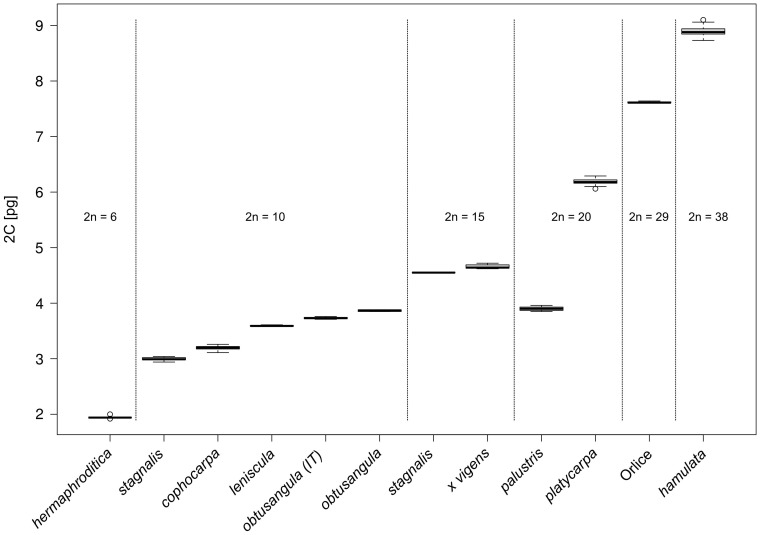
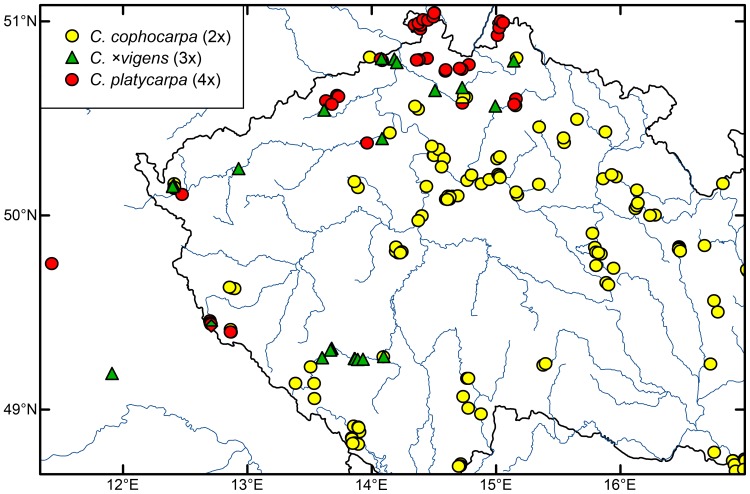
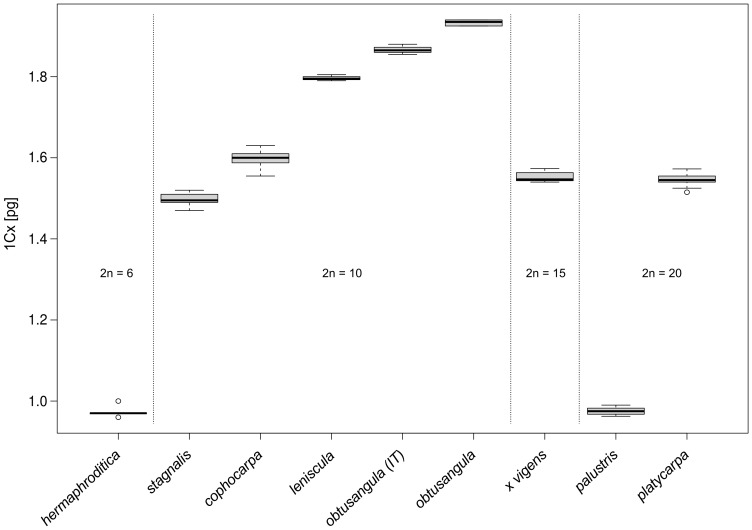
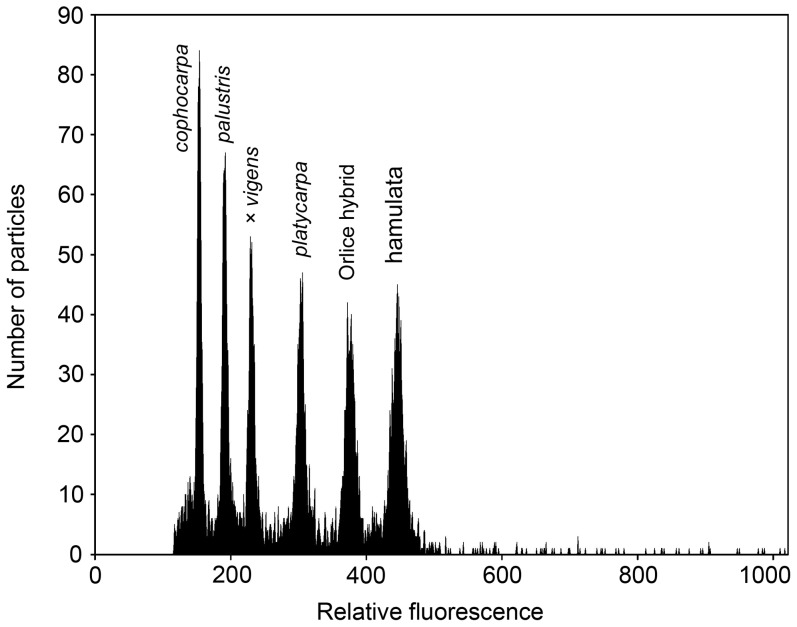
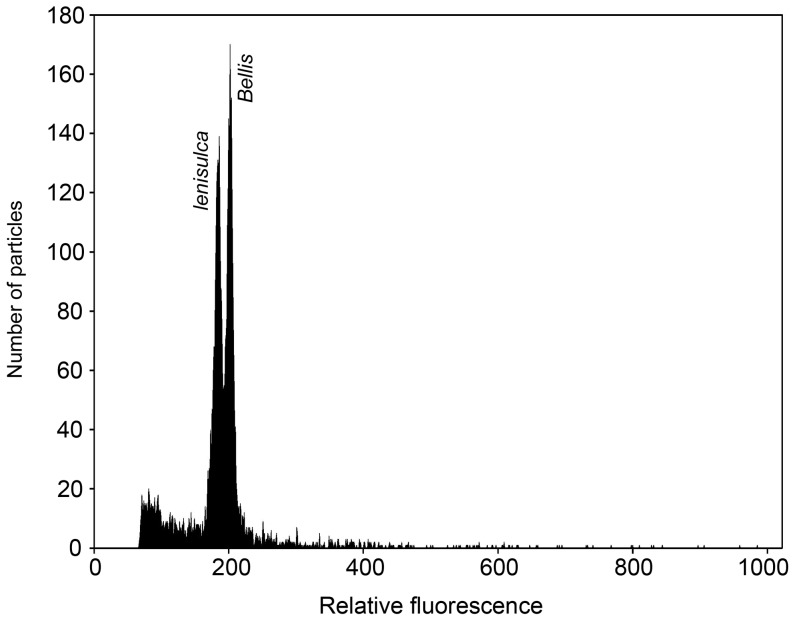
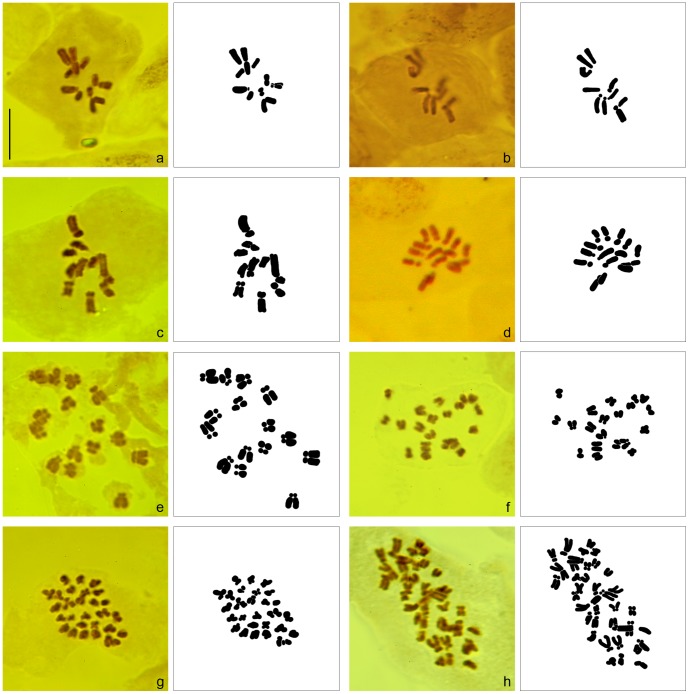
Despite their complex evolutionary histories, aquatic plants are highly underrepresented in contemporary biosystematic studies. Of them, the genus Callitriche is particularly interesting because of such evolutionary features as wide variation in chromosome numbers and pollination systems. However, taxonomic difficulties have prevented broader investigation of this genus. In this study we applied flow cytometry to Callitriche for the first time in order to gain an insight into evolutionary processes and genome size differentiation in the genus. Flow cytometry complemented by confirmation of chromosome counts was applied to an extensive dataset of 1077 Callitriche individuals from 495 localities in 11 European countries and the USA. Genome size was determined for 12 taxa. The results suggest that many important processes have interacted in the evolution of the genus, including polyploidization and hybridization. Incongruence between genome size and ploidy level, intraspecific variation in genome size, formation of autotriploid and hybridization between species with different pollination systems were also detected. Hybridization takes place particularly in the diploid-tetraploid complex C. cophocarpa-C. platycarpa, for which the triploid hybrids were frequently recorded in the area of co-occurrence of its parents. A hitherto unknown hybrid (probably C. hamulata × C. cophocarpa) with a unique chromosome number was discovered in the Czech Republic. However, hybridization occurs very rarely among most of the studied species. The main ecological preferences were also compared among the taxa collected. Although Callitriche taxa often grow in mixed populations, the ecological preferences of individual species are distinctly different in some cases. Anyway, flow cytometry is a very efficient method for taxonomic delimitation, determination and investigation of Callitriche species, and is even able to distinguish homoploid taxa and identify introduced species.
尽管水生植物有着复杂的进化历史,但在当代生物系统学研究中它们的代表性严重不足。其中,水马齿属植物尤其引人关注,因为其具有染色体数目和授粉系统广泛变异等进化特征。然而,分类学上的困难阻碍了对该属植物更广泛的研究。在本研究中,我们首次将流式细胞术应用于水马齿属植物,以深入了解该属的进化过程和基因组大小差异。我们将流式细胞术与染色体计数确认相结合,应用于来自11个欧洲国家和美国495个地点的1077个水马齿属植物个体的广泛数据集。测定了12个分类群的基因组大小。结果表明,该属的进化过程中涉及许多重要过程,包括多倍体化和杂交。还检测到基因组大小与倍性水平不一致、基因组大小的种内变异、同源三倍体的形成以及不同授粉系统物种之间的杂交。杂交尤其发生在二倍体 - 四倍体复合体水马齿 - 宽叶水马齿中,在其亲本共存的区域经常记录到三倍体杂种。在捷克共和国发现了一种迄今未知的具有独特染色体数目的杂种(可能是弯果水马齿×水马齿)。然而,在大多数研究物种中杂交很少发生。我们还比较了所收集分类群的主要生态偏好。尽管水马齿属分类群通常生长在混合种群中,但在某些情况下,单个物种的生态偏好明显不同。无论如何,流式细胞术是一种用于水马齿属物种分类界定、鉴定和研究的非常有效的方法,甚至能够区分同倍体分类群并识别引入物种。