Csiszar Agnes, Kutay Betül, Wirth Silvia, Schmidt Ulrike, Macho-Maschler Sabine, Schreiber Martin, Alacakaptan Memetcan, Vogel Georg F, Aumayr Karin, Huber Lukas A, Beug Hartmut
Breast Cancer Res. 2014 Sep 9;16(5):433. doi: 10.1186/s13058-014-0433-7.
Interleukin-like epithelial-to-mesenchymal transition inducer (ILEI) is an essential cytokine in tumor progression that is upregulated in several cancers, and its altered subcellular localization is a predictor of poor survival in human breast cancer. However, the regulation of ILEI activity and the molecular meaning of its altered localization remain elusive.
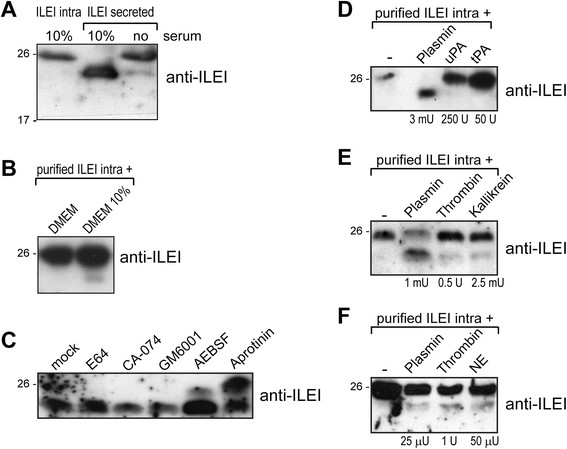
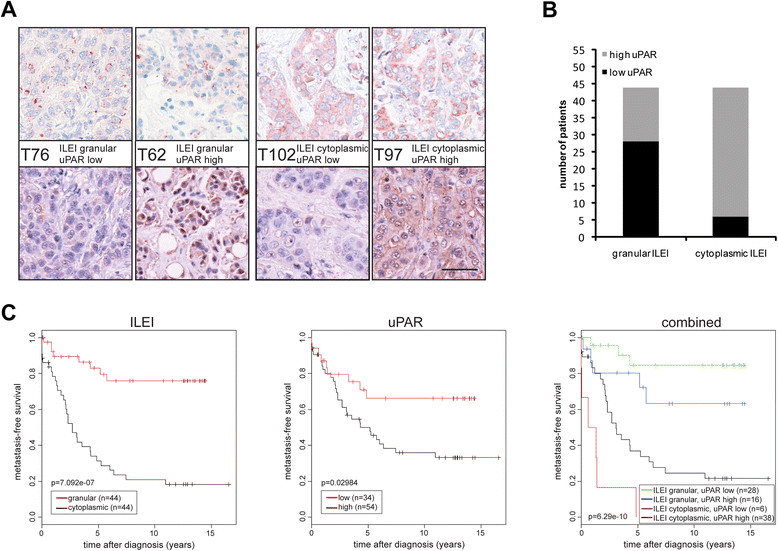
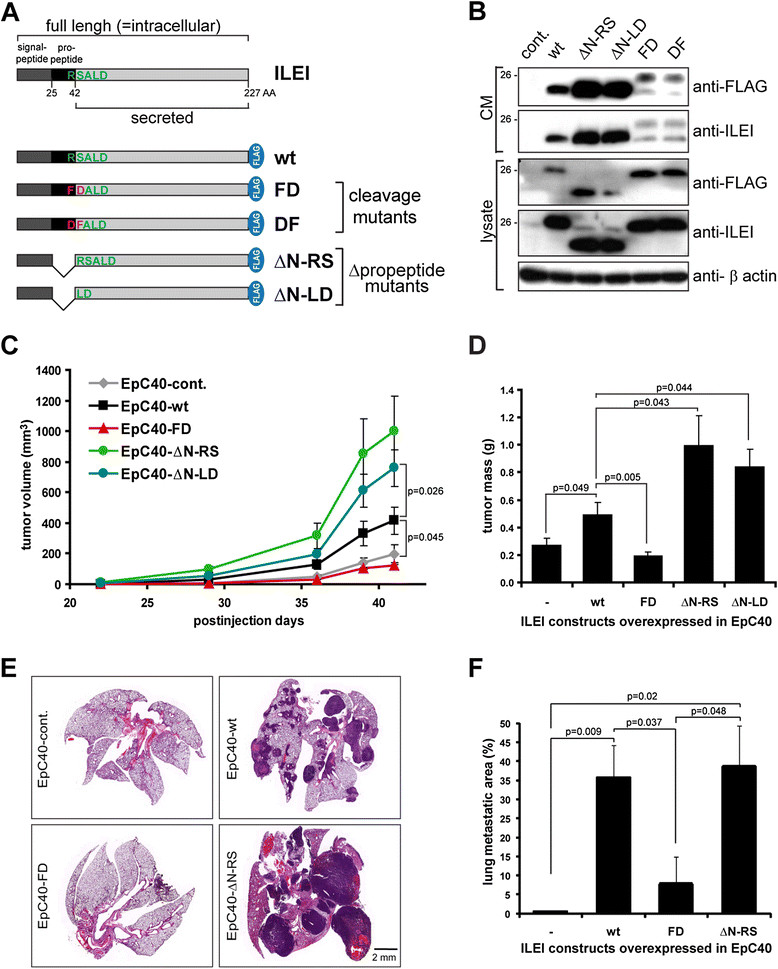
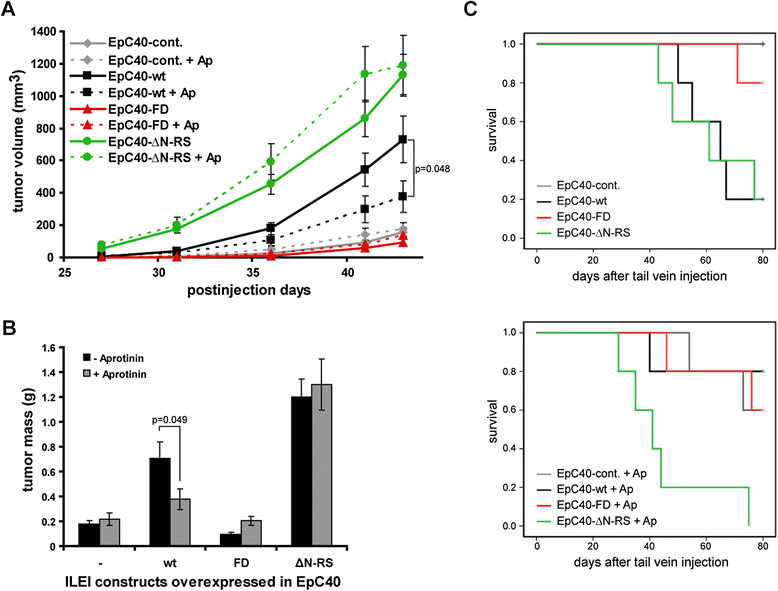
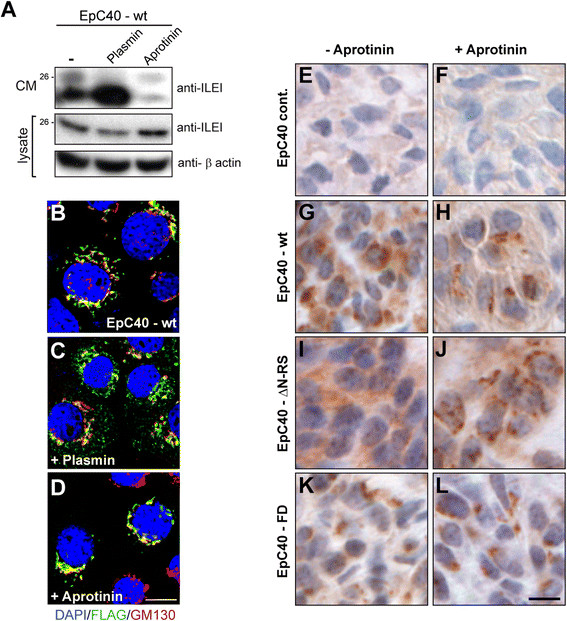
The influence of serum withdrawal, broad-specificity protease inhibitors, different serine proteases and plasminogen depletion on the size and amount of the secreted ILEI protein was investigated by Western blot analysis of EpRas cells. Proteases with ILEI-processing capacity were identified by carrying out an in vitro cleavage assay. Murine mammary tumor and metastasis models of EpC40 and 4T1 cells overexpressing different mutant forms of ILEI were used-extended with in vivo aprotinin treatment for the inhibition of ILEI-processing proteases-to test the in vivo relevance of proteolytic cleavage. Stable knockdown of urokinase plasminogen activator receptor (uPAR) in EpRas cells was performed to investigate the involvement of uPAR in ILEI secretion. The subcellular localization of the ILEI protein in tumor cell lines was analyzed by immunofluorescence. Immunohistochemistry for ILEI localization and uPAR expression was performed on two human breast cancer arrays, and ILEI and uPAR scores were correlated with the metastasis-free survival of patients.
We demonstrate that secreted ILEI requires site-specific proteolytic maturation into its short form for its tumor-promoting function, which is executed by serine proteases, most efficiently by plasmin. Noncleaved ILEI is tethered to fibronectin-containing fibers of the extracellular matrix through a propeptide-dependent interaction. In addition to ILEI processing, plasmin rapidly increases ILEI secretion by mobilizing its intracellular protein pool in a uPAR-dependent manner. Elevated ILEI secretion correlates with an altered subcellular localization of the protein, most likely representing a shift into secretory vesicles. Moreover, altered subcellular ILEI localization strongly correlates with high tumor cell-associated uPAR protein expression, as well as with poor survival, in human breast cancer.
Our findings point out extracellular serine proteases, in particular plasmin, and uPAR as valuable therapeutic targets against ILEI-driven tumor progression and emphasize the prognostic relevance of ILEI localization and a combined ILEI-uPAR marker analysis in human breast cancer.
白细胞介素样上皮-间质转化诱导因子(ILEI)是肿瘤进展过程中的一种重要细胞因子,在多种癌症中表达上调,其亚细胞定位的改变是人类乳腺癌患者生存预后不良的一个预测指标。然而,ILEI活性的调节及其定位改变的分子意义仍不清楚。
通过对EpRas细胞进行蛋白质印迹分析,研究血清去除、广谱蛋白酶抑制剂、不同丝氨酸蛋白酶和纤溶酶原缺失对分泌型ILEI蛋白大小和含量的影响。通过体外切割试验鉴定具有ILEI加工能力的蛋白酶。使用过表达不同突变形式ILEI的EpC40和4T1细胞建立小鼠乳腺肿瘤和转移模型,并在体内用抑肽酶处理以抑制ILEI加工蛋白酶,从而测试蛋白水解切割在体内的相关性。在EpRas细胞中稳定敲低尿激酶型纤溶酶原激活物受体(uPAR),以研究uPAR在ILEI分泌中的作用。通过免疫荧光分析肿瘤细胞系中ILEI蛋白的亚细胞定位。在两个人类乳腺癌组织芯片上进行ILEI定位和uPAR表达的免疫组织化学分析,并将ILEI和uPAR评分与患者的无转移生存期进行相关性分析。
我们证明,分泌型ILEI需要通过位点特异性蛋白水解成熟为其短形式才能发挥其促肿瘤功能,这一过程由丝氨酸蛋白酶执行,其中纤溶酶最为有效。未切割的ILEI通过一种前肽依赖性相互作用与细胞外基质中含纤连蛋白的纤维相连。除了ILEI加工外,纤溶酶还通过以uPAR依赖的方式动员其细胞内蛋白池,迅速增加ILEI的分泌。ILEI分泌增加与该蛋白亚细胞定位的改变相关,很可能是向分泌小泡的转变。此外,在人类乳腺癌中,ILEI亚细胞定位的改变与肿瘤细胞相关的uPAR蛋白高表达以及不良生存密切相关。
我们的研究结果指出细胞外丝氨酸蛋白酶,特别是纤溶酶和uPAR是对抗ILEI驱动的肿瘤进展的有价值的治疗靶点,并强调了ILEI定位以及ILEI-uPAR联合标记分析在人类乳腺癌中的预后相关性。