You Myung-Jo
Laboratory of Veterinary Parasitology, College of Veterinary Medicine and Biosafety Research Center, Chonbuk National University, Jeonju 561-756, Korea.
Korean J Parasitol. 2014 Aug;52(4):435-8. doi: 10.3347/kjp.2014.52.4.435. Epub 2014 Aug 29.
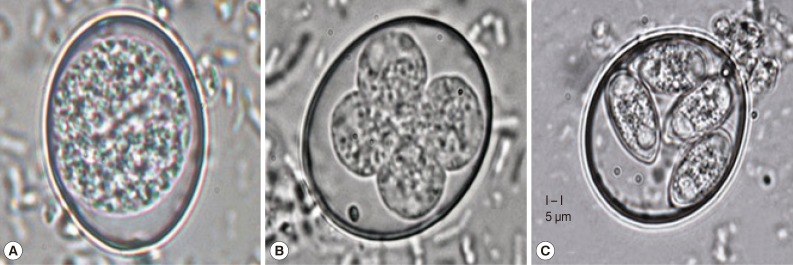
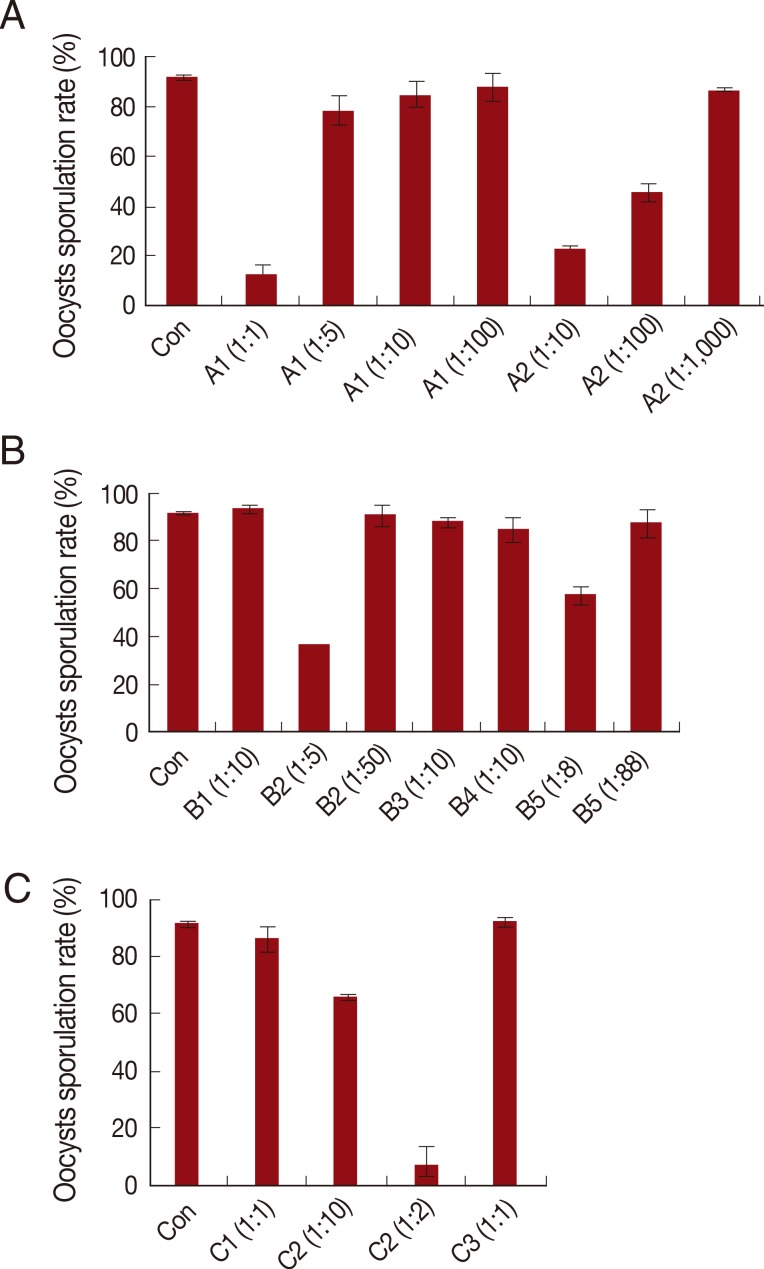
The disinfectant effects (DEs) of 10 types of chemicals, defined by their ability to destroy or inhibit oocysts and consequently prevent sporulation of Eimeria tenella field isolate, were evaluated in vitro. Correct species assignments and sample purities were confirmed by the singular internal transcribed spacer (ITS)-PCR analysis. A total of 18 treatments were performed, and the disinfection suppression levels were 75.9% for 39% benzene + 22% xylene (1:10 dilution), 85.5% for 30% cresol soup (1:1 dilution), and 91.7% for 99.9% acetic acid (1:2 dilution) group. The results indicate that acetic acid, cresol soup, and benzene+xylene are good candidates for suppression of E. tenella oocyst sporulation.
通过体外试验评估了10种化学物质的消毒效果(DEs),这些化学物质通过破坏或抑制卵囊从而防止柔嫩艾美耳球虫田间分离株的孢子形成的能力来定义。通过单链内转录间隔区(ITS)-PCR分析确认了正确的物种归属和样品纯度。总共进行了18种处理,消毒抑制水平分别为:39%苯+22%二甲苯(1:10稀释)组为75.9%,30%甲酚皂溶液(1:1稀释)组为85.5%,99.9%乙酸(1:2稀释)组为91.7%。结果表明,乙酸、甲酚皂溶液和苯+二甲苯是抑制柔嫩艾美耳球虫卵囊孢子形成的良好候选物质。