
塔姆态耦合发射:探针位置和发射波长的影响。
Tamm State-Coupled Emission: Effect of Probe Location and Emission Wavelength.
作者信息
Badugu Ramachandram, Lakowicz Joseph R
机构信息
Center for Fluorescence Spectroscopy, Department of Biochemistry and Molecular Biology, University of Maryland, Baltimore , 725 West Lombard Street, Baltimore, Maryland 21201, United States.
出版信息
J Phys Chem C Nanomater Interfaces. 2014 Sep 18;118(37):21558-21571. doi: 10.1021/jp506190h. Epub 2014 Aug 29.
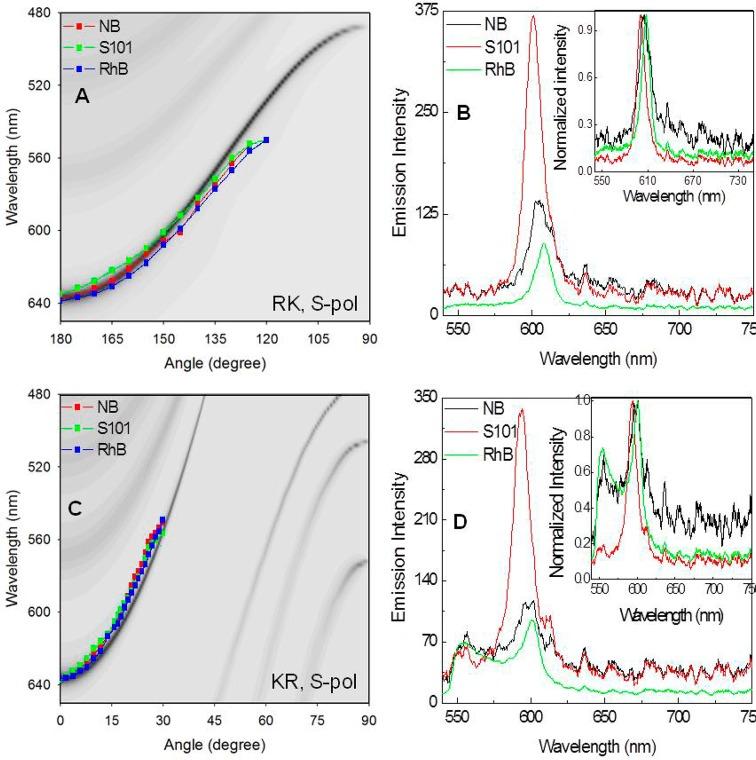
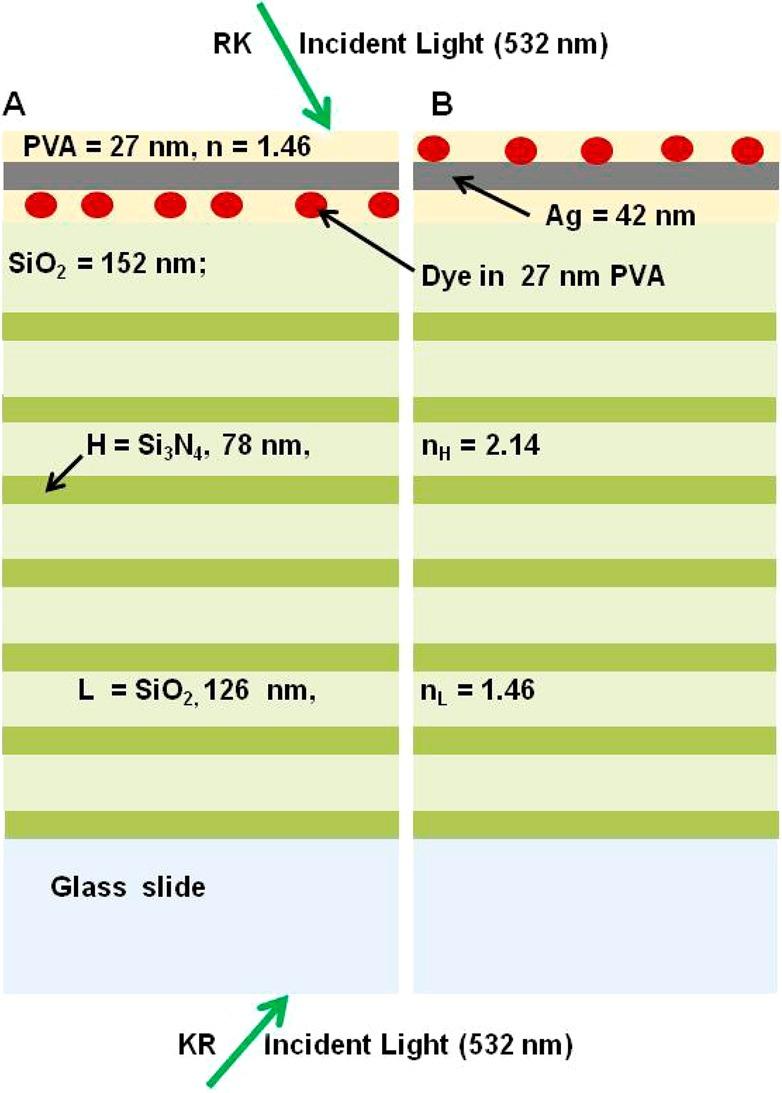
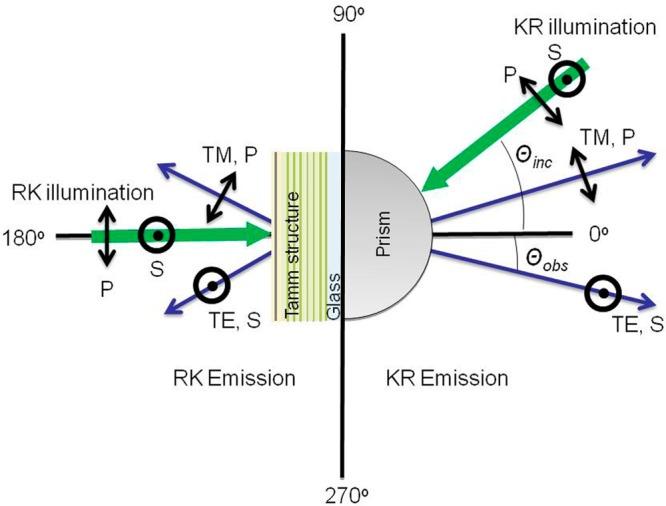
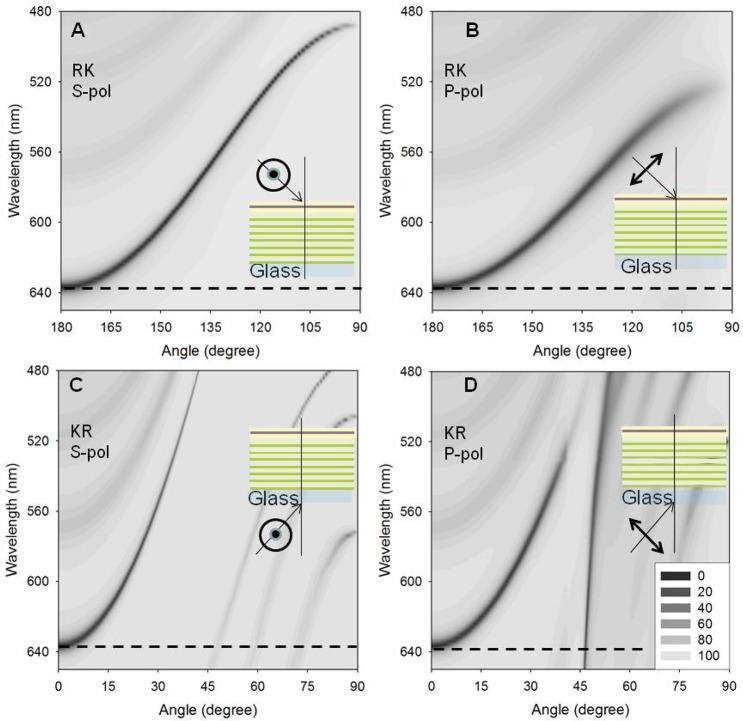
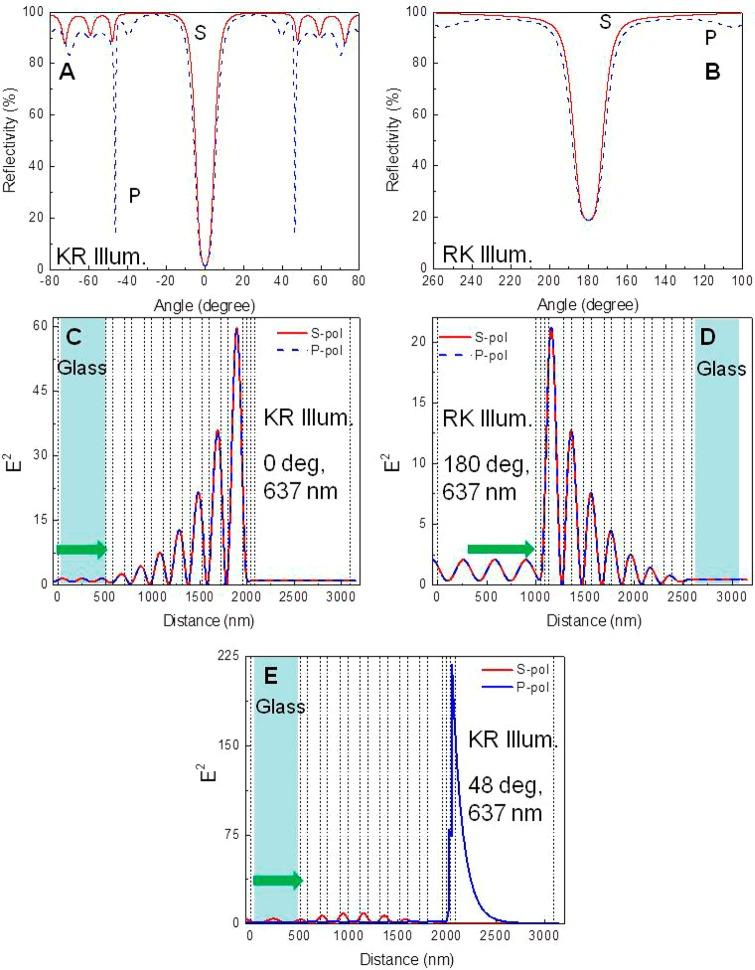
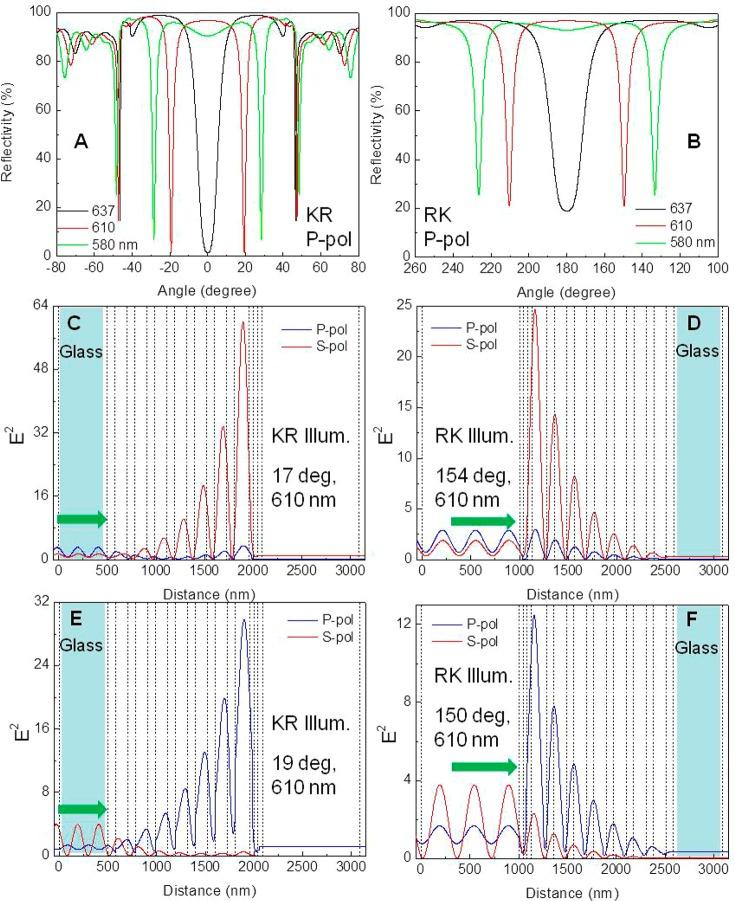
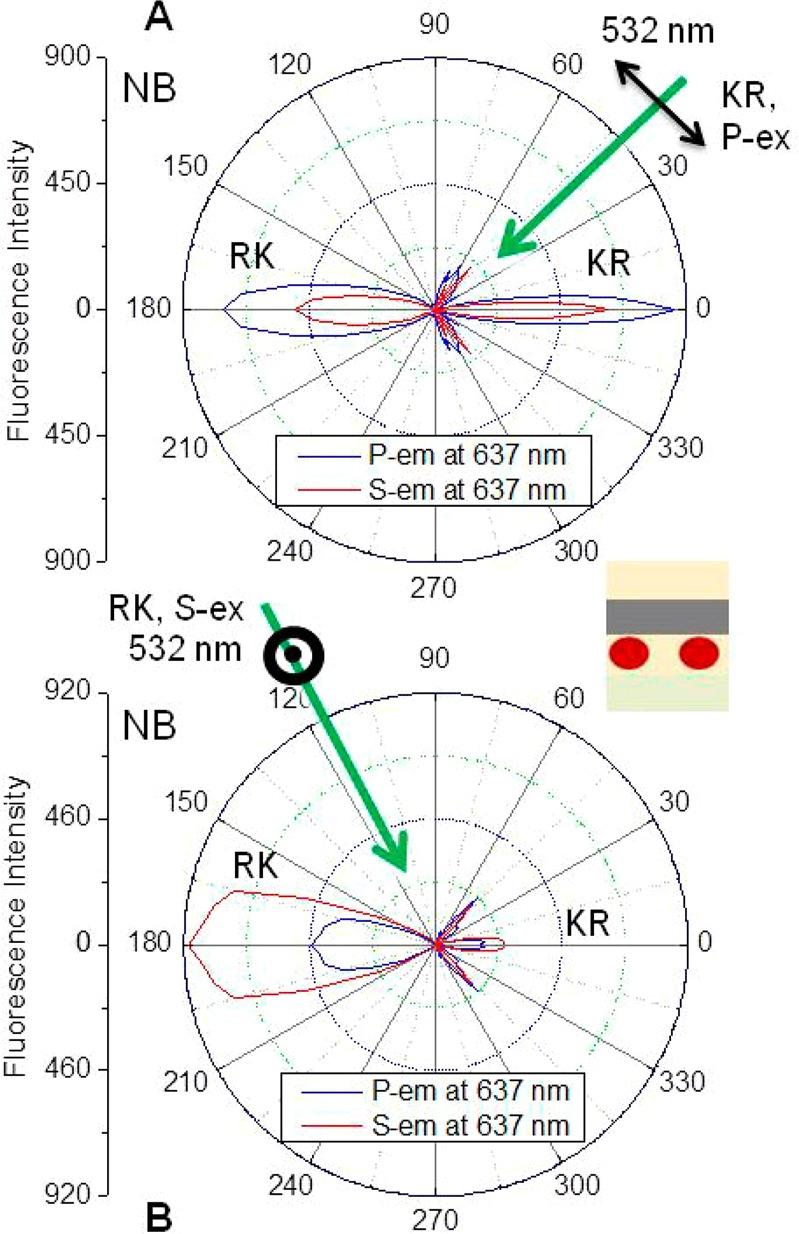
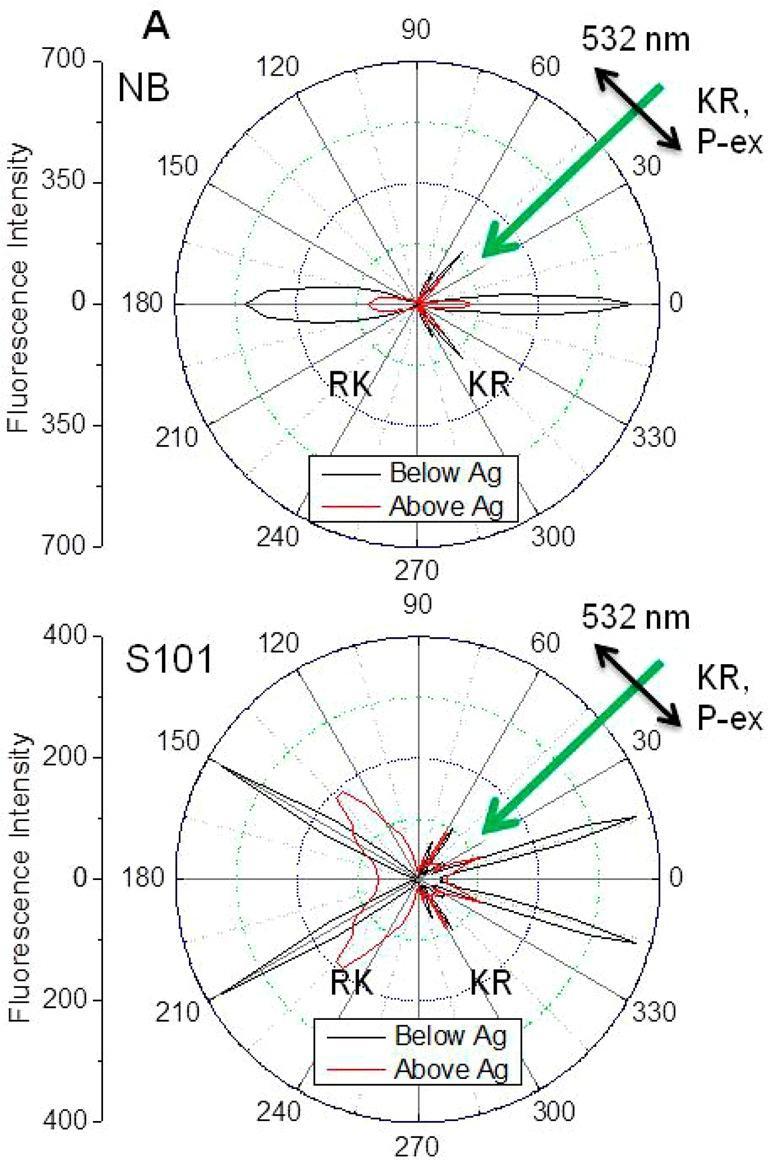
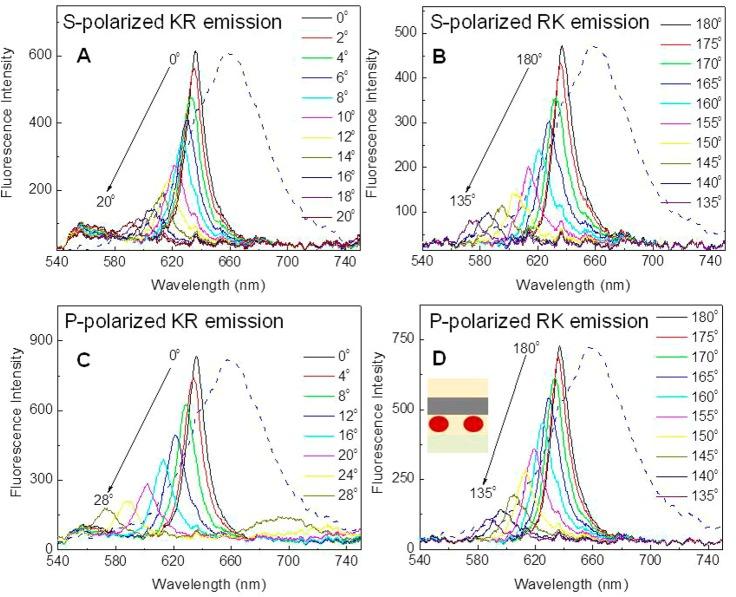
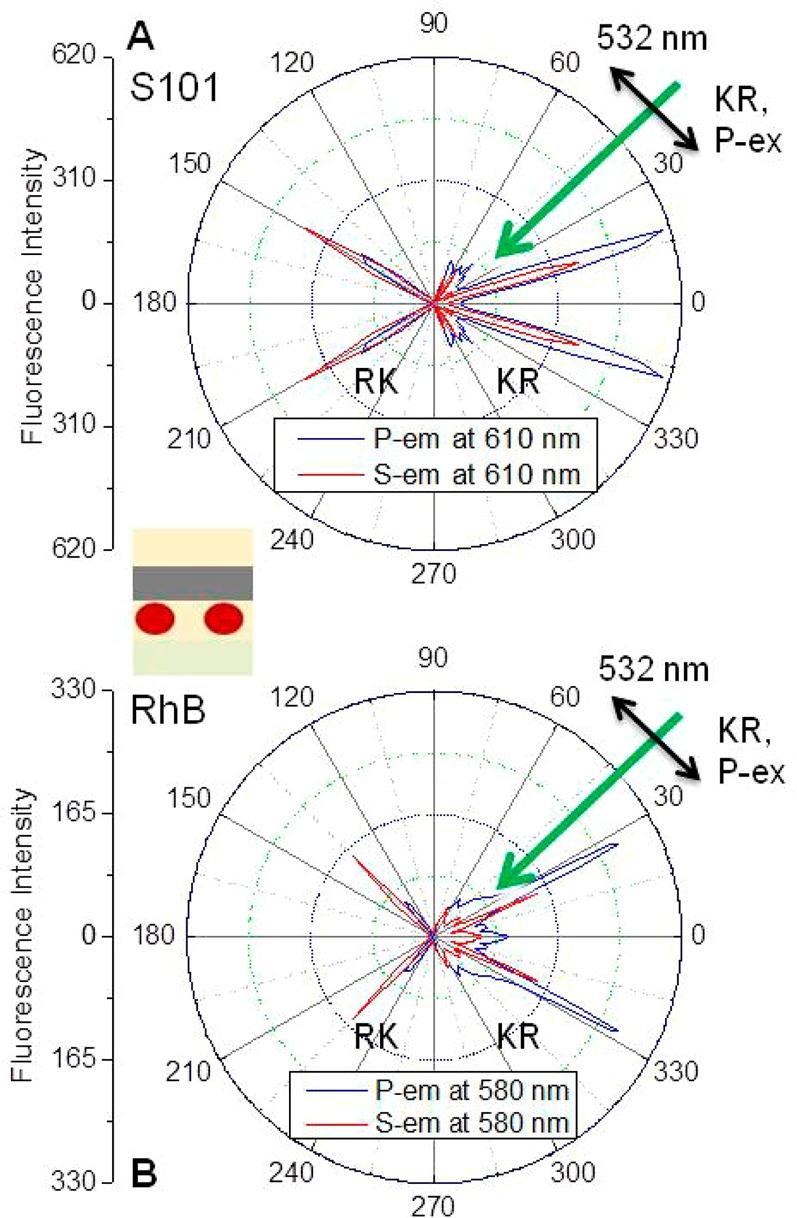
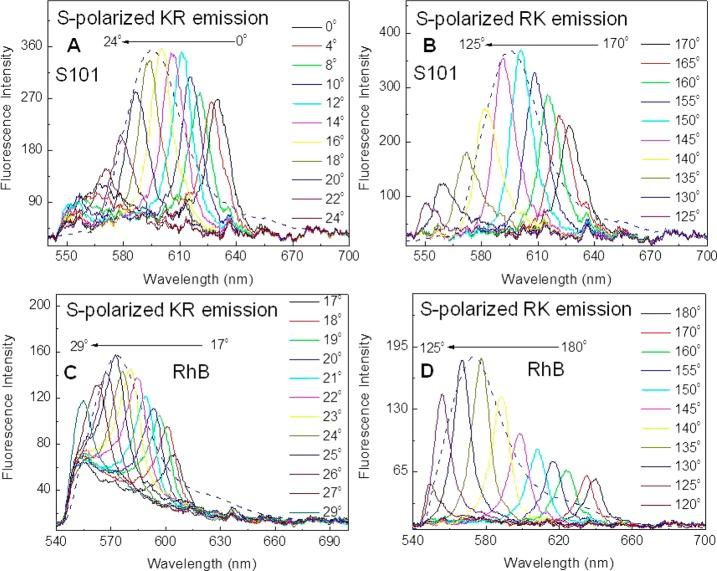
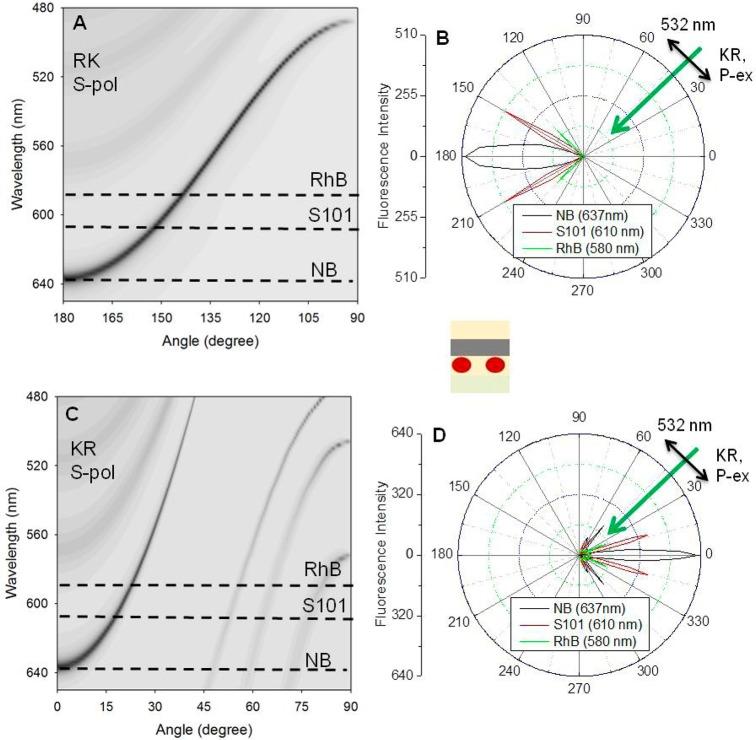
We report the effect of the probe location and wavelength on the emission spatial distribution and spectral properties of fluorophores located on structures which display Tamm states. Our structure consists of a one-dimensional photonic crystal (1DPC)-that is, a multilayer structure of alternate high and low refractive index dielectrics-and a thin top silver film. Simulations show the presence of Tamm and surface plasmon modes in the structure. The electric field intensities for the Tamm modes are located mostly in the dielectric layer below the metal film. The corresponding field intensities for the surface plamon modes are located above the metal film in the distal side. Tamm states can be in resonance with the incident light normal or near normal to the surface, within the light line, and can be accessed without the use of a coupling prism or gratings. We investigated the emission spectra and angular distribution of the emission for probes located above and below the metal film to explore the interaction of fluorophores with Tamm plasmons and surface plasmons modes. Three probes were chosen with different overlap of the emission spectra with the Tamm modes. The fluorophores below the metal film coupled predominantly with the Tamm state and displayed more intense and only Tamm state-coupled emission (TSCE). Probes above the metal film display both surface plasmon-coupled emission (SPCE) and Tamm state-coupled emission. In contrast to SPCE, which shows only KR, P-polarized emission, the Tamm states can display both S- and P-polarized emission and can be populated using both RK and KR illuminations. The TSCE angle is highly sensitive to wavelength, which suggests the use of Tamm structures to provide both directional emission and wavelength dispersion. The combination of plasmonic and photonic structures with directional emission close to surface normal offers the opportunities for new design formats for clinical testing, portable devices, and other fluorescence-based applications.
我们报告了探针位置和波长对位于呈现塔姆态结构上的荧光团发射空间分布和光谱特性的影响。我们的结构由一维光子晶体(1DPC)组成,即由交替的高折射率和低折射率电介质构成的多层结构,以及顶部的薄银膜。模拟显示该结构中存在塔姆模和表面等离子体激元模。塔姆模的电场强度主要位于金属膜下方的电介质层中。表面等离子体激元模的相应场强位于金属膜上方的远端。塔姆态可以与垂直或接近垂直于表面且在光线范围内的入射光发生共振,并且无需使用耦合棱镜或光栅即可实现。我们研究了位于金属膜上方和下方的探针的发射光谱和发射角度分布,以探索荧光团与塔姆等离子体激元和表面等离子体激元模的相互作用。选择了三种发射光谱与塔姆模有不同重叠的探针。金属膜下方的荧光团主要与塔姆态耦合,并表现出更强且仅与塔姆态耦合的发射(TSCE)。金属膜上方的探针同时显示表面等离子体激元耦合发射(SPCE)和塔姆态耦合发射。与仅显示KR、P偏振发射的SPCE不同,塔姆态可以显示S偏振和P偏振发射,并且可以通过RK和KR照明来激发。TSCE角度对波长高度敏感,这表明可利用塔姆结构来提供定向发射和波长色散。等离子体和光子结构与接近表面法线的定向发射相结合,为临床检测、便携式设备及其他基于荧光的应用提供了新的设计形式。


 Zotero 插件