Wen Zhili, Huang Wei, Feng Yuliang, Cai Wenfeng, Wang Yuhua, Wang Xiaohong, Liang Jialiang, Wani Mashhood, Chen Jing, Zhu Pin, Chen Ji-Mei, Millard Ronald W, Fan Guo-Chang, Wang Yigang
Department of Infectious Disease, Nanchang University Medical School, Nanchang, Jiangxi, China; Department of Pathology and Lab Medicine, University of Cincinnati Medical Center, Cincinnati, Ohio, United States of America.
Department of Pathology and Lab Medicine, University of Cincinnati Medical Center, Cincinnati, Ohio, United States of America.
PLoS One. 2014 Sep 24;9(9):e104666. doi: 10.1371/journal.pone.0104666. eCollection 2014.
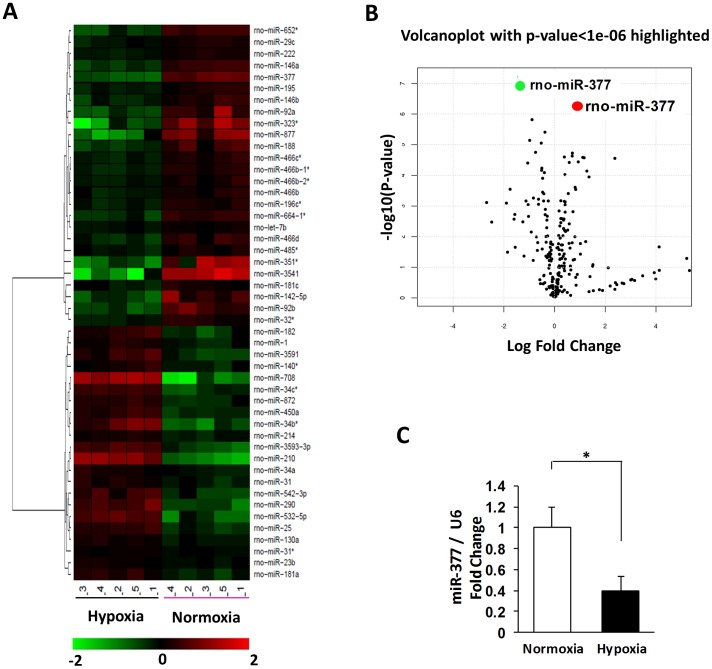
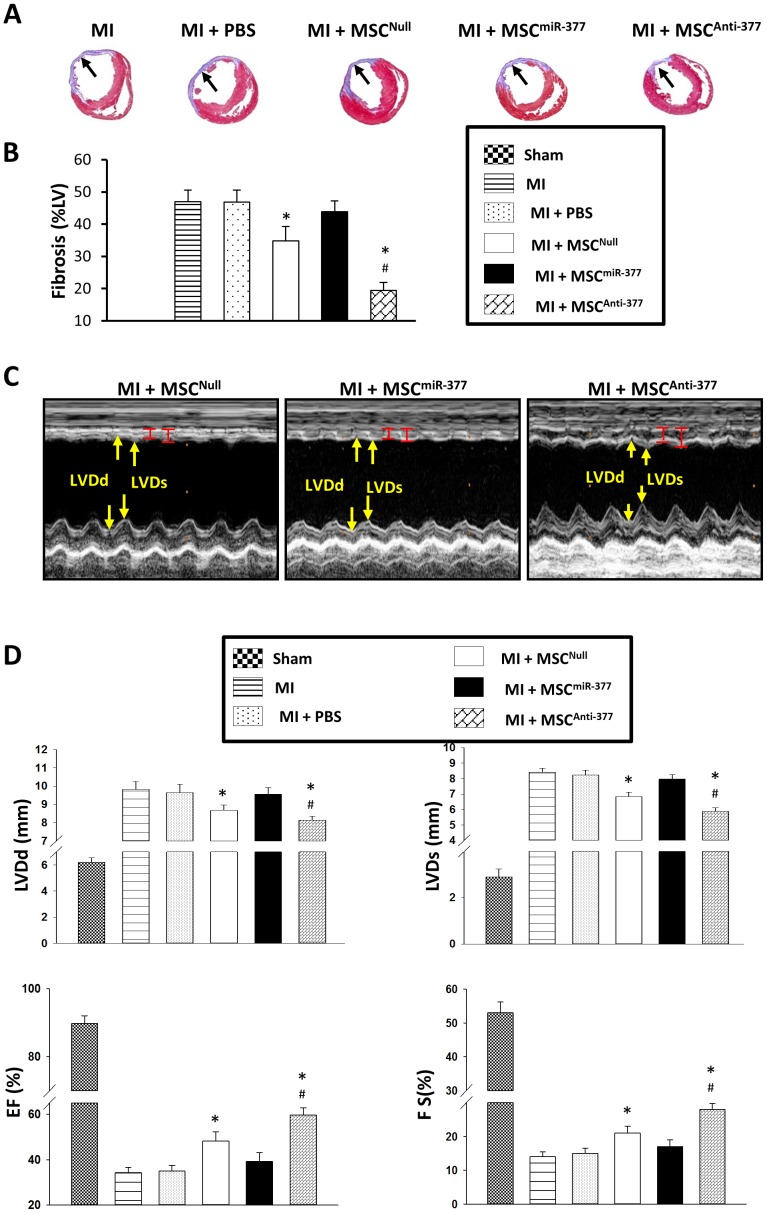
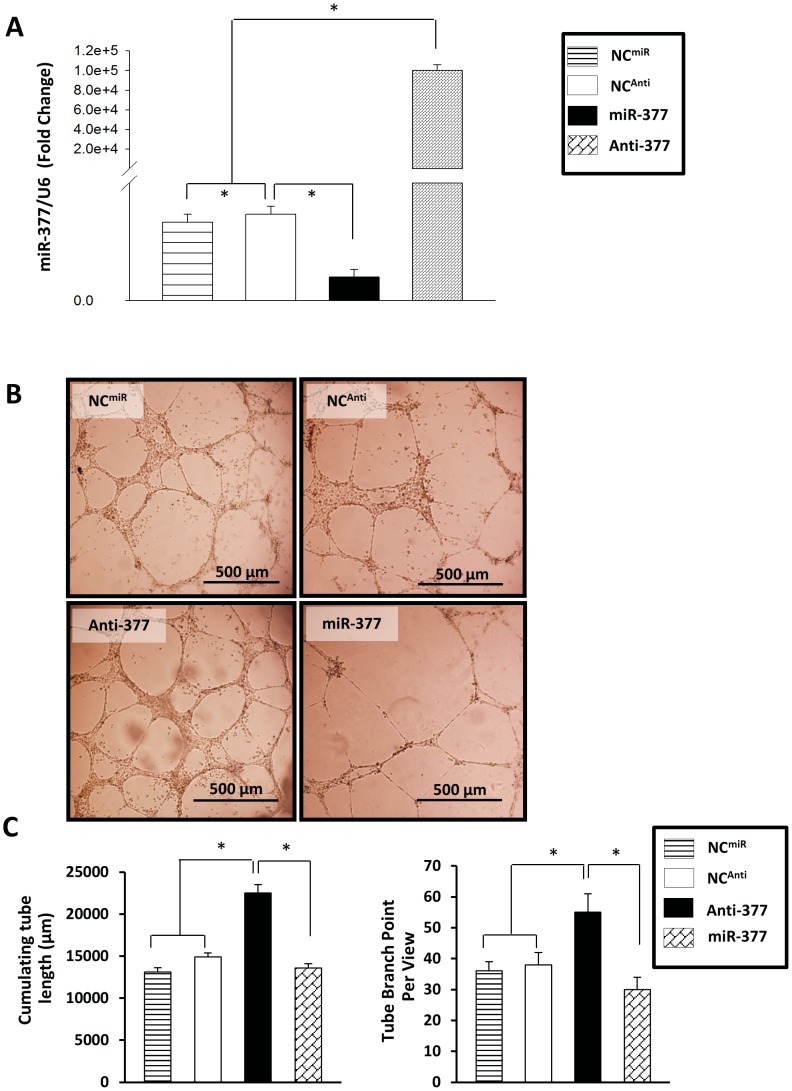
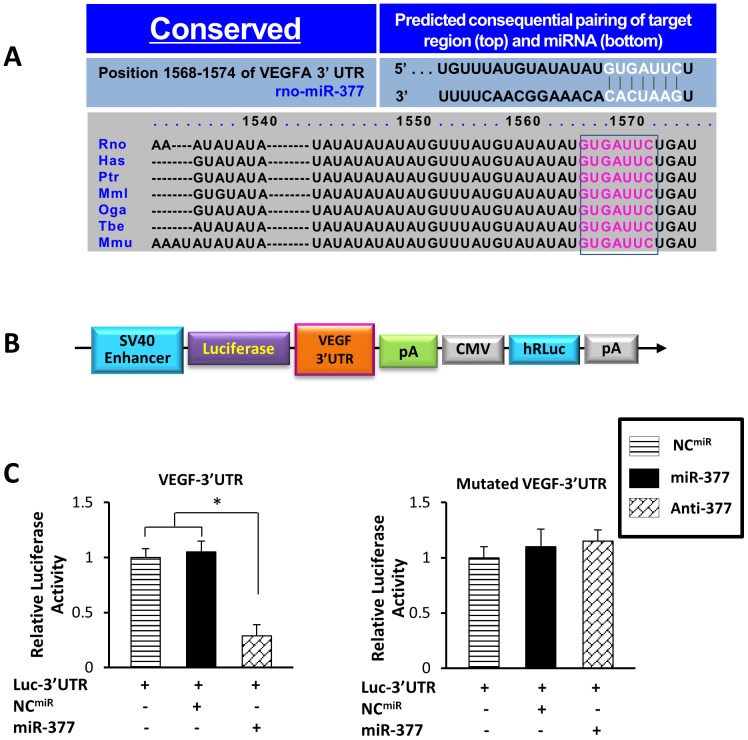
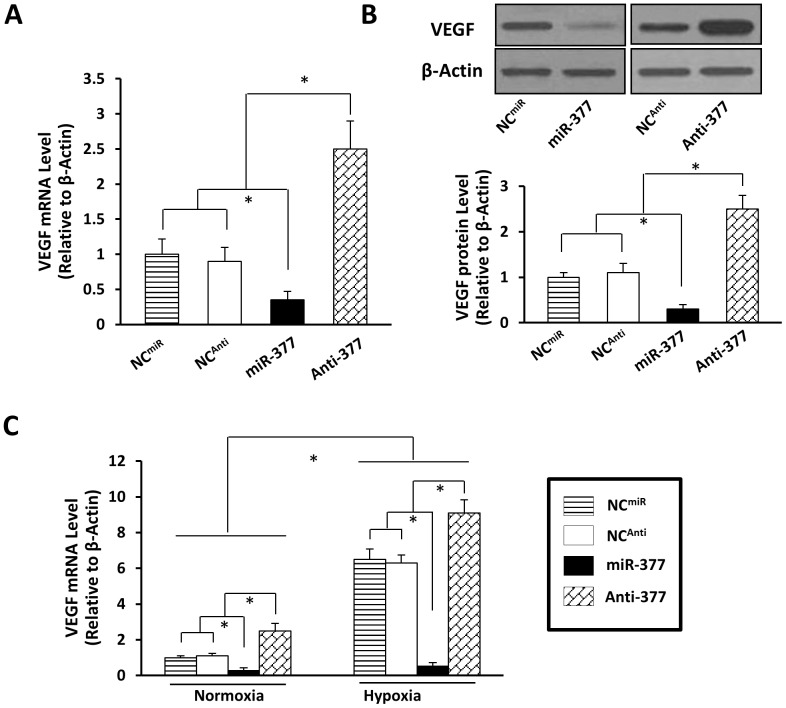
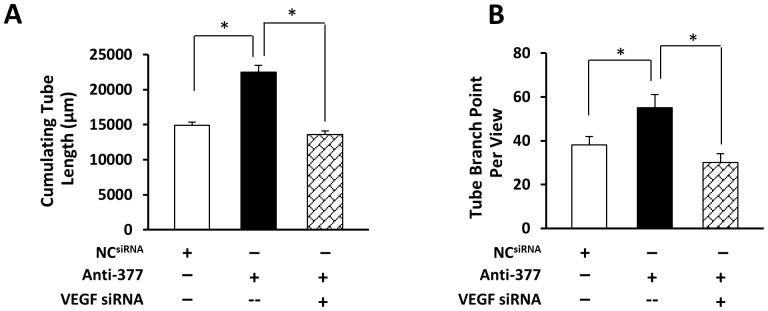
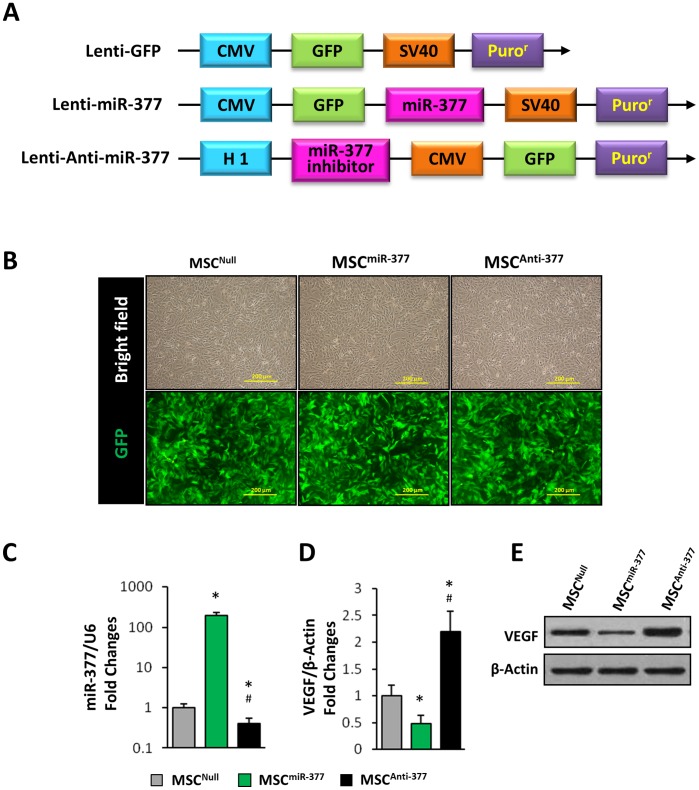
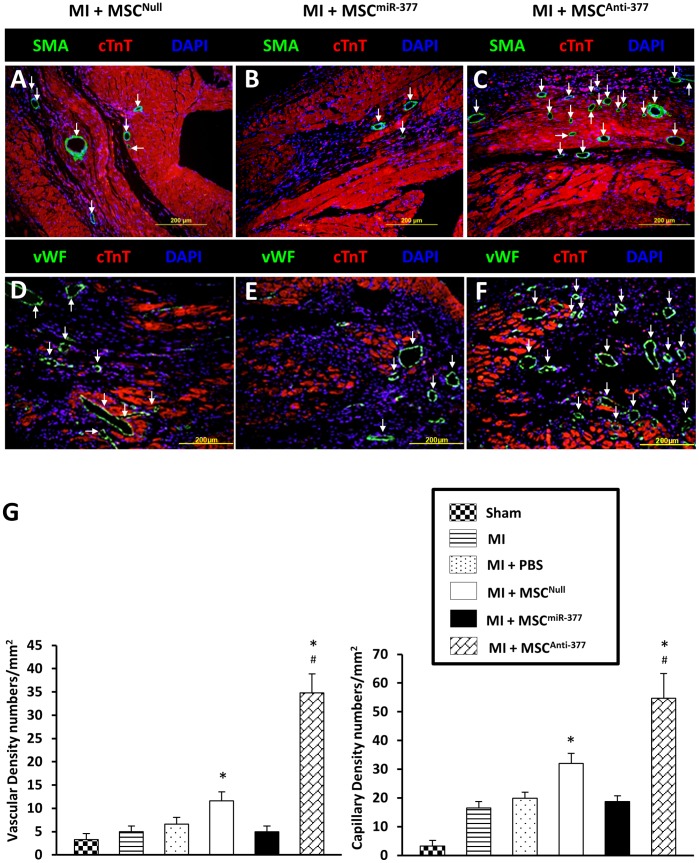
MicroRNAs have been appreciated in various cellular functions, including the regulation of angiogenesis. Mesenchymal-stem-cells (MSCs) transplanted to the MI heart improve cardiac function through paracrine-mediated angiogenesis. However, whether microRNAs regulate MSC induced angiogenesis remains to be clarified. Using microRNA microarray analysis, we identified a microRNA expression profile in hypoxia-treated MSCs and observed that among all dysregulated microRNAs, microRNA-377 was decreased the most significantly. We also validated that vascular endothelial growth factor (VEGF) is a target of microRNA-377 using dual-luciferase reporter assay and Western-blotting. Knockdown of endogenous microRNA-377 promoted tube formation in human umbilical vein endothelial cells. We then engineered rat MSCs with lentiviral vectors to either overexpress microRNA-377 (MSC miR-377) or knockdown microRNA-377 (MSC Anti-377) to investigate whether microRNA-377 regulated MSC-induced myocardial angiogenesis, using MSCs infected with lentiviral empty vector to serve as controls (MSC Null). Four weeks after implantation of the microRNA-engineered MSCs into the infarcted rat hearts, the vessel density was significantly increased in MSC Anti-377-hearts, and this was accompanied by reduced fibrosis and improved myocardial function as compared to controls. Adverse effects were observed in MSC miR-377-treated hearts, including reduced vessel density, impaired myocardial function, and increased fibrosis in comparison with MSC Null-group. These findings indicate that hypoxia-responsive microRNA-377 directly targets VEGF in MSCs, and knockdown of endogenous microRNA-377 promotes MSC-induced angiogenesis in the infarcted myocardium. Thus, microRNA-377 may serve as a novel therapeutic target for stem cell-based treatment of ischemic heart disease.
微小RNA已被证实参与多种细胞功能,包括对血管生成的调控。移植到心肌梗死心脏的间充质干细胞(MSC)通过旁分泌介导的血管生成改善心脏功能。然而,微小RNA是否调节MSC诱导的血管生成仍有待阐明。通过微小RNA微阵列分析,我们确定了缺氧处理的MSC中的微小RNA表达谱,并观察到在所有失调的微小RNA中,微小RNA-377的下降最为显著。我们还使用双荧光素酶报告基因检测和蛋白质印迹法验证了血管内皮生长因子(VEGF)是微小RNA-377的靶标。敲低内源性微小RNA-377可促进人脐静脉内皮细胞的管腔形成。然后,我们用慢病毒载体对大鼠MSC进行工程改造,使其过表达微小RNA-377(MSC miR-377)或敲低微小RNA-377(MSC Anti-377),以研究微小RNA-377是否调节MSC诱导的心肌血管生成,将感染慢病毒空载体的MSC用作对照(MSC Null)。将微小RNA工程化的MSC植入梗死大鼠心脏四周后,MSC Anti-377组心脏的血管密度显著增加,与对照组相比,纤维化减少,心脏功能改善。与MSC Null组相比,在MSC miR-377处理的心脏中观察到了不良影响,包括血管密度降低、心脏功能受损和纤维化增加。这些发现表明,缺氧反应性微小RNA-377直接靶向MSC中的VEGF,敲低内源性微小RNA-377可促进梗死心肌中MSC诱导的血管生成。因此,微小RNA-377可能成为基于干细胞治疗缺血性心脏病的新治疗靶点。