Heimer Robert, Eritsyan Ksenia, Barbour Russell, Levina Olga S
BMC Infect Dis. 2014;14 Suppl 6(Suppl 6):S12. doi: 10.1186/1471-2334-14-S6-S12. Epub 2014 Sep 19.
Behavioural surveillance among people who inject drugs (PWID) and testing for hepatitis C virus (HCV) and HIV is needed to understand the scope of both epidemics in at-risk populations and to suggest steps to improve their health.
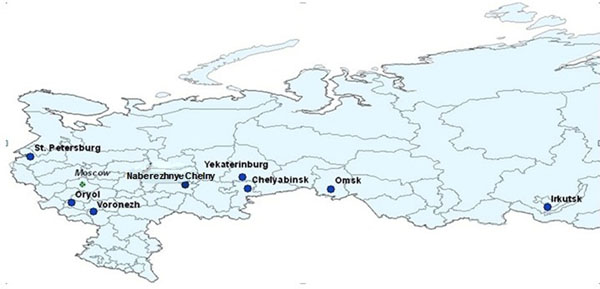
PWID were recruited using respondent-driven sampling (RDS) in eight Russian cities. A standardized survey was administered to collect sociodemographic and behavioral information. Blood specimens were obtained for serological testing for HCV and HIV-1. Data across the eight sites were pooled to identify individual-, network-, and city-level factors associated with positive HCV serostatus.
Among 2,596 PWID participating in the study, 1,837 tested positive for HCV (71%). The sample was 73% male and the mean age was 28. Very few PWID reported regular contact with harm reduction programs. Factors associated with testing positive for HCV were longer duration of injection drug use, testing positive for HIV-1, sharing non-syringe injection paraphernalia and water for rinsing syringes, and larger social network size. Factors negatively associated with HCV-positive serostatus were injecting with a used syringe and two city-level factors: longer mean RDS recruitment chain in a city and higher levels of injecting stimulants.
HCV prevalence in all eight Russian cities is at the higher end of the range of HCV prevalence among PWID in Europe, which provides evidence that more resources, better prevention programs, and accelerated treatment targeting PWID are needed to control the HCV epidemic.
需要对注射吸毒者进行行为监测以及丙型肝炎病毒(HCV)和艾滋病毒检测,以了解高危人群中这两种流行病的范围,并提出改善他们健康状况的措施。
在俄罗斯的八个城市采用应答者驱动抽样(RDS)招募注射吸毒者。进行标准化调查以收集社会人口统计学和行为信息。采集血样进行HCV和HIV-1血清学检测。汇总八个地点的数据,以确定与HCV血清阳性相关的个人、网络和城市层面的因素。
在参与研究的2596名注射吸毒者中,1837人HCV检测呈阳性(71%)。样本中73%为男性,平均年龄为28岁。很少有注射吸毒者报告与减少伤害项目有定期接触。与HCV检测呈阳性相关的因素包括注射吸毒时间更长、HIV-1检测呈阳性、共用非注射器注射用具和冲洗注射器的水以及社交网络规模更大。与HCV阳性血清状态呈负相关的因素是使用用过的注射器注射以及两个城市层面的因素:城市中平均RDS招募链更长和注射兴奋剂的水平更高。
俄罗斯所有八个城市的HCV流行率处于欧洲注射吸毒者中HCV流行率范围的较高水平,这表明需要更多资源、更好的预防项目以及针对注射吸毒者的加速治疗来控制HCV疫情。