Cho Nam Woo, Dilley Robert L, Lampson Michael A, Greenberg Roger A
Department of Cancer Biology, Perelman School of Medicine, University of Pennsylvania, 421 Curie Boulevard, Philadelphia, PA 19104-6160, USA.
Department of Biology, University of Pennsylvania, Philadelphia, PA 19104, USA.
Cell. 2014 Sep 25;159(1):108-121. doi: 10.1016/j.cell.2014.08.030.
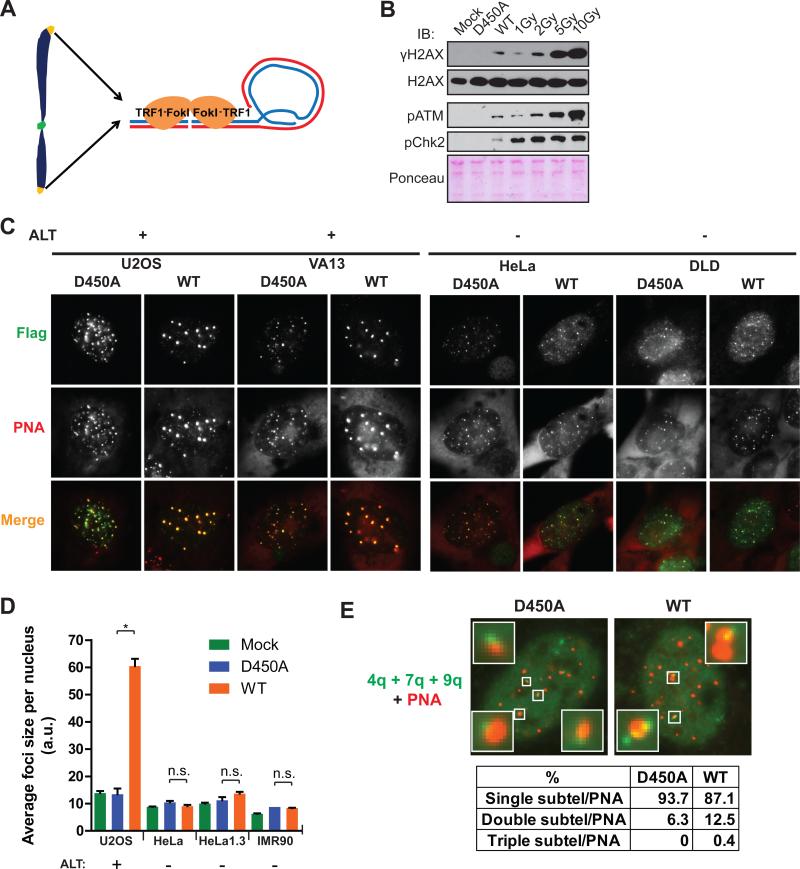
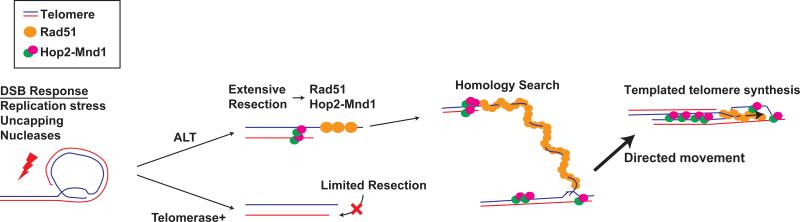
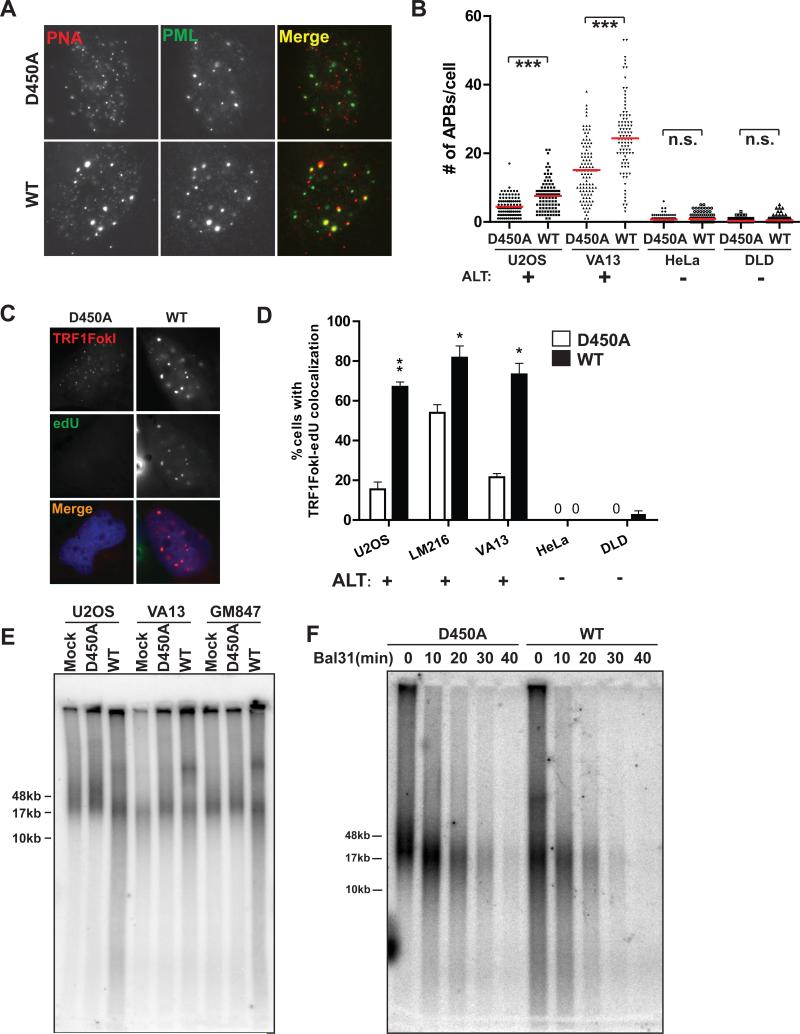
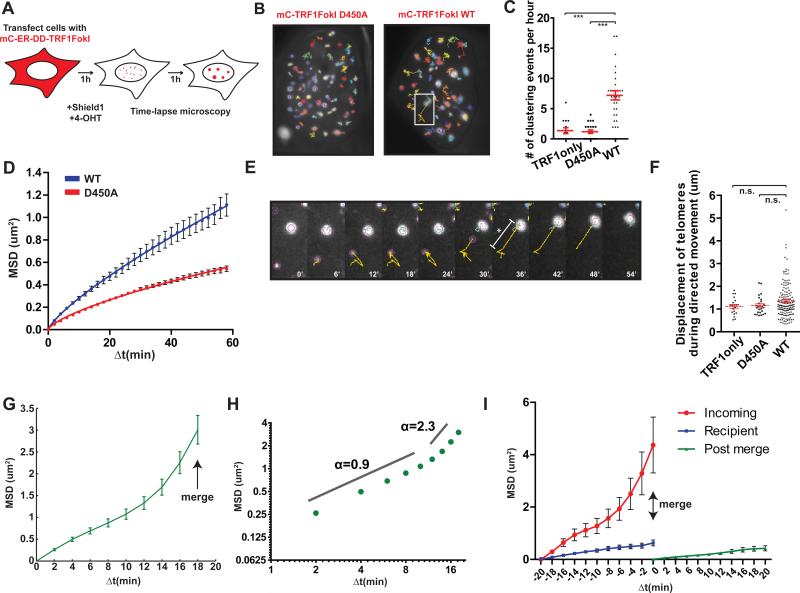
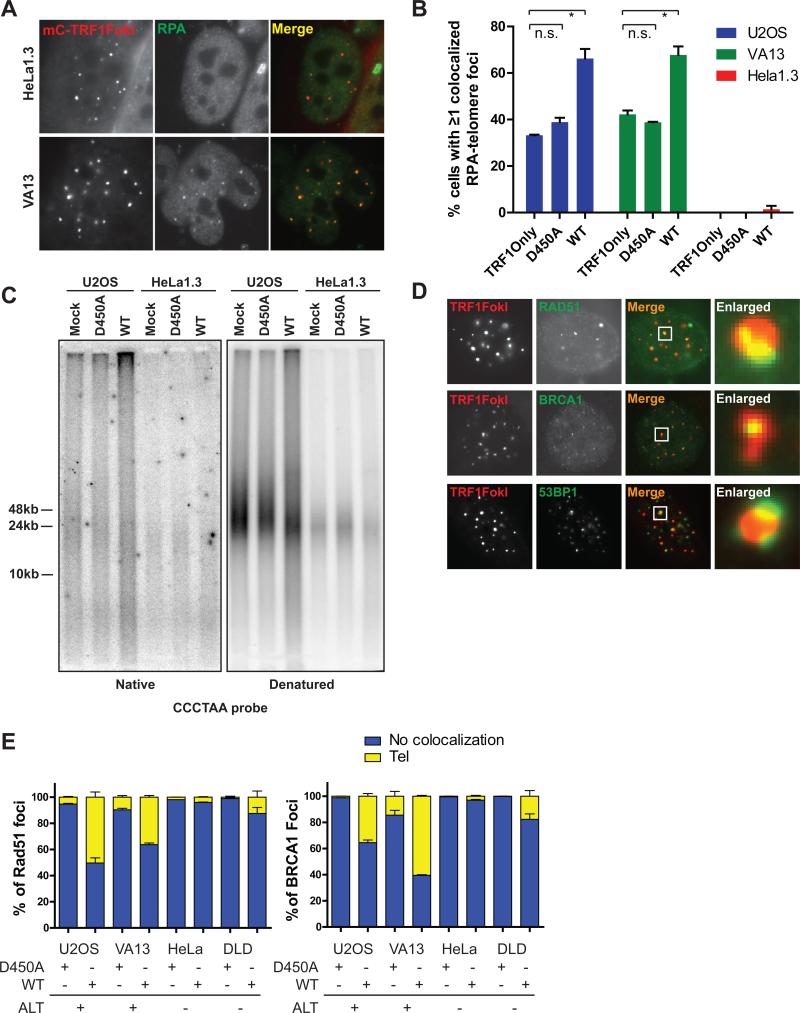
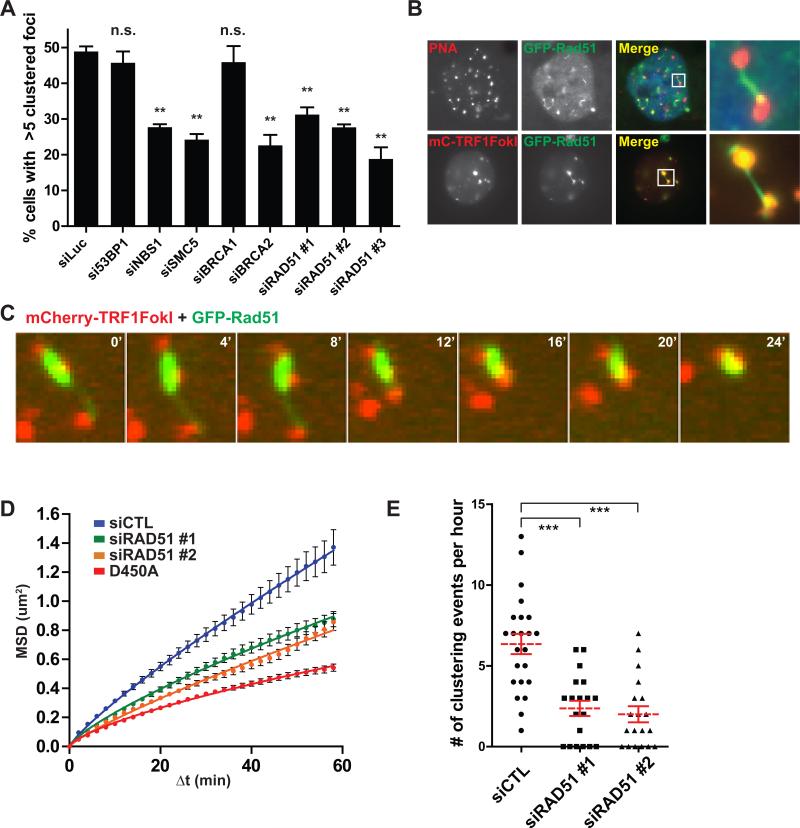
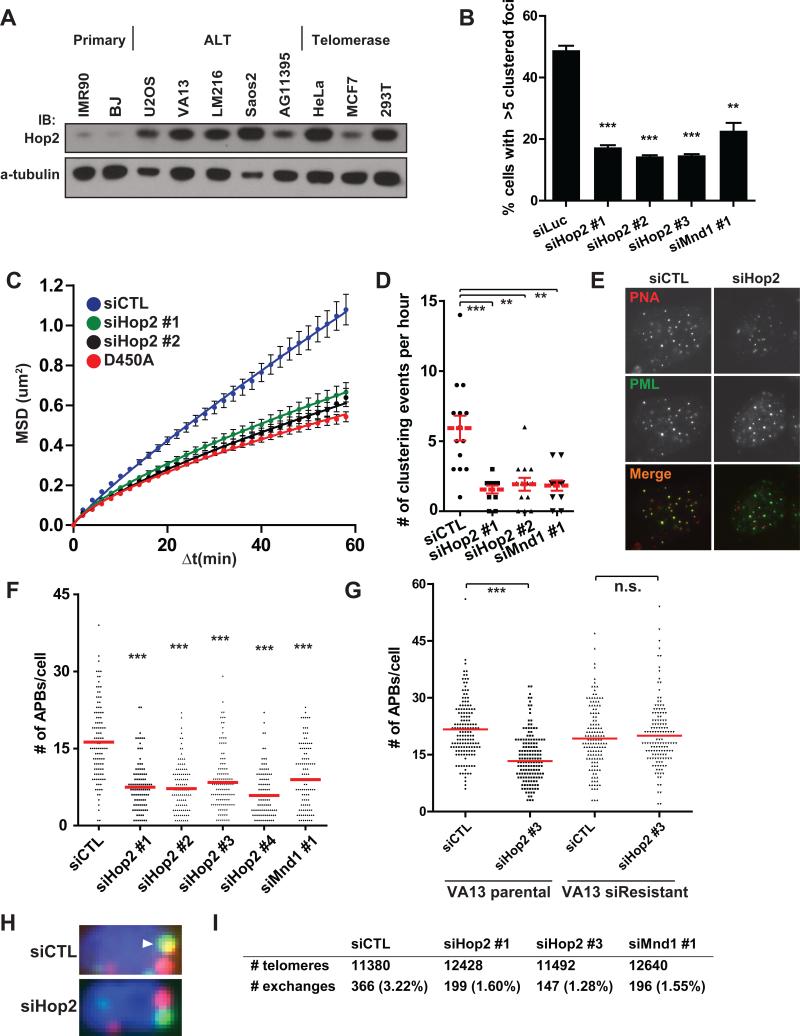
Telomere length maintenance is a requisite feature of cellular immortalization and a hallmark of human cancer. While most human cancers express telomerase activity, ∼10%-15% employ a recombination-dependent telomere maintenance pathway known as alternative lengthening of telomeres (ALT) that is characterized by multitelomere clusters and associated promyelocytic leukemia protein bodies. Here, we show that a DNA double-strand break (DSB) response at ALT telomeres triggers long-range movement and clustering between chromosome termini, resulting in homology-directed telomere synthesis. Damaged telomeres initiate increased random surveillance of nuclear space before displaying rapid directional movement and association with recipient telomeres over micron-range distances. This phenomenon required Rad51 and the Hop2-Mnd1 heterodimer, which are essential for homologous chromosome synapsis during meiosis. These findings implicate a specialized homology searching mechanism in ALT-dependent telomere maintenance and provide a molecular basis underlying the preference for recombination between nonsister telomeres during ALT.
端粒长度维持是细胞永生化的必要特征,也是人类癌症的一个标志。虽然大多数人类癌症表达端粒酶活性,但约10%-15%的癌症采用一种依赖重组的端粒维持途径,称为端粒替代延长(ALT),其特征是多端粒簇和相关的早幼粒细胞白血病蛋白体。在这里,我们表明,ALT端粒处的DNA双链断裂(DSB)反应触发了染色体末端之间的长距离移动和聚集,导致同源性定向端粒合成。受损的端粒在显示出快速的定向移动并与受体端粒在微米级距离上结合之前,会启动对核空间的随机监测增加。这种现象需要Rad51和Hop2-Mnd1异二聚体,它们在减数分裂期间对同源染色体联会至关重要。这些发现暗示了ALT依赖的端粒维持中一种特殊的同源性搜索机制,并为ALT期间非姐妹端粒之间重组偏好提供了分子基础。