Pan Zhe, Wang Hanbo, Liu Yuantao, Yu Chunxiao, Zhang Yuchao, Chen Jicui, Wang Xiangdong, Guan Qingbo
Department of Endocrinology, Shandong Provincial Hospital affiliated to Shandong University; Shandong Clinical Medical Center of Endocrinology and Metabolism; Institute of Endocrinology and Metabolism; Shandong Academy of Clinical Medicine, 324 Jing 5 Rd, Jinan, Shandong 250021, P, R, China.
Lipids Health Dis. 2014 Oct 2;13:155. doi: 10.1186/1476-511X-13-155.
Deregulated secretion of adipokines contributes to subclinical systemic inflammation associated with type 2 diabetes mellitus (T2DM). However, the mechanisms underlying are not fully understood. Hydrogen sulfide (H2S), as an endogenous gasotransmitter, possesses an anti-inflammation activity. The aim of this study was to examine the possible involvement of H2S in high glucose induced adipokine secretion in 3T3-L1 adipocytes.
The expression of cystathionine-gamma-lyase (CSE), the H2S-forming enzyme, was evaluated by Western-blotting and real-time PCR. The secretion of TNF-α, MCP-1 and adiponectin was determined by radioimmunoassay and enzyme-linked immunosorbent assay (ELISA), respectively. Lentiviral empty vector and vector expressing mouse CSE were used for in vitro transduction.
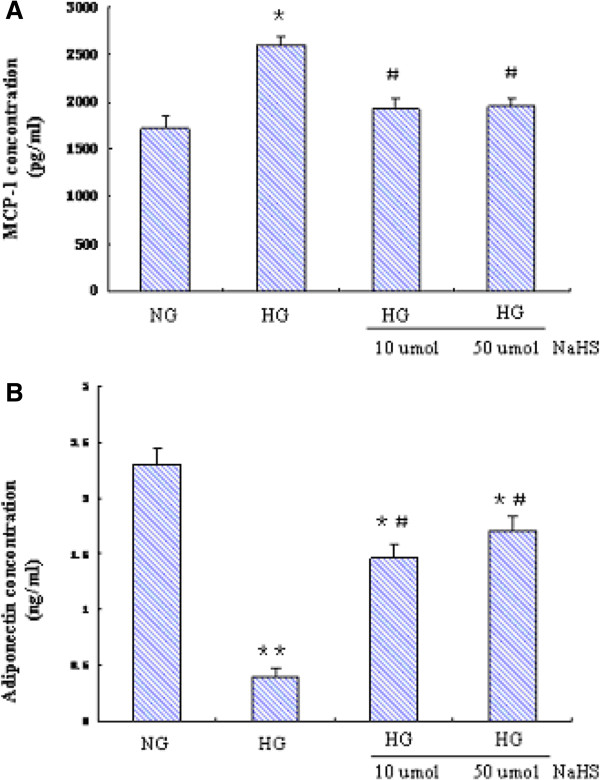
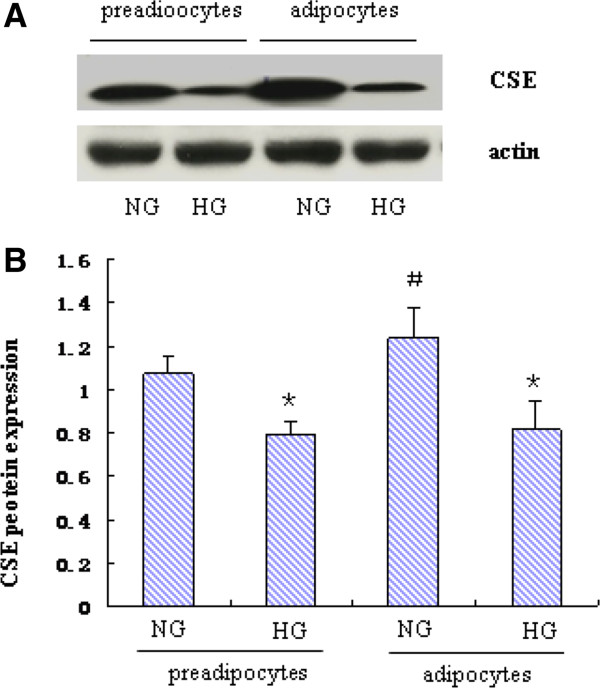
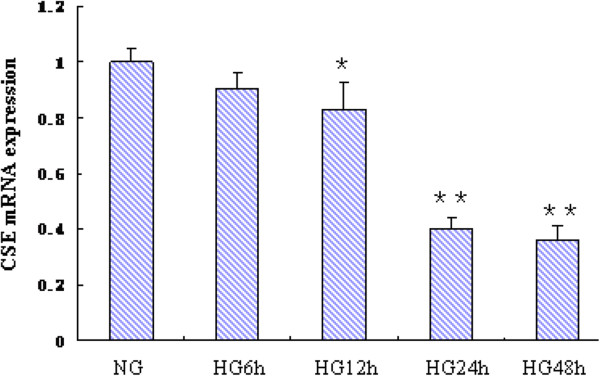
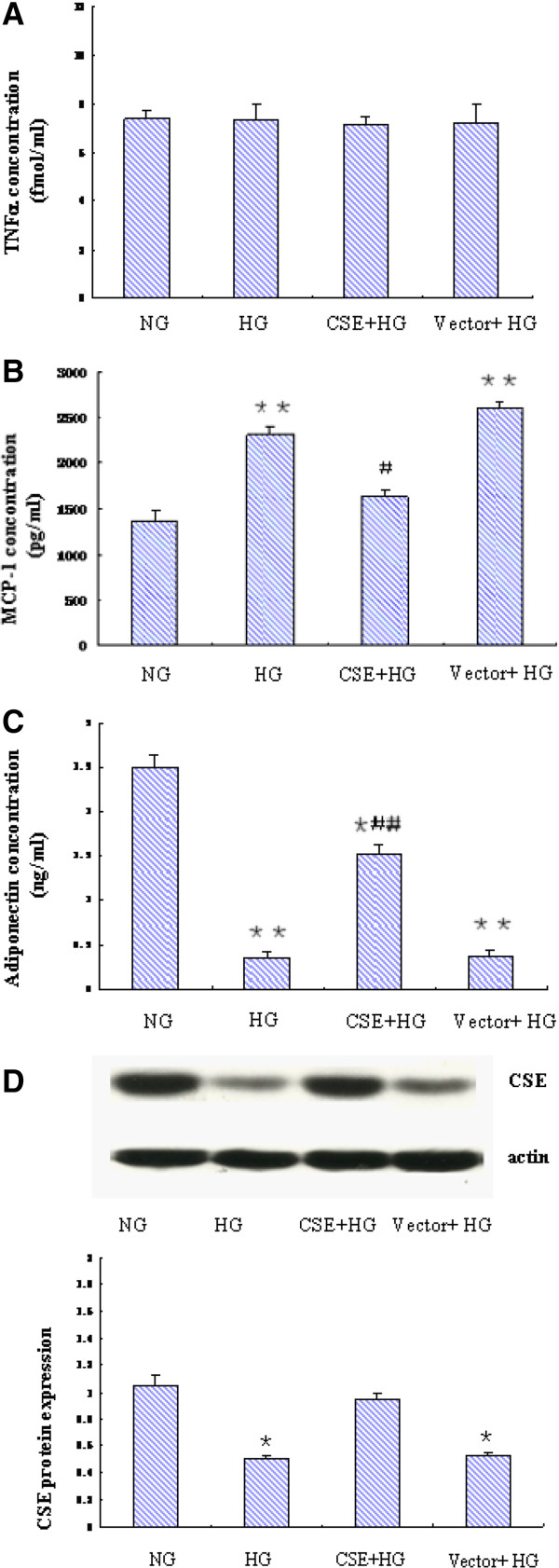
High glucose (HG) significantly decreased CSE expression at both protein and mRNA levels in mature 3T3-L1 adipocytes. In parallel, HG significantly increased secretion of MCP-1 while decreasing secretion of adiponectin, but had no effect on secretion of TNF-α. HG induced changes in MCP-1 and adiponectin secretion were partly attenuated by forced expression of CSE or sodium hydrosulfide (NaHS), a source of exogenous H2S.
High glucose induces aberrant secretion of adipokines in mature 3T3-L1 adipocytes, favoring inflammation. The mechanism is partly related to inhibition of CSE/ H2S system.
脂肪因子分泌失调会导致与2型糖尿病(T2DM)相关的亚临床全身炎症。然而,其潜在机制尚未完全明确。硫化氢(H2S)作为一种内源性气体递质,具有抗炎活性。本研究旨在探讨H2S是否可能参与高糖诱导的3T3-L1脂肪细胞中脂肪因子的分泌。
采用蛋白质免疫印迹法和实时定量PCR评估硫化氢生成酶胱硫醚-γ-裂解酶(CSE)的表达。分别采用放射免疫分析法和酶联免疫吸附测定法(ELISA)测定肿瘤坏死因子-α(TNF-α)、单核细胞趋化蛋白-1(MCP-1)和脂联素的分泌。利用慢病毒空载体和表达小鼠CSE的载体进行体外转导。
高糖(HG)显著降低成熟3T3-L1脂肪细胞中CSE的蛋白和mRNA水平表达。同时,HG显著增加MCP-1的分泌,降低脂联素的分泌,但对TNF-α的分泌无影响。通过强制表达CSE或外源性H2S来源硫氢化钠(NaHS),部分减弱了HG诱导的MCP-1和脂联素分泌的变化。
高糖诱导成熟3T3-L1脂肪细胞中脂肪因子异常分泌,促进炎症反应。其机制部分与CSE/H2S系统的抑制有关。