Alexander Brittany E, Liebrand Kevin, Osinga Ronald, van der Geest Harm G, Admiraal Wim, Cleutjens Jack P M, Schutte Bert, Verheyen Fons, Ribes Marta, van Loon Emiel, de Goeij Jasper M
Department of Aquatic Ecology and Ecotoxicology, Institute for Biodiversity and Ecosystem Dynamics, University of Amsterdam, Amsterdam, The Netherlands; Porifarma B.V. Poelbos 3, Ede, The Netherlands.
Department of Aquatic Ecology and Ecotoxicology, Institute for Biodiversity and Ecosystem Dynamics, University of Amsterdam, Amsterdam, The Netherlands.
PLoS One. 2014 Oct 7;9(10):e109486. doi: 10.1371/journal.pone.0109486. eCollection 2014.
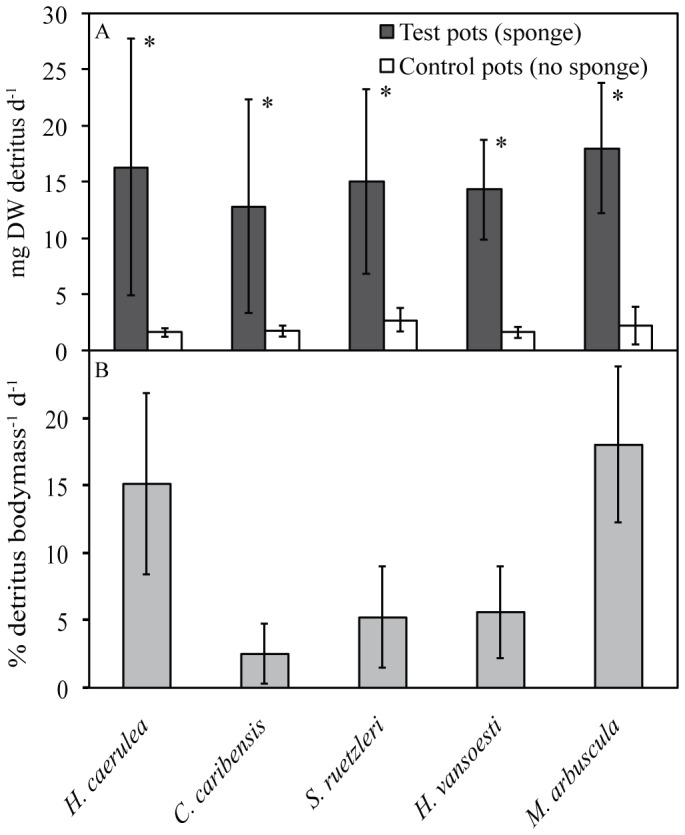
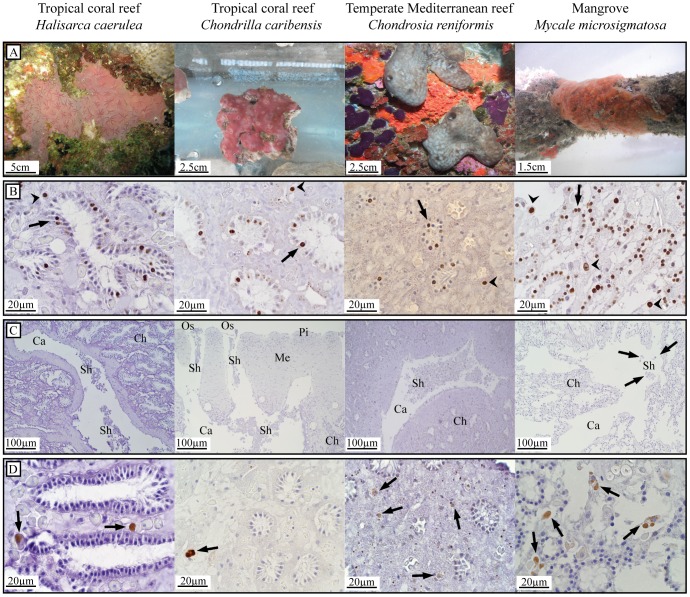
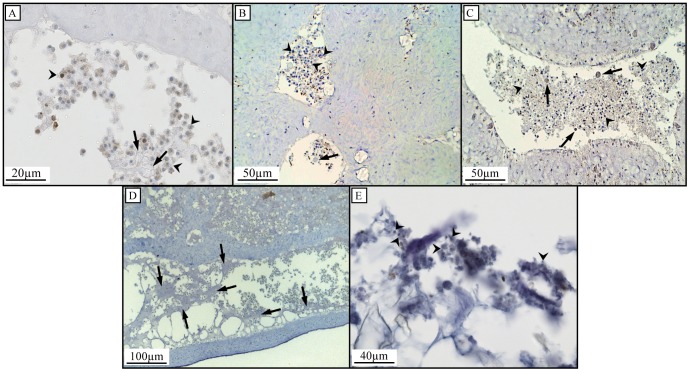
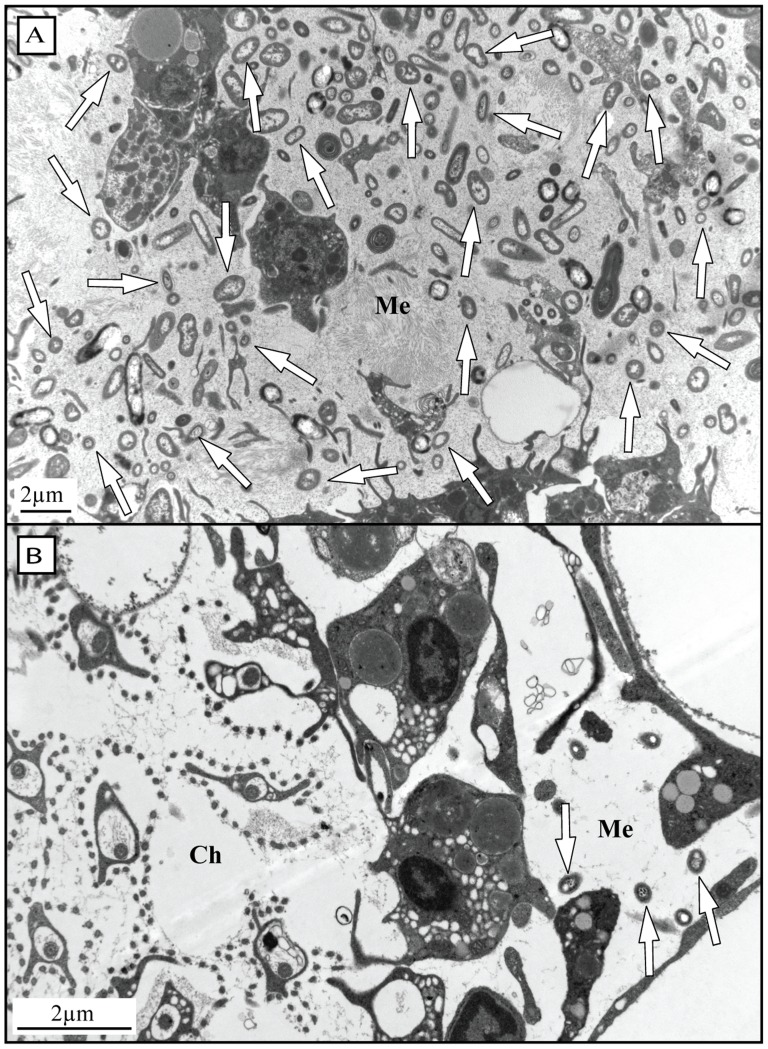
This study describes in vivo cell turnover (the balance between cell proliferation and cell loss) in eight marine sponge species from tropical coral reef, mangrove and temperate Mediterranean reef ecosystems. Cell proliferation was determined through the incorporation of 5-bromo-2'-deoxyuridine (BrdU) and measuring the percentage of BrdU-positive cells after 6 h of continuous labeling (10 h for Chondrosia reniformis). Apoptosis was identified using an antibody against active caspase-3. Cell loss through shedding was studied quantitatively by collecting and weighing sponge-expelled detritus and qualitatively by light microscopy of sponge tissue and detritus. All species investigated displayed substantial cell proliferation, predominantly in the choanoderm, but also in the mesohyl. The majority of coral reef species (five) showed between 16.1±15.9% and 19.0±2.0% choanocyte proliferation (mean±SD) after 6 h and the Mediterranean species, C. reniformis, showed 16.6±3.2% after 10 h BrdU-labeling. Monanchora arbuscula showed lower choanocyte proliferation (8.1±3.7%), whereas the mangrove species Mycale microsigmatosa showed relatively higher levels of choanocyte proliferation (70.5±6.6%). Choanocyte proliferation in Haliclona vansoesti was variable (2.8-73.1%). Apoptosis was negligible and not the primary mechanism of cell loss involved in cell turnover. All species investigated produced significant amounts of detritus (2.5-18% detritus bodyweight(-1)·d(-1)) and cell shedding was observed in seven out of eight species. The amount of shed cells observed in histological sections may be related to differences in residence time of detritus within canals. Detritus production could not be directly linked to cell shedding due to the degraded nature of expelled cellular debris. We have demonstrated that under steady-state conditions, cell turnover through cell proliferation and cell shedding are common processes to maintain tissue homeostasis in a variety of sponge species from different ecosystems. Cell turnover is hypothesized to be the main underlying mechanism producing sponge-derived detritus, a major trophic resource transferred through sponges in benthic ecosystems, such as coral reefs.
本研究描述了来自热带珊瑚礁、红树林和温带地中海礁生态系统的八种海洋海绵物种的体内细胞更新(细胞增殖与细胞损失之间的平衡)。通过掺入5-溴-2'-脱氧尿苷(BrdU)并在连续标记6小时后(肾形软骨海绵为10小时)测量BrdU阳性细胞的百分比来确定细胞增殖。使用抗活性半胱天冬酶-3抗体鉴定细胞凋亡。通过收集并称重海绵排出的碎屑来定量研究通过脱落造成的细胞损失,并通过对海绵组织和碎屑进行光学显微镜检查来定性研究。所有被研究的物种都表现出大量的细胞增殖,主要发生在领细胞层,但中胶层也有增殖。大多数珊瑚礁物种(五种)在6小时后显示出16.1±15.9%至19.0±2.0%的领细胞增殖(平均值±标准差),而地中海物种肾形软骨海绵在BrdU标记10小时后显示出16.6±3.2%的增殖。丛生单枝海绵显示出较低的领细胞增殖(8.1±3.7%),而红树林物种微小异枝海绵显示出相对较高水平的领细胞增殖(70.5±6.6%)。范氏哈氏海绵的领细胞增殖情况不一(2.8 - 73.1%)。细胞凋亡可忽略不计,并非细胞更新中细胞损失的主要机制。所有被研究的物种都产生了大量的碎屑(2.5 - 18%碎屑体重(-1)·天(-1)),并且在八种物种中有七种观察到了细胞脱落。在组织学切片中观察到的脱落细胞数量可能与碎屑在管道内的停留时间差异有关。由于排出的细胞碎片已降解,碎屑产生与细胞脱落无法直接关联。我们已经证明,在稳态条件下,通过细胞增殖和细胞脱落进行的细胞更新是维持来自不同生态系统的各种海绵物种组织稳态的常见过程。据推测,细胞更新是产生海绵碎屑的主要潜在机制,海绵碎屑是通过海绵在诸如珊瑚礁等底栖生态系统中转移的主要营养资源。