Tuominen Markku, Stuart Michael J, Aubry Mark, Kannus Pekka, Parkkari Jari
Medisport Ltd, Tampere, Finland.
Department of Orthopedics, Mayo Clinic, Rochester, Minnesota, USA.
Br J Sports Med. 2015 Jan;49(1):30-6. doi: 10.1136/bjsports-2014-093688. Epub 2014 Oct 7.
Information on ice hockey injuries at the international level is very limited. The aim of the study was to analyse the incidence, type, mechanism and severity of ice hockey injuries in men's international ice hockey tournaments.
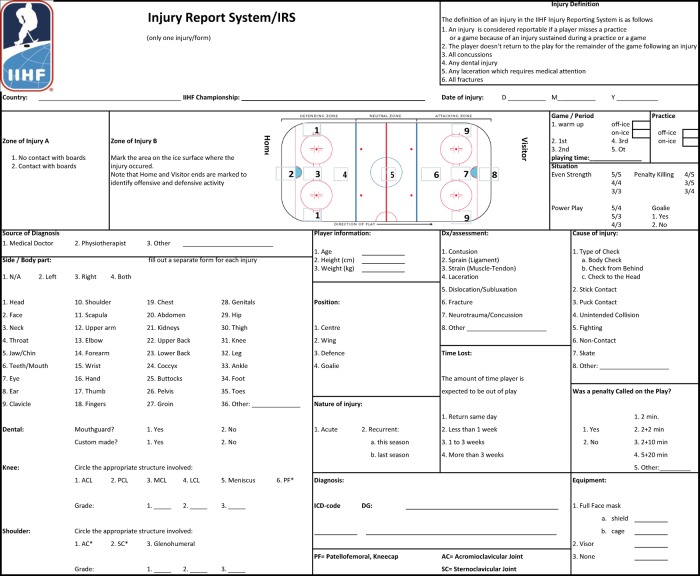
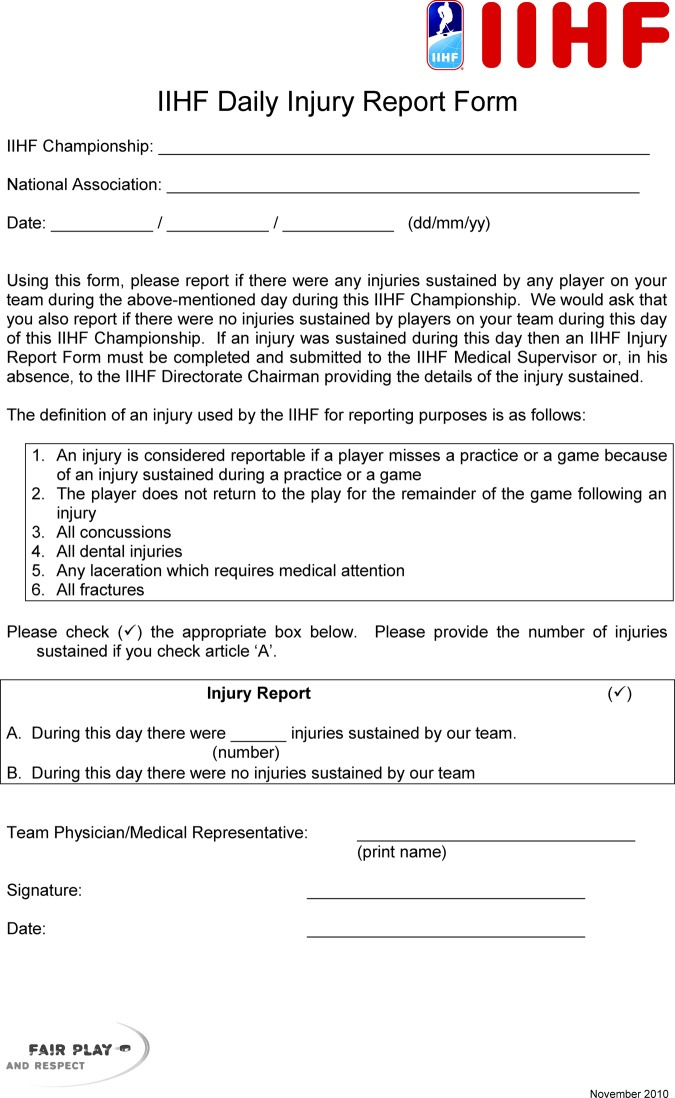
All the injuries in men's International Ice Hockey Federation World Championship tournaments over a 7-year period were analysed using a strict definition of injury, standardised reporting strategies and an injury diagnosis made by a team physician.
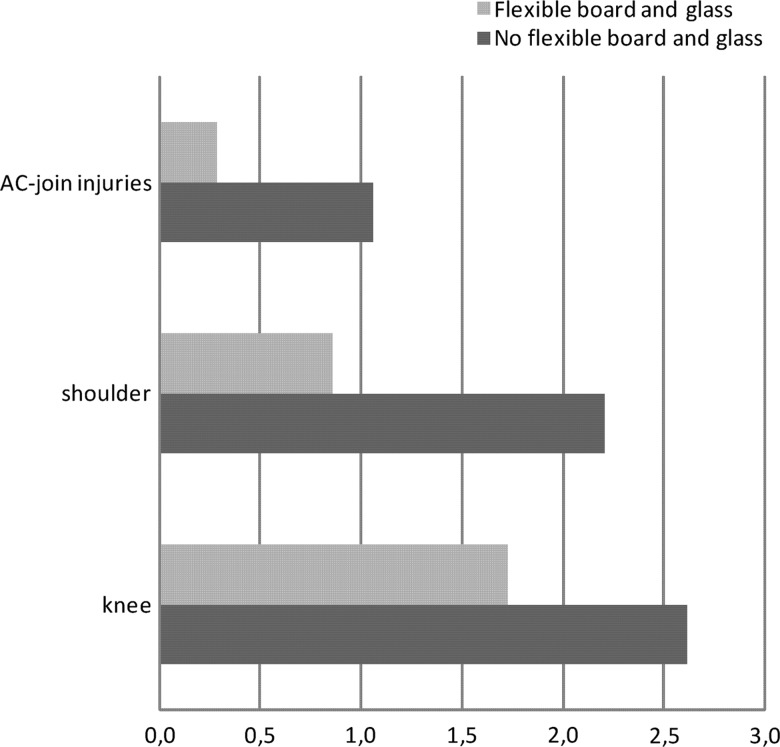
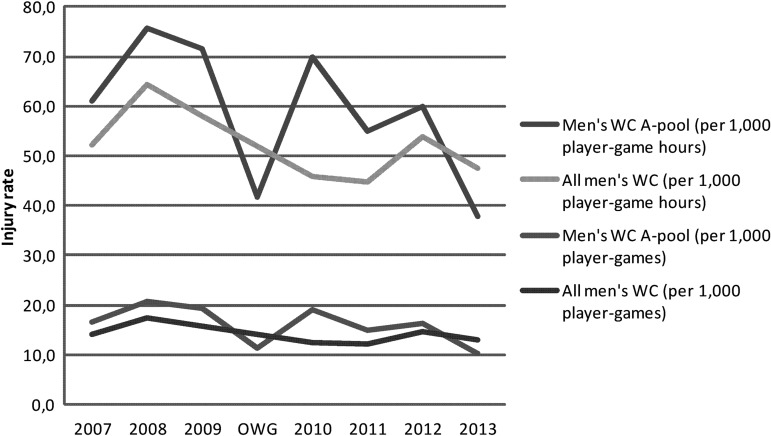
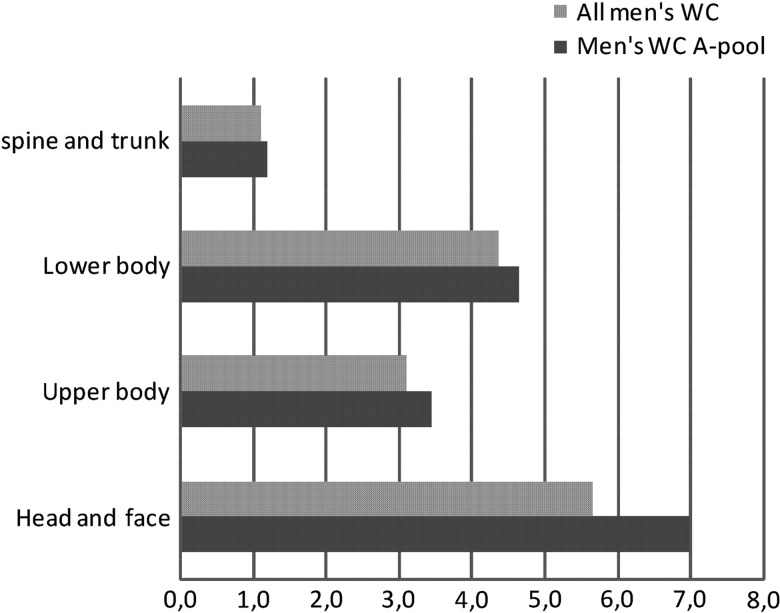
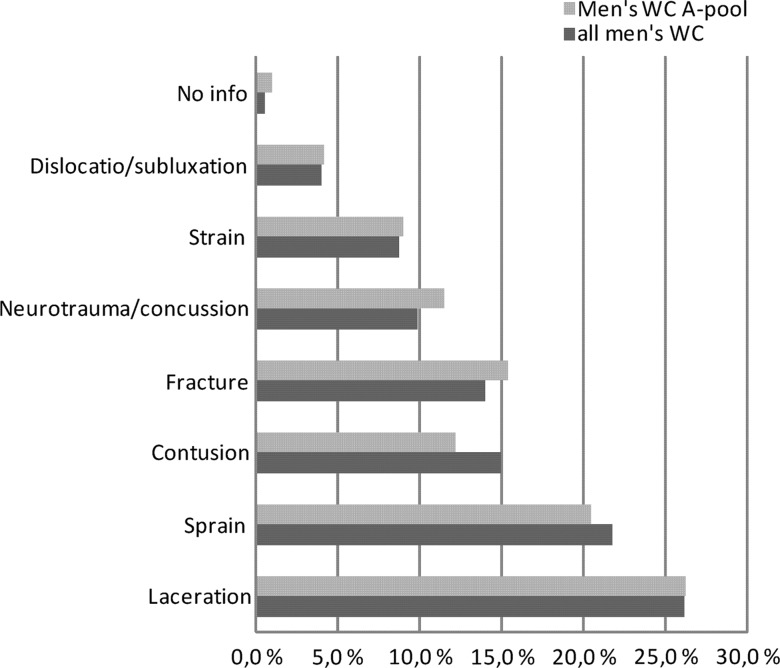
528 injuries were recorded in games resulting in an injury rate of 14.2 per 1000 player-games (52.1/1000 player-game hours). Additionally, 27 injuries occurred during practice. For WC A-pool Tournaments and Olympic Winter Games (OWG) the injury rate was 16.3/1000 player-games (59.6/1000 player-game hours). Body checking, and stick and puck contact caused 60.7% of the injuries. The most common types of injuries were lacerations, sprains, contusions and fractures. A laceration was the most common facial injury and was typically caused by a stick. The knee was the most frequently injured part of the lower body and the shoulder was the most common site of an upper body injury. Arenas with flexible boards and glass reduced the risk of injury by 29% (IRR 0.71, (95% CI 0.56 to 0.91)).
The incidence of injury during international ice hockey competition is relatively high. Arena characteristics, such as flexible boards and glass, appeared to reduce the risk of injury.
国际层面冰球运动损伤的相关信息非常有限。本研究旨在分析男子国际冰球锦标赛中冰球损伤的发生率、类型、机制及严重程度。
对7年间男子国际冰球联合会世界锦标赛中的所有损伤进行分析,采用严格的损伤定义、标准化报告策略以及队医做出的损伤诊断。
比赛中记录到528例损伤,损伤发生率为每1000运动员比赛场次14.2例(每1000运动员比赛小时52.1例)。此外,训练期间发生27例损伤。对于世界冰球锦标赛A组赛事和冬季奥运会,损伤发生率为每1000运动员比赛场次16.3例(每1000运动员比赛小时59.6例)。身体冲撞、球杆及冰球接触导致60.7%的损伤。最常见的损伤类型为撕裂伤、扭伤、挫伤和骨折。撕裂伤是最常见的面部损伤,通常由球杆所致。膝部是下半身最常受伤的部位,肩部是上半身最常见的受伤部位。带有弹性护板和玻璃的比赛场地使损伤风险降低了29%(发病率比0.71,95%可信区间0.56至0.91)。
国际冰球比赛期间的损伤发生率相对较高。比赛场地特征,如弹性护板和玻璃,似乎可降低损伤风险。